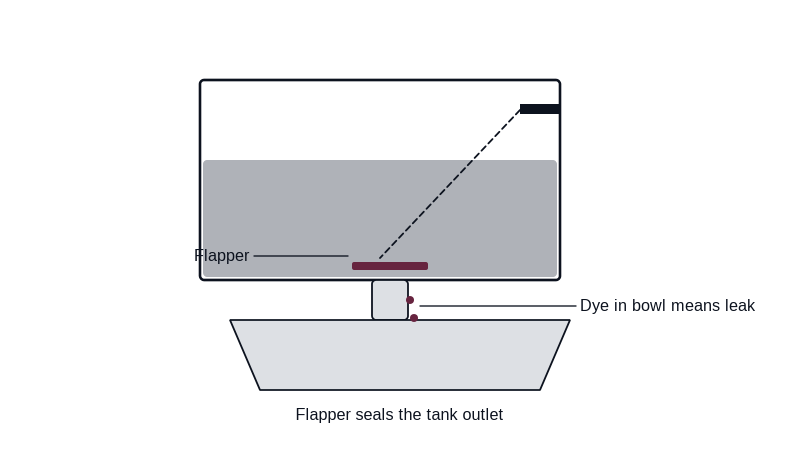
Lift the lid and look in the tank. A thin stream over the overflow tube, a flapper sitting crooked, or a fill valve that cannot shut off: the culprit nearly always lives there, and the replacement parts are cheap. To hand it off instead, Slauson Plumbing can line up a local plumber through the quote form. Otherwise start with the cheapest test, which needs only a drop of food colouring.
What keeps a toilet running after the flush is over?
Either the tank never completes its refill or it keeps leaking into the bowl. After a flush, the flapper drops over the outlet, a float lets the fill valve refill the tank, and the valve cuts off at a set level. A leaking flapper or a valve that stays open keeps the water moving, so the toilet appears to run.
A general reference on toilets names a leaking flapper or drop valve as the usual cause. Wear, or debris caught in the valve, lets water seep steadily into the bowl. Such leaks are often hard to notice, yet a lot of water can disappear this way.
Four causes cover most toilets: a worn flapper, a chain that is tighter or looser than it should be, a fill valve whose float sits too high, and an overflow tube that is cracked or set too low. Check them in that order.
What if the flush handle does nothing?
A loose, floppy or dead handle usually means the lever inside the tank has come loose, the chain has slipped off, or the mounting nut is slack. Take off the lid, find where the chain meets the lever arm, and clip it back on with some play. A sticking handle can also prop the flapper open and keep the toilet running.
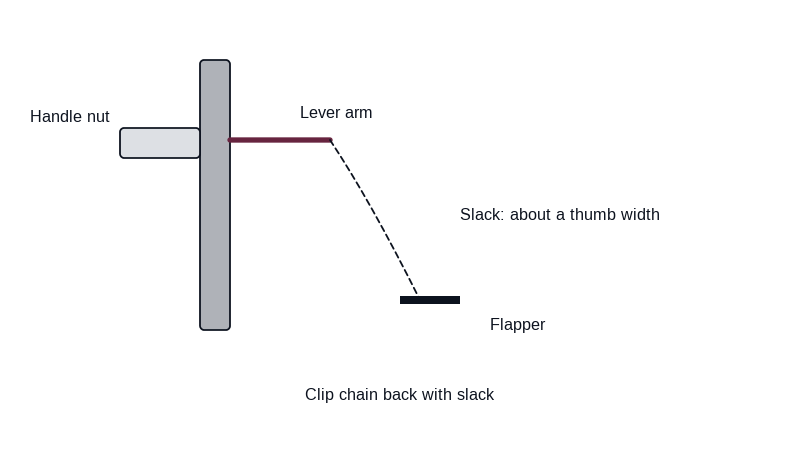
Tighten the handle nut by hand, bearing in mind that many toilets are reverse-threaded, so counterclockwise is the tightening direction. If the lever is bent or cracked, replace the whole handle assembly. Should trouble continue after these checks, read about toilet flush repair.
Is the flapper or chain a do-it-yourself fix?
Yes, and it is the commonest repair of all. Shut the valve at the wall behind the toilet, flush the tank empty and examine the flapper. A soft, warped or slimy rubber flapper should be swapped for a matching one. The chain between handle and flapper needs slack of about a thumb's width, which keeps it from holding the flapper open.
Fitting takes minutes and normally needs no tools. Carry the old flapper to the store to match its size, which is typically two or three inches. First wipe the seat with a cloth, because one speck of grit stops a new flapper sealing. A plumber's visit pays off only when the tank has cracked or the seat itself is damaged. The step-by-step guide to toilet flapper repair has the details.
A home-inspector association gives toilet tank components about five years of life, so a flapper that old is due, and the whole toilet 100 years or more.
When is it time for a new toilet, or a plumber?
Replace the toilet when the bowl or tank has a crack, when it rocks or leaks at its base, or when repairs keep failing. Book a plumber for a leak at the floor, a shutoff valve that has failed, or if draining a tank is beyond your comfort. Toilets generally last a century, so age alone seldom decides it.
Old houses and rentals concentrate these problems: original fixtures with worn parts, tenants who never report a small leak, and shared meters that hide who is using what. Renters should tell the landlord about a running toilet in writing, since someone pays for the wasted water. Replacement pricing is on toilet replacement cost.
Use the quote form. Someone reads submissions Monday to Friday, 9am to 5pm, and a plumber from the area then offers a visit and a price on paper.
Will a running toilet raise my water bill?
Yes, and it ranks among the commonest hidden reasons for a big bill. Water slipping past the flapper still passes through the meter, and a slow leak can go unnoticed for weeks. On average, household leaks waste more than 9,300 gallons a year according to the EPA, and a toilet is a typical source.
Utilities often bill by volume and may round to the nearest hundred gallons, so a steady small loss appears as a creeping bill rather than one spike. Watch your meter for two hours with every fixture off. If it moves and the dye test shows colour, you have found it. Other causes are covered in reasons for an unusually big water bill, and running toilets in Bell homes is a close companion read.
Some providers give an adjustment for a documented leak. Ask yours, and save the receipt for repair parts along with your meter readings.
What if the fill valve keeps running?
The fill valve governs how much water enters the tank. If it sticks open or its float rides too high, water flows over the top of the overflow tube. Start by lowering the float, using the screw or clip on the valve, so the water settles about an inch below the tube's rim. If the valve still will not close, replace it.
Fill valves are cheap and fit most toilets, but installing one is fiddly: the tank has to be drained and the supply line detached. Follow the package instructions and check the supply connection for leaks. The guide to repairing a toilet fill valve covers it, and overflow tube repair covers the tube.
Replace a leaky or stiff supply valve behind the toilet in the same visit. Old stops that seize are a frequent reason a small repair becomes a flood. See shutoff valve repair.
How can I tell which part has failed?
Two quick tests will tell you. Drop food colouring into the tank and leave it for ten minutes with no flush: colour appearing in the bowl proves a leaking flapper. Then watch the water level. Should it rise to the top of the overflow tube and spill in, the fill valve or float is at fault rather than the flapper.
The dye test is the EPA's own method for finding toilet leaks. Flush afterward to keep the dye from staining the tank.
Listen as well. Hissing or trickling while nobody is using the toilet means the fill valve or a leak. Some fill valves, the concentric type, are built to make noise when the tank leaks, whereas the older float-ball type tends to stay quiet, so a silent toilet does not prove a sound one.
A toilet that only runs after a pause, refilling every few minutes with nobody near, has a slow flapper leak. This phantom flushing is easy to ignore, and it adds up on the meter.
Common questions
What makes a toilet start up by itself every few minutes?
That is phantom flushing: a slow trickle gets by the flapper and down into the bowl, the tank level drops, and the fill valve refills it. Fit a new flapper, clean its seat and check the chain. If it carries on, suspect the fill valve or overflow tube next.
How much does fixing a running toilet cost?
A flapper or fill valve kit is an inexpensive part that fits in roughly half an hour. A plumber adds labor and perhaps a trip fee, so ask for the price in writing. We give no figure because prices vary by plumber, parts and time of day.
Is a running toilet an emergency?
Generally no, though it should be repaired within days. An overflow or a leak onto the floor is different: close the supply valve behind the toilet and treat it as urgent. For a plain run, keeping that valve closed until the repair stops the waste.
Why has my toilet handle gone loose?
Either the mounting nut has worked loose or the lever inside the tank has lost its chain. Tighten the nut, reattach the chain leaving some slack, and confirm the flapper lifts and drops freely. A bent or cracked lever arm needs a new handle.
Is a leaking toilet behind a high water bill?
Yes, it can be. Water leaking past the flapper registers on the meter even while the toilet looks idle. The dye test and a two-hour meter test will reveal it. Repairing the flapper, valve or tube usually returns the bill to normal by the next billing cycle.