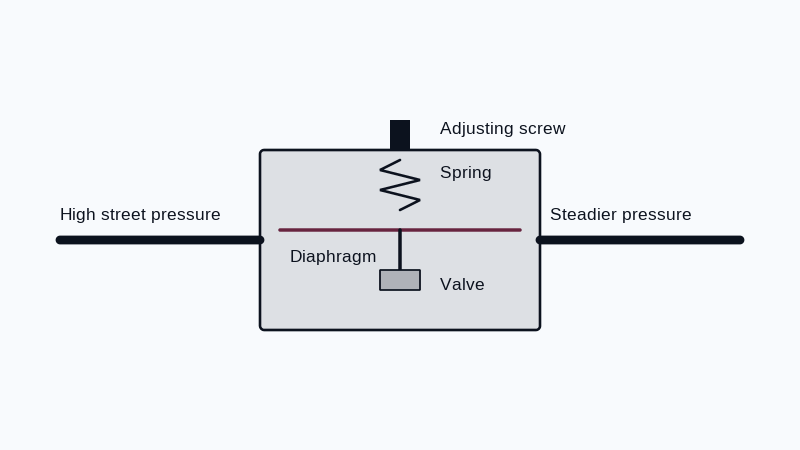
The regulator in this size fits a one-inch water line, and it makes sense only if your house takes in a pipe of that size after the meter. Single-family homes mostly run a smaller line, while larger lots, duplexes and small multi-unit buildings sometimes run one inch. The wrong size hurts flow. The low water pressure page for Bell explains how to ask a local plumber to check pressure and the regulator.
What does a one-inch pressure regulator do?
It is a valve on the main supply that cuts high street pressure down to a steadier level inside the house. A spring and diaphragm shut it as house-side pressure climbs, so fixtures and appliances never face the city main's full pressure. The one-inch figure describes the connection, which must match the incoming pipe.
Without it, spikes can strain fittings, supply hoses, toilet valves and water heaters, and cause banging pipes. A failing unit can swing the other way and deliver too little, leaving the whole house feeling weak. The page on water hammer sounds covers one symptom of excess pressure.
How do California rules apply to regulator work?
CSLB rules generally require a contractor license for work totaling $1,000 in labor and materials, and for every job that needs a permit. A regulator swap on the main supply is plumbing work and some cities want a permit, so ask your city's Building and Safety office. Bell's is at City Hall, 6330 Pine Avenue.
Ask whether a permit is part of the quote, verify the contractor's license on the CSLB website, and hold any deposit to the lesser of $1,000 or 10 percent of the price. Main-line work is no casual DIY job, since a failed joint can flood the house.
How can I spot a regulator on its way out?
Symptoms include pressure that lurches between very high and very low, pipes that knock, a toilet refilling over and over, a drip from the water heater's relief valve, and fixtures that spray hard. To get the figure, thread a gauge onto an outside hose bib; a reading that creeps up overnight suggests the valve is failing.
Gauges are inexpensive and thread onto a hose connection. Read it once with all water off, and again during a busy time. Many homes target a moderate pressure in the 50s psi, but check the manufacturer's range for your fixtures. EPA's leak guidance notes that leaks waste water, and high pressure makes leaks and drips worse. If you have a regulator and the gauge shows high pressure, adjusting or replacing it is the next step.
Is a one-inch regulator right, or do you need a smaller one?
Match the regulator to the pipe. Read the pipe size where the water line comes through the wall or ground, normally near the main shutoff. Markings stamped on the pipe or on the old regulator's body often state the size. Nominal pipe size and the measured outside width differ by material, so a tape measure alone can mislead you.
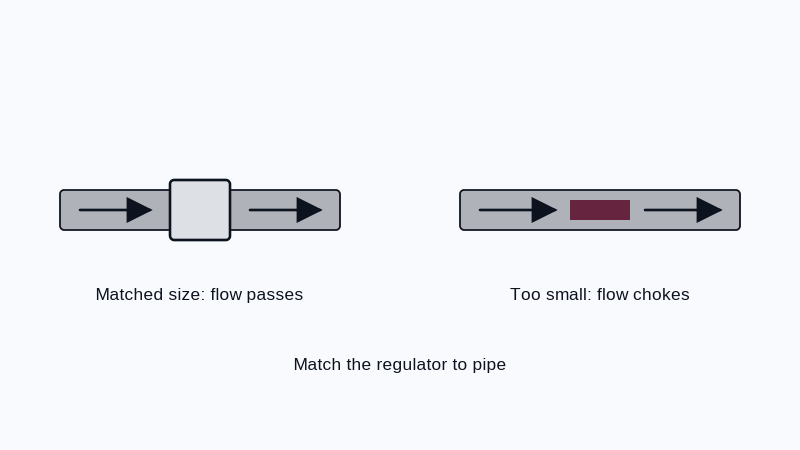
Do not size up just to get more flow, because a bigger valve on a smaller pipe needs fittings that add restrictions. Do not size down either, since a regulator smaller than the main chokes flow in a house with several bathrooms. If the old unit was 3/4 inch and the pipe is 3/4 inch, buy 3/4 inch. A plumber can read the pipe and the household demand quickly.
What does installing this regulator involve?
The plumber begins by shutting the main and draining the line, then cuts out or unscrews the old unit and fits the new one facing the direction of flow, which is marked by an arrow cast into the housing. Unions or compression fittings make later replacement easier. The main is then reopened slowly, the pressure is set with a gauge and every connection is checked for leaks.
Newer installs often add a thermal expansion tank next to the water heater, since a regulator may form a closed system where heated water has nowhere to expand. Such tanks are frequently needed here, and the plumber will tell you whether yours is one. For the steps and what to expect, see our page on replacing a regulator.
Where is the regulator on a house in Bell?
Begin at the main shutoff, the spot the supply pipe enters the building: a garage wall, beside a front hose bib, a utility closet or a meter box. What you want is a brass valve shaped like a bell, with an adjusting screw on top. Many houses from the 1920s to 1950s have none, or keep an original unit long past its service life.
Cannot find it? One guide on finding the regulator names the common spots, and another on the regulator's appearance helps with identifying it. Duplexes and backyard units may have a separate regulator or share one, so check with the owner before you work on it.
Common questions
What is the usual duration of a replacement visit?
With an accessible main, a plumber commonly needs a couple of hours, testing and pressure setting included. Corroded fittings, an awkward location or a new expansion tank add time. The local plumbing business sets the schedule and no window can be promised, so request one in writing.
What should I bring up before hiring?
Ask whether the plumber will measure pressure before and after, and which setting is planned. The quote ought to list the regulator, fittings, expansion tank and permit. Confirm insurance, plus a California contractor license number that the CSLB site can verify.
Must someone be at the house during the work?
Yes. A grown-up needs to okay the plan and watch the closing pressure test. The water stays off for a while during the job. Renters need the landlord's approval and arrangement for access. Note pets, gates and the main shutoff's location in your request.
Can a one-inch regulator cure low pressure?
Not by itself. A regulator reduces pressure, so it helps with high or unsteady readings. With low pressure, a failed regulator may be to blame, though a half-shut valve, a blocked pipe, a leak or the street supply could also be. A plumber can test each with a gauge and a walk-through.
For the wider picture, start with Slauson Plumbing.