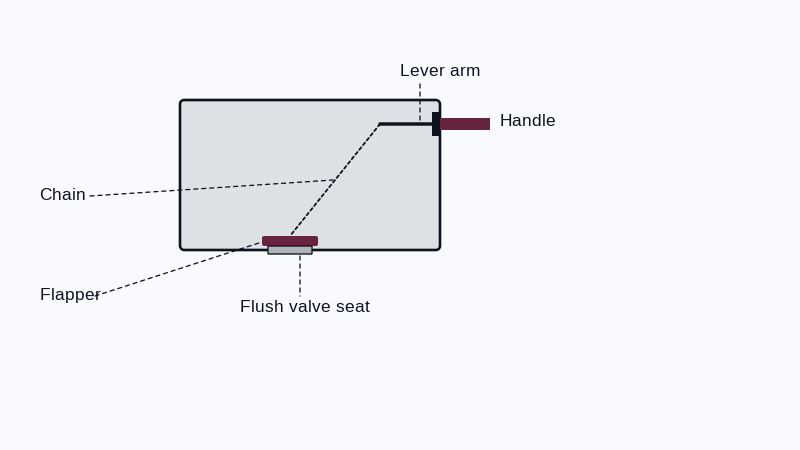
Lift the tank lid and observe one flush. The cause is normally inside: perished rubber on the flapper, a chain that is too tight or too slack, or a flush valve seat worn rough. These parts are cheap and quick to replace. When the tank looks fine, describe the fault in the quote form and a nearby plumbing business can take it on. The Slauson Plumbing home page lists other jobs around Bell.
What makes the water run on after the flush ends?
A flapper at the bottom of the tank that fails to seal lets water trickle into the bowl, and the fill valve keeps replacing it in a loop. Old rubber hardens, warps or gathers a mineral film, and the seat beneath it can roughen. A chain cut too short may also prop the flapper slightly open. The result is a hiss, a refilling bowl and a higher water bill.
A quick test settles it. Add a little food dye to the tank water, leave the toilet unflushed for fifteen minutes, and check the bowl. Tinted water in the bowl tells you the flapper, or the seat beneath it, is leaking. Wipe the seat clean, give the chain one link of slack, and buy a flapper that fits your model, taking the old one along to compare. The EPA puts household leak losses above 9,300 gallons a year, and silent flapper seepage is a classic contributor. For the whole running-toilet checklist, read the page on a toilet that never stops running, plus the flapper repair guide.
What does it take to replace a toilet flush valve?
The flush valve is the central tower in the tank, and the flapper seals its foot. Once it cracks, warps or weeps where it meets the tank, the cure is a whole new valve, which comes as a kit. That means draining the tank and treating the bolts and the big rubber gasket gently. The usual blunder is buying a kit that does not fit.
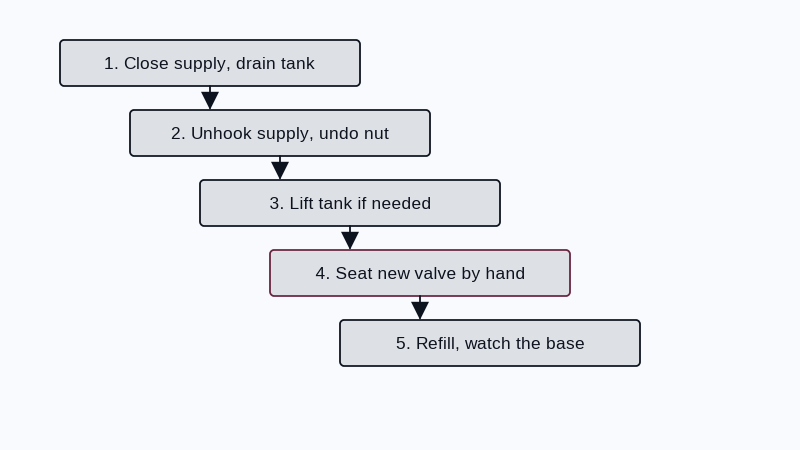
The rough sequence:
- Turn off the wall valve behind the bowl, then flush so the tank empties. A sponge soaks up what remains.
- Unscrew the supply line, followed by the nut beneath the tank holding the worn valve in place.
- If your model calls for it, lift the tank away and rest it on a towel.
- Drop in the replacement valve with its gasket, tighten by hand, then add a small extra turn with a wrench. Porcelain can crack at this step.
- Reconnect the supply, refill the tank, and watch the base for leaks over several minutes.
Seized tank bolts, a rocking tank or cracked porcelain are your cue to quit and call in a plumber. Replacing the toilet may be cheaper than fighting it, and our page on the cost to replace a toilet shows what that involves.
How do I repair a wobbly or stuck flush handle?
A handle that wobbles or sticks usually points to a slipped arm inside the tank, a loosened nut or a chain hooked in the wrong hole. Tighten the mounting nut, remembering that many models are reverse-threaded, which makes clockwise the loosening direction. Clip the chain back onto the arm leaving about one link of slack, and the handle should spring back.
A handle that sticks down often scrapes the tank wall, so check that the arm clears it. If the plastic arm is cracked or the nut has stripped, a replacement handle is a small part. A flush that needs two or three tries, or a weak flush that leaves paper behind, may be a different issue: an under-filled tank, a partly closed supply valve, or clogged rim holes. Look at the water mark inside the tank: the surface should rest about one inch lower than the rim of the overflow tube. Raise it with the fill valve adjustment. See the guide to toilet inlet valves when the fill itself is the problem.
When should I send a toilet flush problem to a plumber?
When a part will not seat, when water appears on the floor, when a clog or a slow flush returns after you clear it, or when the toilet rocks or has a cracked tank or bowl. Also when you rent and the landlord should be told. A plumber can reach hidden causes that a quick kit swap will not.
A quick sort of faults:
- Water around the base. A tired wax seal or loose floor bolts are the likely suspects. Stop flushing, shut the supply and arrange the job.
- Repeated clogs. Read about help with a blocked toilet before blaming the flush valve.
- Cracked porcelain. Replacement is the sensible fix.
- Old homes. In Gateway city houses built between the 1920s and 1950s, the shutoff valves are often decades old and can snap when turned. A stiff or weeping valve behind the toilet should be replaced, not forced.
- Hard water. Mineral scale can foul a flapper seat or a fill valve. The provider named on your bill publishes hardness in its yearly water quality report.
A flush kit costs well under the $1,000 mark where state law starts to demand a contractor license, but a full toilet swap with a new stop valve might not. Ask whether the plumber is insured, and have the price put in writing. No emergency dispatch sits behind this site; form submissions are read on weekdays between 9am and 5pm.
Do they flush toilets during a home inspection?
Generally yes. A home inspector normally flushes each toilet to check that it fills, flushes and drains, and looks for leaks at the base and supply line. Inspection scopes differ, so ask yours. If the report lists a running or weak toilet, the fix is usually one of the cheap parts above, and a seller or buyer can have it done before closing.
Common questions
What is the usual time for fixing a flush?
A new flapper or a chain tweak is over in minutes. A flush valve usually costs a first-timer an hour to ninety minutes, and somewhat less for someone who does it daily. A stubborn clog, a leaking base or a cracked tank runs longer and may require lifting the whole toilet.
Which questions suit a plumber quoting this job?
Ask what the price covers, whether parts cost extra, whether the plumber carries insurance and whether a new stop valve is included. Contractor licensing in California starts at about $1,000 of work, and the state licensing board's website lets you verify a license number.
Do I have to be home while the work happens?
Yes. Somebody has to open the door, point out the faulty bathroom and agree on the price. Tenants can ask the landlord to arrange entry instead. Clear the floor around the toilet and shut the supply valve if water is escaping, so the plumber can start straight away.
Will hardware store parts fix a toilet flush?
Often, yes. Flappers, fill valves, handles and flush valve kits are sold everywhere and suit most standard toilets. Success depends on matching brand and size, so photograph the tank and carry the old part along. Book a plumber if a fitting will not tighten or the porcelain cracks.