A steel storage tank contains a rod of softer metal wound around a steel core. Water corrodes the rod before it touches the tank wall. Once the rod is used up, the tank itself starts to rust. Consumer guides suggest inspecting or replacing it about every three to five years. It is a small task among water heater repairs and services, and it can help a sound tank last longer.
What is the rod for, and how often should it be changed?
The rod is designed to corrode first, which spares the tank lining. Inspect it roughly every three to five years, or sooner with hard water. Replace it once it has worn down to a thin wire, lost more than about half its thickness, or shows about six inches of bare steel core. Those thresholds come from consumer guides and not the manufacturer, so read your own warranty.
Signs the rod is spent: rust-colored hot water while the cold runs clear, a rotten-egg smell from the hot tap (a reaction that can occur with some rods and bacteria), popping or rumbling that points to scale, and moisture seeping out around the upper part of the tank. A heater already leaking through the tank shell is beyond help, since the steel has failed. Then the answer is replacement, not a new rod.
Hardness shortens the rod's life. Commerce's Cal Water system reported average hardness of 146 ppm in its 2025 report, which is hard (USGS scale). Other cities in this area have other providers whose figures differ, so find the hardness line in the yearly water quality report your own provider publishes. Your water bill names your provider.
What are the steps to check and change the rod?
Checking a rod starts by cutting power or gas, closing the cold supply and relieving pressure. After that, a socket and breaker bar unscrew the rod from the tank top. Many rods are seated tight and need leverage. If it is worn, a new rod of the same length and thread goes in with thread tape or sealant, and the tank refills with a faucet open.
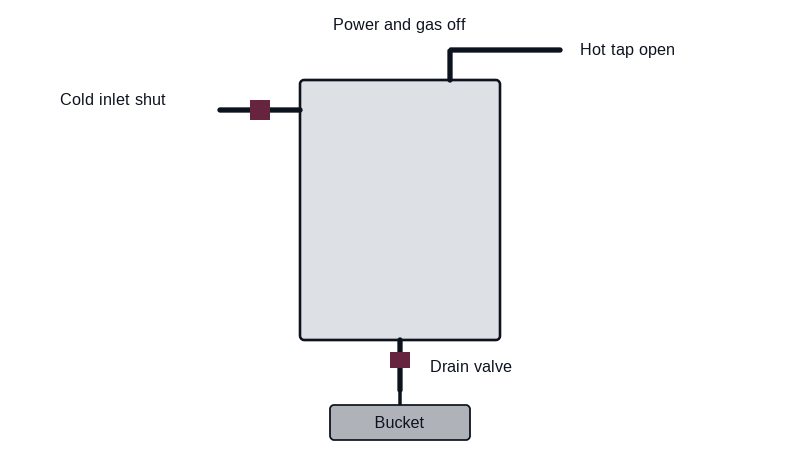
The sequence, step by step:
- Power the unit down. An electric heater goes off at the breaker; a gas heater's control moves to off or pilot.
- Shut the cold water inlet valve sitting above the heater.
- Run a hot tap somewhere in the house, then let a few gallons out through the drain valve at the base so the water drops under the top.
- Locate the rod. Depending on the model, it is a hex head on the tank lid or part of the hot outlet nipple.
- Loosen the hex head with a six-point socket. An impact wrench or a long breaker bar helps, because rods are often stuck.
- Pull the rod out, look at how much of the metal remains, and fit its replacement.
- Close the drain, open the cold inlet, let air escape through the open hot tap, then restore power or gas.
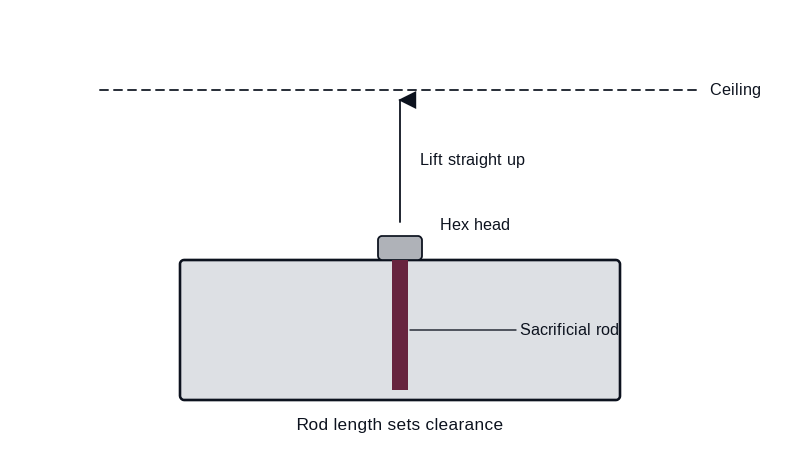
Lifting a rod out in one piece takes clearance above the tank. In many Bell and Huntington Park bungalows the tank is tucked into a low-ceiling closet or the corner of a garage, and a rigid rod will not clear. A flexible segmented rod solves that.
When should a plumbing business take over?
Hand the job off when the rod will not budge, when a gas heater is involved and the pilot or controls are unfamiliar, when the tank already leaks, or when the unit is so old that disturbing the rod may start a leak. A stuck rod forced with too much leverage can twist the tank.
Other reasons to arrange a visit:
- Gas heaters. Gas piping and the controls are regulated work. Swapping the heater itself generally calls for both a permit and a contractor license, so a tank replacement goes through your city's building office. Bell Building and Safety takes applications by email; other cities in the area run their own divisions.
- A rental. In a rental the owner decides whether to spend on the heater. Tell the landlord in writing before you open anything.
- A warranty. Some manufacturers can void a warranty if the owner swaps the rod, so check it first.
- An old tank. A heater past roughly a decade, with scale or rust, is often cheaper to replace than to service. Prices are on the water heater replacement cost page.
A state-law license requirement begins at $1,000 in labor plus materials, so a rod swap sits below that line; any job needing a permit sits above it whatever the price. There is no overnight dispatch here, and requests get read Monday to Friday, 9am to 5pm. Send the quote form and a nearby plumbing business can inspect the heater. The Slauson Plumbing home page shows other jobs covered.
Are there rod types worth knowing about?
Yes. Magnesium and aluminum rods are the usual sacrificial types, and some water reacts with one of them to give a sulfur smell. A powered anode runs on a small electric current instead of a sacrificial metal, so it does not wear away the same way, though it needs a power connection. Ask which type suits your water and your heater before you buy.
Do not fit a rod made for a different brand without checking length and thread size. Some water heaters have two rods, and tankless units have no anode at all. For the contrast see tank versus tankless and the hot water heater repair guide.
Common questions
What is the usual duration of a rod change?
Given the right socket and clear access, roughly an hour, with extra minutes while the tank refills and heats. A stuck rod, a tight ceiling or a gas heater with awkward controls can double that. A plumber normally finishes faster, because they carry breaker bars and flexible rods.
What is a rod replacement priced at?
No sourced price range from a source we have read was available, so no number is quoted. The rod itself is a modest part; labor and the visit make up the rest. Request a written quote, and ask whether a flexible rod, a drain-down and a pressure check are included.
What should I confirm with a plumber before booking this job?
Find out whether the rod type matches your water, what the price includes, and whether the tank gets checked for leaks afterward. Ask about warranty effects, and whether the plumber is insured. California expects a contractor license once work reaches $1,000, and the licensing board's website lets you verify the number.
Is it worth replacing the rod on an old heater?
Sometimes. A tank that is sound and under about ten years old can gain useful life from a new rod. If the tank is leaking, crusted with scale or well past ten years, put the money toward a new heater instead. A quick look at the old rod reveals how fast the tank is being attacked.