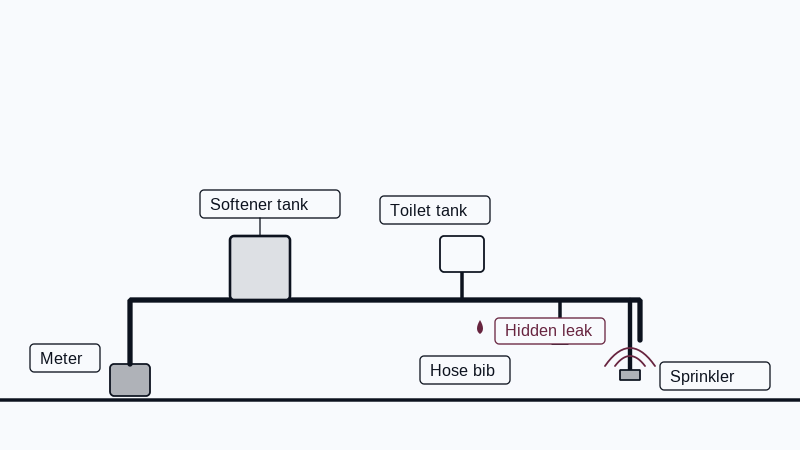
Run as designed, a softener adds a modest amount to your water use, since each regeneration pushes water through the resin and out to a drain. It turns into a bill problem when the valve sticks, the unit regenerates far too often, or the real culprit is a leak or sprinkler unrelated to it. Slauson Plumbing arranges local plumbers for this kind of check; the home page has the complete list of services.
Inspect the softener, then inspect everything else. Most surprise bills end up being a toilet, a hose bib or an irrigation line.
Does a water softener use a lot of water?
No. A household softener takes water only during regeneration, when it backwashes, draws brine and rinses the resin, and each of those cycles sends water to the drain. Against total household use that is a small slice. Your model's manual states gallons per cycle and how often it runs; both depend on hardness and household size.
The regeneration steps are well documented: reverse flow to flush solids, brine drawn through the resin, then a longer fresh-water rinse, all heading to a drain. Heavy water use, a very hard supply, or a badly set timer means more cycles. Review the settings: a valve set to regenerate daily when every third day would do is wasting water and salt.
Could a leak or sprinkler be the real reason for the bill?
Very often. A running toilet, a dripping faucet, a hidden line leak or a broken sprinkler head will outspend any softener. EPA says household leaks average more than 9,300 gallons of water wasted every year, and a crack about 1/32 inch wide in a sprinkler system can waste roughly 6,300 gallons a month.
A broken sprinkler head or a cracked irrigation line is easy to miss because the water soaks into the ground. Walk the yard after the system runs and look for soggy patches, spray where there should be none, and low pressure at the farthest zone. Per the same EPA page, a faucet that drips about once a second can waste over 3,000 gallons a year.
How can a softener end up wasting water?
A stuck valve or a failed control head can leave the unit locked in the backwash or rinse step, so water flows to the drain nonstop. You might hear running water near the softener, see the drain line flowing for hours, or find the brine tank overfilling. In that case, bypass the unit and ask a plumber to examine it.
Signs to check this week:
- Water noise at the softener when nobody is using water.
- A drain line or standpipe that keeps flowing between cycles.
- A salt tank full of water above the salt line.
- A control head that shows the same step for hours.
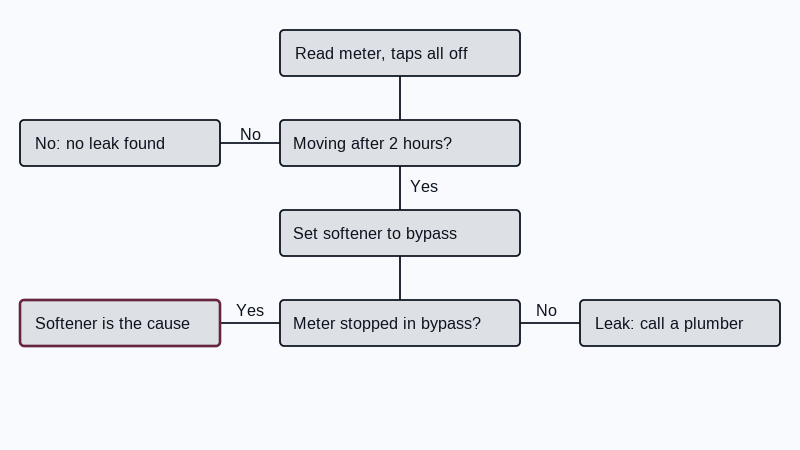
Turn the bypass valve to isolate the softener, and watch whether the meter stops moving, as described below. If it does, the unit was the cause. A plumber can repair or replace the valve; see water softener installation cost for what replacement involves.
What other causes make a water bill too high?
Besides leaks, consider seasonal watering, more people in the home, a rate change, a stuck float in a toilet, and a billing period longer than usual. Set this bill beside the same month last year, and read the usage line instead of just the dollar total. Your bill names your water provider, who can explain the rate.
EPA's benchmark: a family of four that uses more than 12,000 gallons a month in winter may have serious leaks. The provider matters here too. In Bell, more than one water provider serves the city depending on the street, so check the name on your own bill before you call anyone. The page on what drives a high water bill goes through the full list, and high water bill with no visible leak covers the hidden ones.
How do you test whether the softener is the cause?
Do a meter check. Confirm nothing is using water, regeneration included, then record the meter reading, wait two hours without using water, and read it again. A changed number means water is going somewhere. Next, switch the softener to bypass and repeat; if the meter now holds still, the softener is the cause.
Pick a time when you know the unit is not set to regenerate; many run in the early morning. EPA's toilet dye test takes ten minutes: add a few drops of food coloring to the tank, and any color in the bowl means a leak. Repair a leaking flapper before blaming anything else; why a toilet keeps running explains the common parts.
When should you arrange a plumber?
Arrange one when the meter moves with everything off, when the softener runs continuously, when the valve will not stop cycling, or when you find wet ground or a damp wall. Gas, electrical and main-line repairs are regulated work, and in California a contractor license is required for jobs of $1,000 or more or any job needing a permit.
If your softener went in years ago, ask whether it is still the right size for the household. Use the quote form to describe the symptoms, and see softener installation for how a new unit goes in. Keep the last two bills handy; the plumber will want to see the usage trend.
Common questions
How much water does a softener waste per week?
It varies with the model, the hardness setting and the household. A regeneration is a single batch of flush water, and most units regenerate a few times a week or fewer. Find gallons per cycle in the manual and multiply by the number of cycles shown on the control head.
Can a softener increase my sewer charges?
Regeneration water goes to the sewer drain, and where sewer is billed by water use it counts like other drain water. For one unit the amount is small. If your provider bills sewer separately, ask how it is calculated and read the usage line on the bill.
Is softened water bad for sprinklers or plants?
Softened water is generally unsuitable for irrigation, because the sodium it carries can build up in soil. Some homes feed the outdoor spigots from a line that bypasses the softener, so check yours. If the sprinkler line is on softened water, ask a plumber to reroute it.
Should I turn the softener off to check my bill?
Switching it to bypass for a week is a fair test, and it costs nothing. Water will be hard while it is bypassed, so scale and spots may return briefly. Record your meter reading before and after so you can see whether use really fell.