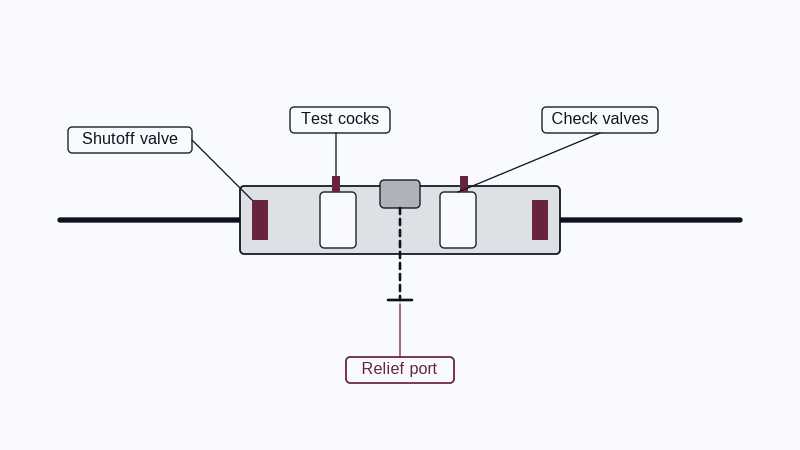
Where your water line feeds a sprinkler system, a fire line or some piece of kit that could hold dirty water, you may find a brass assembly shaped like a pair of fat valves in series. That is a backflow preventer, and a trained tester has to sign it off on a schedule. See the home page for how a request is handled, then begin by describing the device on the quote form.
What does the tester want to see?
The tester wants proof that the internal check valves still hold and that the relief port lets go at its design pressure. Gauges go onto small test cocks, water runs through a fixed order of valve positions, and the readings land on a report that normally goes to your water provider.
Wikipedia defines backflow as liquid, gas or solids moving the wrong way into a drinking water supply. Any junction between drinking water and a non-drinking system is a cross-connection, and the preventer guards it.
Two ways water can run backwards:
- Back-siphonage. Pressure in the supply collapses and suction drags water in reverse, much like a straw.
- Back-pressure. Something downstream, such as a pump, boiler or sprinkler loop, outmuscles the supply.
Springs tire, rubber seats stiffen and grit lodges in seats. Hence a yearly look rather than one inspection at installation.
Whose responsibility is the yearly test?
Whoever holds a connection that the water provider has fitted with an assembly: lawns with irrigation, fire sprinkler lines, pools, restaurant kitchens, factories. Typical homes without those features have none. Not sure? Ask the provider whether a device is registered at your address.
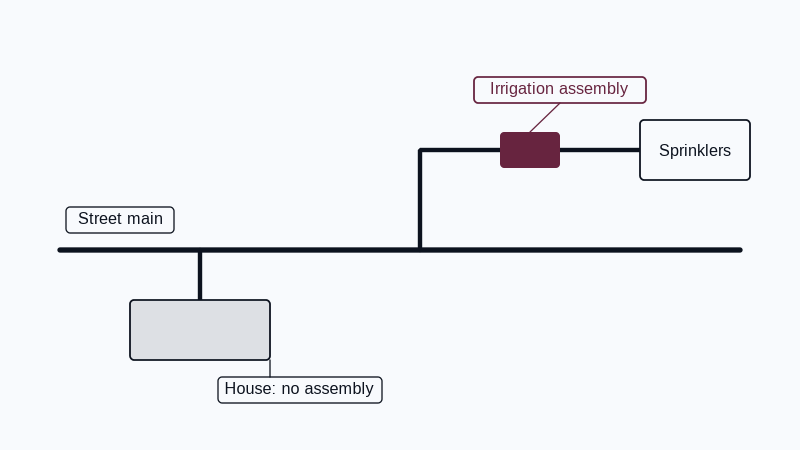
Wikipedia lists sprinkler connections, outdoor taps where a hose could siphon pool water and appliances such as washers and dishwashers, which rely on air gaps built into their design. Power washing with bleach is another case it names.
Around Bell the picture is patchy. Bell, Bell Gardens, Cudahy, South Gate and other neighbours are each served in part by different water providers, and each provider runs its own cross-connection program, so your bill is the document to read. Warehouses and food plants in Vernon and Commerce are far likelier to carry assemblies than a 1940s bungalow.
How often is a test due where we are, in Los Angeles County?
Yearly is the pattern. The County Public Health page on backflow devices describes annual testing by a tester holding the required qualification. On the state side, the Cross-Connection Control handbook (its full name is the Policy Handbook) became effective on July 1, 2024 and got an amendment in June 2025; it took the place of older Title 17 rules. Your provider sets the local details.
Three questions for the provider's office: when is it due, which testers does it accept, and where does the report go? Some mail a notice every year and others expect an online filing. A fresh test is also due after an assembly is installed, moved or repaired, as Wikipedia notes.
Tester credentials are shifting too. The State Water Board noted that one national body stopped issuing tester certificates in October 2024, so ask any tester which qualification they carry and whether your provider recognizes it.
How can you prepare ahead of the tester's arrival?
Find the assembly, photograph its nameplate, dig out last year's tag and read your provider's notice for the deadline. Clear a working space around it, and let everyone on site know there will be a gap in the water supply.
A short list:
- Photograph the device's label and note its size.
- Dig out last year's report or tag.
- Ask the provider for its accepted testers and filing method.
- Mention any sprinkler timer or fire line fed through the assembly, because shutting the supply affects it.
- Expect a short interruption to your water.
Wanting a test tomorrow? That hinges on how booked local testers are and how close your provider's deadline sits, so we cannot promise a date. Staff open submissions from nine to five on weekdays, so submit early when a deadline looms.
Tempted to test it yourself? The job needs calibrated gauges, and providers accept reports only from people holding their recognized qualification. Cheat sheets and videos describe the steps without giving you that standing.
A failed test: what happens next?
Expect a repair or a swap, then a second test, and only a passing report counts. Worn rubber and springs are the usual inexpensive fixes, while a cracked body or discontinued model means the whole unit goes. Hold off using the protected line if the tester tells you to, until it passes.
Have the plumber name the failed part and say if a permit applies. A swap often does need one. California rules give permit work to a contractor with a license, and so is any job that reaches a thousand dollars. Our guides on doing a backflow test and backflow prevention testing add more detail.
Will plumbing or gas changes near the device need paperwork?
Moving or replacing an assembly commonly means a city permit, and the water provider may have to approve the new unit. Within Bell, permits are handled by the city's own building staff at City Hall; the neighbouring cities keep their own counters. Gas piping falls into a separate category and goes to a contractor.
Readers sometimes ask about residential gas piping codes here because one plumber often handles both. California's plumbing code, as adopted by your city, governs gas piping, and a permit plus a contractor are both required. We leave code tables out; the city building office is the authority. For background, read gas line pricing and the notes on flexible natural gas line.
Owners can sometimes pull a permit for the home they live in, subject to inspection. Read the city office's rules before starting.
Common questions
What time slot does a single assembly need?
Plan on a short visit when there is one assembly within easy reach, often under an hour. More assemblies, a shared site or a repair stretch it out, and the tap water stays off during part of the job, so keep a few jugs filled if the household depends on it.
Is there a typical price for a test?
Nothing dependable in print gave a price, so we show none. The total follows how many assemblies there are, their size, how reachable they are, any repair and whatever filing fee the provider charges. Ask for test and repair prices as separate written lines.
Which people are allowed to sign a test report?
Testers must hold the qualification your provider or the health program recognizes, and many providers keep a list of approved names. A general plumber who does not test cannot sign. Get the provider's list before hiring so the result is accepted without argument.
Must someone be on site while it happens?
Someone usually has to open the gate and point out the device and the shutoff, though nobody needs to stand over the work. For a locked yard or shared utility room, arrange entry beforehand and mention irrigation timers or fire lines downstream.
I have never had my device tested. Now what?
First confirm you really have one: look near the meter, around irrigation valves and along any fire line. If you find an assembly with no recent tag, contact your water provider, which may hold a record and a notice you missed, then book a test without delay.