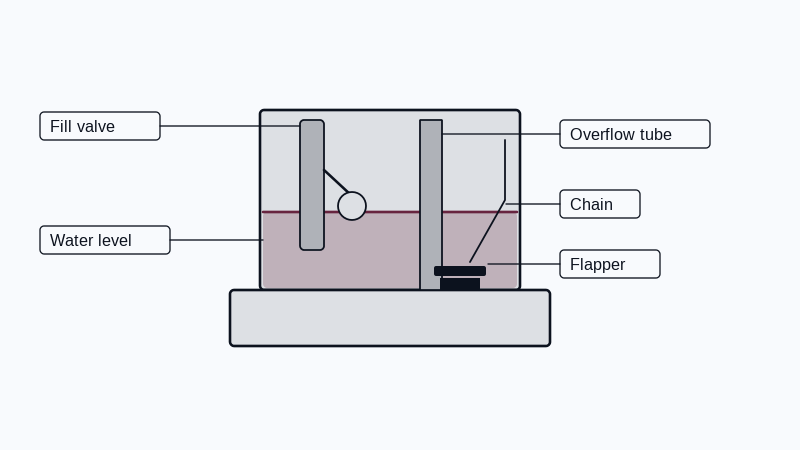
Lift the tank lid and observe for a minute. Water sliding down the inside of the central standpipe shows the fill valve never shuts. A normal level with an occasional hiss or a surprise refill points at the rubber seal on the tank floor, which lets water creep into the bowl. Both parts cost little, and one afternoon is plenty. Other Bell jobs we arrange are on the Slauson Plumbing home page.
What is a constantly running toilet telling you?
Either water is leaking out of the tank into the bowl, or the inlet never closes. Usual suspects are a perished flapper, a float stuck high, a chain with bad slack or a cracked standpipe. Your ears can sort them out before you touch a tool.
A constant hiss says the inlet stays open. A short refill every few minutes with nobody nearby is a phantom flush, meaning a slow leak past the seal. Water pouring into the standpipe says the float rides too high.
The toilet is one of the largest silent water users in a bathroom. According to the EPA, a worn flapper can make a toilet flush by itself or quietly lose thousands of gallons yearly, and flappers should be swapped at least once every five years. That is why even a toilet that looks fine is worth checking.
How can you diagnose a toilet that will not stop running?
The EPA describes a simple dye test. Add a few drops of food coloring to the tank and leave the toilet untouched for about 10 minutes. Colored water showing up in the bowl tells you the flapper seal is failing. Flush right afterward so the tank does not stain.
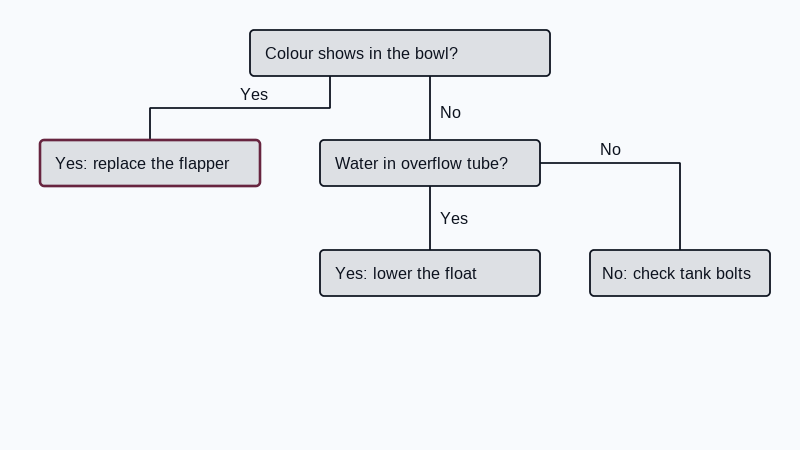
If the bowl stays clear, the flapper is not leaking. Check the overflow tube instead. Water spilling into the tube means the float sits too high, or the fill valve is on its way out and will not shut off. A fill valve is the modern version of the old ballcock, a float-driven valve that shuts off the inlet before the tank overflows.
Last, check the chain. It should hang with a little slack, not so tight that it holds the flapper up and not so loose that it tangles under it. Jiggle the handle: if the running stops, the chain or handle linkage was the problem.
What is the DIY fix for a running toilet?
To swap a flapper, shut the small valve at the wall, flush until the tank is empty, unhook the old rubber piece and clip in a matching one. Take the old part or a photo to the hardware store, since sizes differ and some carry foam floats. Reopen the valve and watch the tank fill.
A new fill valve is a bigger job: loosen the supply line, remove the locknut under the tank, drop the new unit in and reconnect. Adjust the float so the water stops slightly below the rim of the standpipe. The guide to repairing a toilet fill valve takes you through each step, and toilet flapper repair goes deeper on the flapper.
In Bell Gardens, 76.5 percent of occupied homes are rented, and across the Gateway cities many families share one bathroom in a duplex or small house. A toilet that stays running there appears quickly on the water bill. Fix it the day you notice it, and keep a spare flapper under the sink.
Why does the toilet still run after a flapper swap?
Suspect the ring the flapper sits on. Scale or pitting there stops any flapper from sealing. Drag a fingernail around it and feel for grit or ridges. A scrub pad sometimes restores it, but a pitted ring means the whole flush valve needs swapping.
Check the overflow tube too. A crack in the tube lets water drain constantly. The guide to repairing a toilet overflow tube explains the options.
If you have dealt with the obvious parts and the tank still refills by itself, a slow leak may be present at the tank bolts or the bowl connection. Check for dampness on the floor around the base and for water marks on the wall behind. A leak you can't trace is a good moment to ask a plumber.
When should you ask a local plumber to fix it?
Pass it on when fresh parts still leak, the wall valve will not close, the tank is cracked, or damp appears around the base. Each of those hints at a worn valve, a failed seal or a hidden leak that can harm the floor.
You can also send the job along if you rent and the owner should arrange it, or if you simply don't want to climb behind the toilet. Put your details into the quote form and a local plumber is lined up for you. The form is read on weekdays from 9am to 5pm, and toilet repair is among the jobs covered.
Before agreeing to anything, ask whether the plumber is insured and whether the price includes parts. Even once a request has gone to a plumber, get the price confirmed before work starts. For a full toilet swap, read what it costs to replace a toilet.
Common questions
Why does my toilet keep running after I flush?
Most often the flapper has stopped sealing, or the float is set too high. A leaking flapper keeps draining the tank, so the inlet keeps topping it up. Watch for water entering the standpipe, then run the coloring test. Lowering the float or fitting a new flapper normally ends it.
What causes a toilet to refill itself every few minutes?
Water seeping past the flapper lowers the level a little, and the inlet restores it, giving a short refill with no flush. Plumbers call this a phantom flush. Coloring in the tank confirms it. A fresh flapper and a clean seat usually cure it, and the EPA advises changing flappers at least once every five years.
What is the time needed to stop a toilet running?
A flapper takes only a few minutes to fit. A fill valve takes most handy people under an hour. A seized wall valve or corroded fittings stretch that, so ask for a time window with the price, and check if parts are covered by it or billed on top.
Does someone need to be home when a plumber repairs a toilet?
Yes, somebody should open the door, point out the fault and watch it flush at the end. If that is impossible, agree access beforehand and ask for a photo once it is done. A toilet repair seldom shuts off water for the rest of the house.