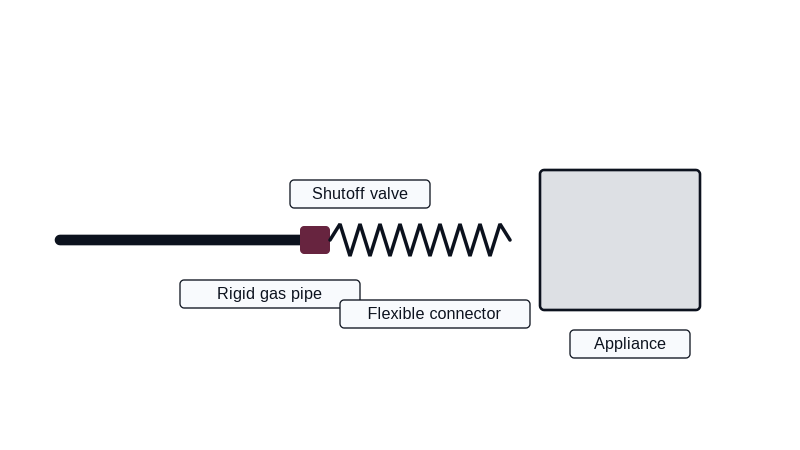
Two different products get called a flexible gas line. One is the short appliance connector, a braided or coated stainless hose tying fixed pipe to a stove, dryer or water heater. The other is corrugated stainless steel tubing, called CSST, which is run through a building the way pipe is. Connectors often come in a half-inch size, but size alone does not make a job legal or safe. Pricing is on the page about gas line costs in Bell, and the home page describes how visits get arranged.
In which places does a flexible gas hose of this size belong?
Mostly as the last link to a fixed appliance, for example a range, dryer, gas water heater or furnace. The connector bends so the appliance can be set in place and, in some cases, moved for cleaning. The 1/2 inch figure is the nominal diameter, and the right size depends on the appliance's gas demand and the length of run.
An undersized line starves the appliance. A range may light poorly, a dryer may run cool and a tankless water heater may shut down when it asks for more gas than the pipe can deliver. That last case matters when a home upgrades from a tank to an instant heater, because the old half-inch branch may not carry enough. Sizing gets its own treatment in the guide to gas tankless water heater installation.
Never reuse an old connector once an appliance is moved. Manufacturers generally tell owners to use a new connector with a new or moved appliance, and an old one can be kinked, corroded or stretched. Never use a connector that has been bent sharply, and never run one through a wall, floor or cabinet partition.
An appliance connector is a part. It is not a way to extend a gas supply across a room. If you are thinking of using one that way, stop and ask a plumber.
Which pipe material carries natural gas in a house?
Black steel pipe is the usual choice indoors, and many homes also have CSST or approved copper where the gas permits. Buried outdoor runs often use polyethylene made for gas. The California Plumbing Code prohibits PVC and CPVC for fuel gas. Your own house depends on its age, and a plumber is able to tell which you have.
According to a published summary of the California Plumbing Code's chapter on fuel gas piping:
- Steel pipe is a standard material.
- CSST must be a listed product and installed according to the code and the manufacturer's instructions.
- Polyethylene gas pipe must be rated and marked as gas pipe.
- Copper is restricted where the gas contains more than a set level of hydrogen sulfide.
- PVC and CPVC may not carry fuel gas.
This summary is from a third-party code site, so confirm the current adopted text with your city's building office. What you see at the appliance may not match the pipe inside the wall, so have the plumber identify it.
A gas smell near any line or connector means leaving the building. SoCalGas advises getting out, staying clear of flames and electrical switches, and then contacting your gas utility from a safe place, or 911 if there is danger. Never attempt to mend the pipe or meter on your own.
How does the code treat outdoor and buried gas lines?
Exterior and underground gas lines face strict rules, which come from the adopted plumbing code and from the building office in your city. Published summaries state that plastic gas pipe may run only outdoors and underground, alongside a buried tracer wire, and must come up through a listed riser. A verified burial depth was not located, so check with your city.
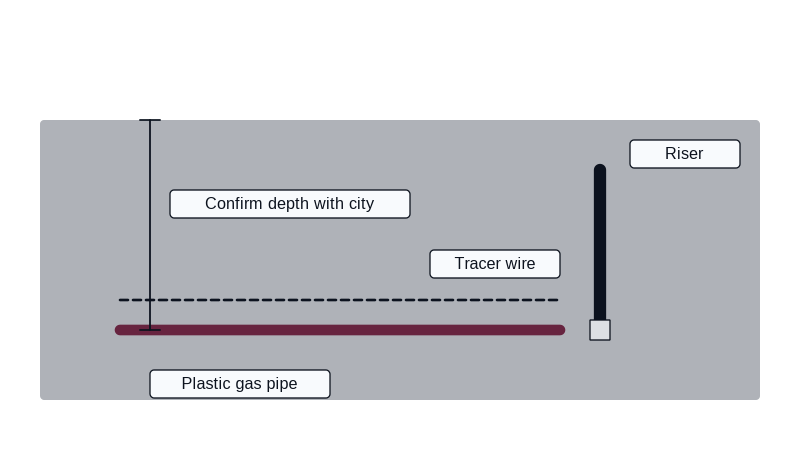
Points from a code summary, worth knowing before you hire anyone:
- Plastic pipe must be transitioned to metal with approved fittings, not ordinary couplings.
- A tracer wire is buried with plastic pipe so it can be found later.
- Piping under a building must be encased or be a listed system.
- Dissimilar metals underground need insulating fittings.
Because depth, cover and conduit rules depend on the section and on local amendments, depth is the single figure to verify before digging. Begin with the building office in your city. In Bell, the city's Building and Safety page is the place to look; every Gateway city runs its own office, and the county covers East Los Angeles.
Before any digging near buried utilities, ask the contractor how underground lines are located and marked. California generally requires a contractor license once work reaches $1,000 in labor and materials combined, and for every job that needs a permit, as new gas piping typically does. Whoever you hire should confirm that the permit and inspection are covered.
Is it possible to put a gas line into a mobile home?
Gas hookups for manufactured and mobile homes follow separate rules, and realistically this is a contractor task involving a permit and a pressure test. The home's piping, the connector and the outside supply must match the unit and the park's utility arrangements. We do not state a code figure here, because the one that applies depends on the home and the park.
What to expect for a mobile home gas job:
- Who owns what. In a park, the park often owns the supply up to a point. Ask management before anyone digs.
- Utility involvement. The gas company may need to set or approve a meter.
- A permit and inspection. Ask your local building office who handles manufactured home permits.
- A leak test. Any new connection should be tested before the gas is turned on.
For background on pipework beneath a mobile home, read plumbing under a mobile home. On the money side, the guide to gas line costs helps.
If you want a local plumber to look at the job, use the quote form. Someone reads messages Monday to Friday, 9am to 5pm, and the business that answers sets its own price.
Common questions
How long does it take to connect a flexible gas line?
Replacing an appliance connector is normally fast, often under an hour including a leak test. New runs take longer: pipe, fittings, permit, inspection and a pressure test can stretch across days, especially if the line is buried. The time depends on distance, access and the inspector's schedule, and a plumber can give an estimate after seeing the site.
Which questions matter before hiring for gas piping?
Ask for the contractor license number and look it up on the Contractors State License Board site. Find out which pipe type and diameter is planned and why, whether the permit and inspection are included in the price, who tests for leaks, and what happens if the inspector requires changes. Get every detail on paper before the job.
Should I stay home while gas piping is worked on?
Yes, an adult should be home. The plumber must shut the gas off at the appliance or meter, carry out the work, test and relight appliances, and will normally ask you to approve the result. Tenants may need the landlord or manager to authorize it, and should pass on the date.
May I purchase a flexible connector and fit it myself?
Changing an appliance connector is a common owner task, although gas piping overall is regulated work. Should you attempt it, use a new connector sized for the appliance, tighten the fittings, test each joint with soapy water and close the gas immediately if bubbles appear. If unsure, call in a plumber instead of risking a leak.