When this month's bill leaps and nothing changed at home, water is probably escaping somewhere out of sight. That cost is easy to miss, because most utilities bill in large units and show only a total. The test below needs two hours and no tools. Run it first, then move on to toilets, outdoor taps and pressure. If a pipe turns out to be the cause, Slauson Plumbing arranges a local plumber through the quote form.
How do I tell if there is a leak somewhere?
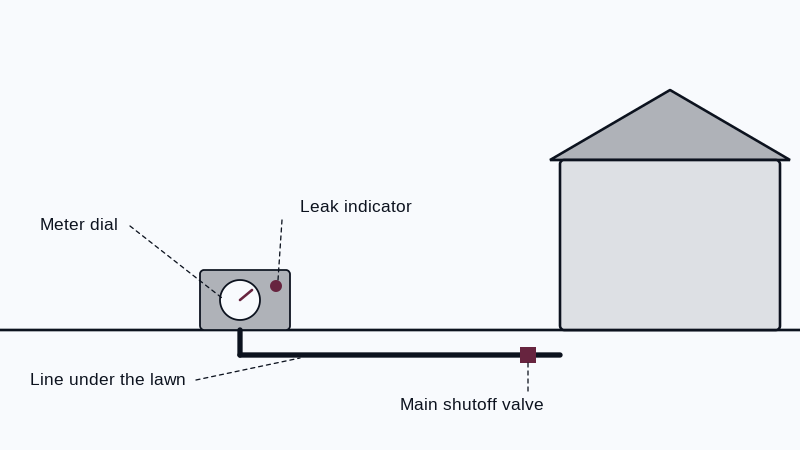
Record the meter reading, keep every tap and appliance off for two hours, then read it again. If the number has changed, water escaped. The EPA recommends this test, and it suits a house, a duplex or a backyard unit alike. Watch the leak indicator too, a tiny disk or hand that turns on flows too small for the main dial.
Before you begin, confirm nothing is running: washer, dishwasher, ice maker, irrigation timer and any water softener that regenerates overnight. Meters usually sit in a box near the street, with a lid you can lift by hand. If you cannot find yours, your water bill names the provider and the provider can say where it is.
An indicator that moves with every tap closed means a leak on the property side of the meter. Next, work out whether it is inside the house or outside. Shut the main valve at the house. If the indicator stops, the leak is inside; if it keeps moving, it lies in the line between the meter and the house, which is often buried. The page on high bills with no visible leak goes through the hidden cases.
Could a running toilet be doing it?
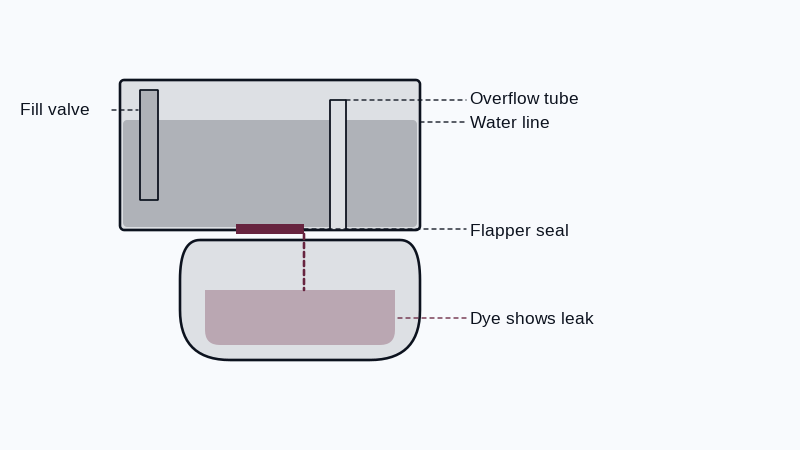
Yes, and it is the commonest hidden culprit. A toilet leaking past its flapper can lose water all day without a sound. To test it, tint the tank water with food colouring, leave the toilet unflushed for ten minutes, and look at the bowl. Any tint there means the flapper or fill valve is passing water. Flush afterward so the tank is not stained.
Across the country, household leaks add up to over 9,300 gallons a year per home on average, per the EPA, and toilets are a big share. A faulty flapper is a few dollars of parts. The pages on why a toilet keeps running and fixing a toilet that will not stop running cover the repair.
Dripping taps count as well. A faucet that drips every second adds up across a month, and an outdoor hose bib that leaks only with the hose attached is easy to miss. Walk the yard and look for a damp patch or a green strip on dry ground.
Is it use, not a leak?
Sometimes the water is going exactly where you sent it. Summer lawn watering, a new bath habit, house guests, a second household in a backyard unit, a pool top-up or evaporative cooling all lift consumption, and some providers charge a higher rate for the extra gallons. Look at the billing period as well as the amount, since a 40-day cycle costs more than a 28-day one.
Compare this month with a quiet one. The EPA points to winter, when the garden is dormant, as the fair comparison: beyond 12,000 gallons a month for four people, serious leaks are likely. If your use truly climbed, think about what changed in the house.
Your provider's online account or app usually shows daily or hourly use, which is the quickest way to see whether the rise is steady, suggesting a leak, or spiky, suggesting behaviour.
Can high water pressure raise a bill?
It can. High pressure forces more water through every open tap and strains fittings, so it wastes water and stresses pipes, heaters and faucets. A building-science guide recommends keeping static service pressure moderate, and adds that many plumbing codes call for a pressure-reducing valve when supply pressure runs high.
A noisy house offers clues. Slamming pipes, a dishwasher that sounds like a drum, faucets that drip and a heater that weeps from its relief valve are all pointers. A plumber can read pressure with a gauge on a hose bib, and a regulator is a modest job compared with the water it saves. Read about low pressure complaints and pipe banging if the symptoms sound familiar.
Does where I live in Bell matter?
It does, because the provider differs by area. Golden State Water lists Bell and Bell Gardens as parts of its service area, and Cal Water's East Los Angeles district also lists Bell, so two neighbours may have different providers, rates and billing dates. Your bill names yours.
Many Bell homes are 1920s to 1950s bungalows and small tract houses with older galvanized or copper pipe, and a lot of the housing is rented or split into duplexes and back units. Older pipe leaks at joints and corroded sections, and a shared meter can hide who is using what. If several households share one meter, ask the landlord how the bill is divided before assuming the leak is yours.
For a hidden line, a plumber can bring leak-detection equipment; the guide to leak detection cost explains typical methods, and slab leak detection and repair covers leaks under a concrete floor.
What should I do next?
Follow this order: two-hour meter test, toilet dye test, walk the yard, inspect the heater's relief valve and the water softener, then compare against a quiet month. If the meter moves with everything off and the cause stays hidden, shut the main valve and arrange a plumber, since a hidden leak keeps costing money every day.
Ask your provider whether it offers a leak adjustment or a payment plan for an unusually high bill. Policies differ by provider and some apply only in certain situations, so ask rather than assume. Keep your meter readings with dates: they show when the problem began.
After that, put the readings and your findings into the quote form. Someone reads it on weekdays from 9am to 5pm, and a plumber from the area replies with a visit date and a price on paper.
Contractors from other trades can overlap here. A cooling or heating contractor can tell you whether an evaporative cooler is drawing water, and a landscaping contractor can check the sprinkler timer. If the plumber finds the supply and fixtures dry, those are the next stops.
Common questions
My bill is high this month, but I was away. Why?
If the meter ran while nobody was home, something is leaking or running. Check the toilets with dye, look for a dripping hose bib, and read the meter before and after a two-hour pause. A timer that switched on irrigation or a faulty softener can also run alone. If the numbers keep moving, shut the main valve and book a plumber.
What causes a high water bill in winter?
Use normally dips in cold months, so a big winter bill usually means water is escaping. Check toilets first, then the water heater's relief valve and every outdoor tap. The EPA's yardstick is that a household of four passing 12,000 gallons in a winter month probably has a serious leak somewhere.
Can a water softener raise my bill?
It can, if it regenerates too often or its valve sticks and runs water to the drain. A softener uses water on every regeneration cycle, so a setting problem shows up as extra gallons. The page on softeners and water bills lists the checks.
Who do I ask if the bill still looks wrong?
Begin with the provider named on your bill, since it reads the meter and can check a reading, test the meter or share usage history. Ask for the reading dates and the meter number. If the property side is the problem, a plumber finds and repairs the leak, and the provider cannot do that for you.
How much water does a leak waste?
According to the EPA, an average home loses over 9,300 gallons a year to leaks, though one stuck toilet or a hidden line can lose more. Size and duration decide the total. Your own meter test is the quickest way to learn whether a leak exists at your address.