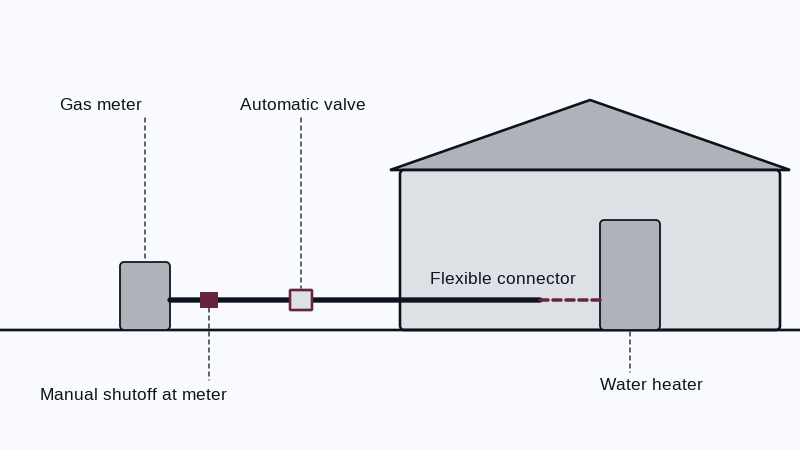
Southern California homes get a shake often enough that everyone has an opinion about the gas meter. The utility's own advice is narrower than the folklore: shut the gas only when you smell it, hear it or spot another sign of a leak, and never try to reopen it yourself. A valve that closes on its own is gas line work, and you can pass the details along on the quote form. The Slauson Plumbing home page shows the other jobs we arrange around Bell.
Should the gas be turned off after a quake?
Only with a reason. SoCalGas says to close the meter if you notice a gas smell, a hissing sound or another sign of a leak, and only when the meter is safe to reach. Shaking does not usually cause leaks, and a closed meter means waiting for a utility worker to reopen it.
Signs of a leak include a gas smell, hissing near a pipe or appliance, or anything else showing gas is escaping. If you notice one, do not flip light switches indoors. Get outside first and report it from there. Your bill names the gas utility; across most of this area that is SoCalGas, while in Vernon the city runs its own. If anyone is hurt or you see fire, call 911.
If you have no sign of a leak, leave the meter alone, check your water heater and any gas appliances for movement, and look at flexible connectors for kinks or pulled fittings.
How do I close the gas, and who reopens it?
The shutoff valve is on the pipe at your meter, and your gas utility's website shows how to close it. Learn that before an emergency. The other half of the rule is firm: after a manual shutoff, never reopen the valve or relight appliances on your own. Only the gas company's field employees restore service at the meter.
After a big quake, service can take a while to come back because crews work through the affected buildings one by one. That is the main cost of closing the valve without cause: no gas for the water heater, the stove, the furnace or the dryer for days. In a renter-heavy duplex, tell the owner or manager before touching a shared meter bank; one tab may serve more than one unit.
Keep wrenches off the pipe fittings downstream of the meter. Those belong to the property owner, and repairing or altering gas piping is plumbing contractor work. In California a contractor license is generally required for jobs worth $1,000 or more in labor and materials, and work needing a permit calls for a license at any price.
How does an automatic shutoff valve work in a quake?
It closes the gas line when it senses strong shaking, even with nobody home. Two types are common. A seismic shutoff valve goes on the house side of the meter and reacts to ground motion. An excess flow valve reacts to a sudden surge of gas, as when a line is torn open. The utility publishes a page describing the excess flow type.
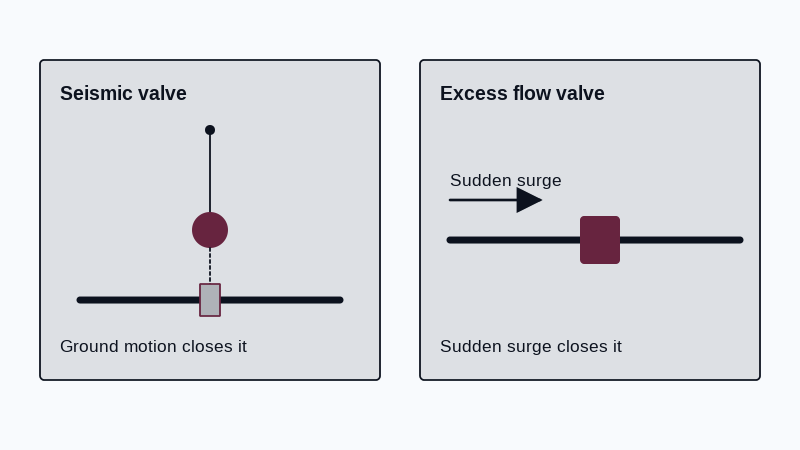
Both are protection against a particular case: a broken line in a building nobody is in. They do not fix a leak. After a valve trips, a person checks the house, and the owner resets it following the manufacturer's instructions. SoCalGas notes that it may charge to reset a valve that closed for a reason other than an earthquake.
Treat with caution anyone who knocks claiming to be from the utility and needing to install a valve. SoCalGas has warned customers about earthquake valve scams, so ask for identification and contact the utility using the number on your bill before letting anyone near the meter.
Does the law require a gas shut off valve, and who fits one?
We have found no state or city rule requiring an automatic valve on an existing house, so regard it as optional protection unless your city's building office or an insurer says otherwise. Fitting one is gas piping, which California expects a contractor with a state license to do, with a permit where the city calls for one.
Worth knowing locally: building offices here are the first source on permit rules. Bell Building and Safety is at City Hall, 6330 Pine Avenue, and accepts applications by email. Huntington Park, South Gate and Montebello operate their own Building and Safety divisions; Maywood and Cudahy permits start at City Hall. East Los Angeles is unincorporated, so the county's building office handles it. Whoever fits the valve should state up front whether a permit is needed and who applies.
Bungalows built between the 1920s and 1950s often carry black iron gas piping extended over the decades, with flexible connectors at the water heater and stove. A plumber assessing a valve will inspect that piping, the connector condition and the meter location in one pass. The gas line plumbing cost page and the guide to flexible natural gas lines give background on that work.
How can an earthquake affect the water heater?
A gas water heater is a tall, heavy appliance with a gas line and vent attached, so it deserves a look after any strong shake. Check that the tank has not shifted, the flexible gas connector is not kinked and the vent is still seated. Never relight a pilot if you smelled gas.
The page on water heater repairs explains what a plumber inspects once a tank has moved. Compton was hit by the 1933 Long Beach earthquake, a reminder that this ground is not always quiet. Renters should ask the landlord who handles the water heater and any valve.
Common questions
Will a plumber turn my gas back on after an earthquake?
No. If you closed the meter yourself, only the gas company's field employees restore service there. A plumber can check the pipes inside your home, repair a damaged line and test it, and the utility handles the meter. Expect to wait if many homes in the area were shut off at once.
Is it okay to put in an earthquake gas valve myself?
No. Adding a valve to a gas line is gas piping work that California expects a contractor to do, and many cities want a permit and inspection. A wrong fitting or poor seal creates the very leak you meant to guard against. Hire a plumber, and have the permit and inspection included in the quote.
What if I smell gas and cannot reach the meter easily?
Do not force your way to it. Get out, keep others away and report the smell from outside to your gas utility, or to 911 if there is danger. Move upwind and away from the building, and never start a car in a garage beside the smell. The utility sends someone to shut it off.
Can I use the form for a gas leak emergency?
No. We read form requests on weekdays, 9am to 5pm, and we are not an emergency service. A gas leak, a smell of gas or a hissing line goes to your gas utility and 911 first. Use the form afterward for the repair work, such as testing the line, replacing a connector or installing a valve.