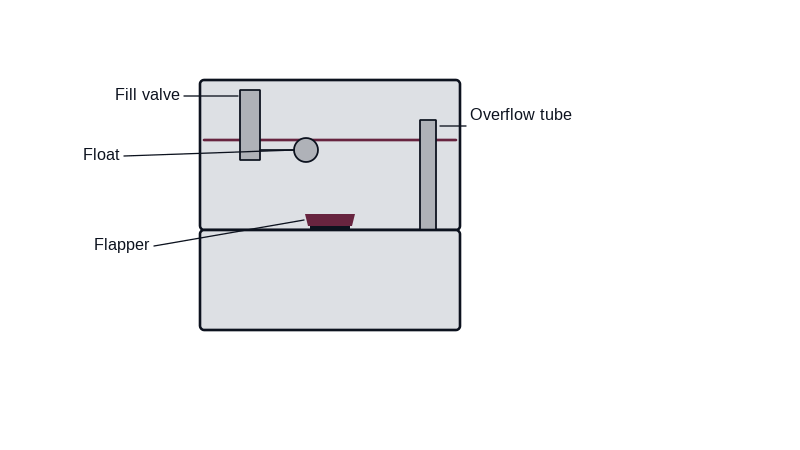
Suspect the flapper first if the toilet tops itself up when nobody has flushed, or if a faint hiss comes from the bathroom at night. It is a rubber seal that lifts at each flush and drops back to close the tank outlet, and once it warps or hardens, water seeps into the bowl. Most owners can replace one in about ten minutes. Renting, or finding the fault lies elsewhere? Fill in the quote form and a nearby plumbing business picks it up. The home page describes the process.
How do I tell whether the flapper is leaking?
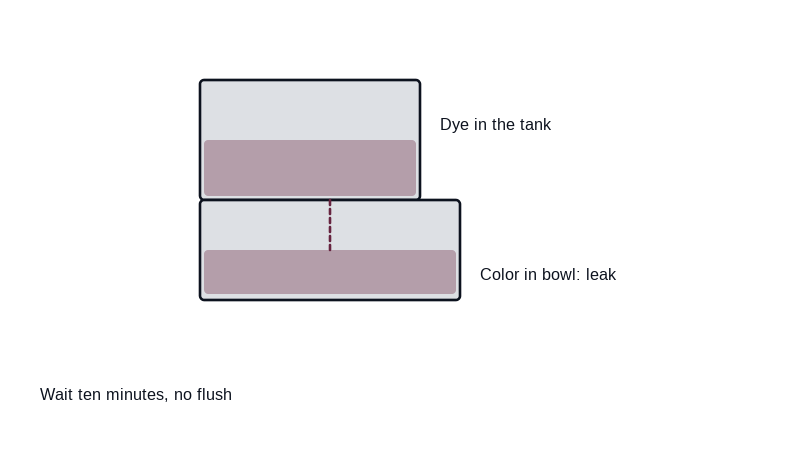
Squeeze a few drops of food dye into the tank, leave the handle alone for roughly ten minutes, and check the bowl afterwards. Any tint showing up in the bowl proves the flapper is passing water. The EPA describes this exact test, and says a worn flapper may waste thousands of gallons yearly in silence, or make the toilet flush by itself.
A second way is the sound test: stand in a quiet house and listen near the toilet. A short "refill" burst every few minutes, with no flush, is the tank topping up after leaking down.
Third, use the water meter. The EPA recommends writing down the reading, leaving every fixture unused for two hours, and checking once more. If the dial advanced, something leaks, and toilets are the most common source. Should the meter move while the dye test comes up clean, keep investigating, and the guide to a constantly running toilet is the place to start.
The EPA reckons an average home leaks away over 9,300 gallons annually, so an inexpensive rubber part that closes one off is good value. A bill that keeps growing? See what makes a water bill climb.
What is the way to swap in a new flapper?
Shut the supply valve at the wall and flush so the tank drains. The old flapper comes off its two pegs beside the overflow tube, and its chain unclips from the flush lever. Push the replacement onto those same pegs, hook the chain back with a touch of slack, reopen the valve and flush once to test the seal.
Step by step:
- Buy the right size. Many toilets take a 2-inch flapper and some newer ones take 3 inches. Bring the worn one to the shop, or photograph the tank and the brand name printed inside.
- Close the supply at the small oval valve on the wall or floor, then flush.
- Sponge out the last water so the seat is visible.
- Clean the seat with a cloth. Grit or mineral crust there makes any flapper leak.
- Swap the part. Clip the new flapper onto the pegs and hook up the chain so it sags by about half an inch.
- Refill and watch. Open the supply, let the tank fill, and repeat the dye test.
Get the chain length right. A taut chain stops the flapper seating fully, and a sagging one can slip beneath it and hold it open.
A stop valve that will not turn, weeps when touched or is encrusted with scale needs its own repair, covered by the page on fixing a toilet shutoff valve. A seized valve is reason enough to hire a plumber rather than force it.
How long does a flapper last, and what wears it out?
The EPA advises replacing flappers at least every five years to keep a good seal. Rubber hardens, warps and picks up mineral film, and toilets in hard-water areas wear them faster. Cleaning products dropped into the tank can speed the damage, and manufacturers often warn against dropping them in the tank.
Mineral film on the flapper seat is often why a new flapper leaks too. Hardness varies between water suppliers across the Gateway cities, so check the annual report on water quality that your utility puts out.
Signs that your flapper is overdue:
- A faint tank refill with no flush
- Water trickling into the bowl
- A flush that only completes while you keep pressing the handle
- A rubber surface that feels slick or sticky, or leaves black on your fingers
While the lid is off, inspect everything else inside. The fill valve (how to repair a toilet fill valve) and the overflow pipe (overflow tube repair) wear out at a similar rate.
What if the new flapper still does not stop the leak?
Then look elsewhere. The usual suspects: a pitted or cracked flapper seat, a fill valve that lets the water rise until it spills into the overflow tube, or a hairline crack running through the tank or bowl. A new flapper on a damaged seat will leak again, and the cure is a seat repair kit or a new toilet.
Work through the likely culprits:
- Level reaching the top of the standpipe. Either the fill valve is set too high or it is failing.
- Rubber looks fine but dye still shows. Run a fingernail around the seat; a rough or chipped edge is the cause.
- Water on the floor. This points to the tank bolts, the supply line or the wax ring, not the flapper. See plumber for toilet leak.
- Runs on after a flush. The chain, flush lever or fill valve may be at fault. The toilet flush repair page covers those.
Once the seat is badly eroded, paying a plumber makes sense. Leveling the seat without cracking porcelain takes a light hand, and a whole new toilet may cost barely more than repeat repairs.
Tenants should report the problem in writing to the owner or building manager. California habitability rules for rentals cover working plumbing, and otherwise you would be watching a running toilet inflate the water bill. The form is checked on weekdays from 9am until 5pm.
Common questions
How long does toilet flapper repair take?
A swap takes about ten to fifteen minutes when the shutoff valve works and you hold the correct part. The dye test adds ten minutes of waiting. A rough seat, a stuck valve or a second tank drain can stretch it to an hour. A plumber on a visit usually finishes well inside that.
Which questions help when hiring someone for a running toilet?
Clarify whether the quote is for the flapper alone or the whole fill and flush kit, whether the seat and stop valve get inspected, and what the call-out fee is. Ask for the dye test to be repeated once they finish. Should they suggest a new toilet, ask what exactly is wrong with yours.
Must an adult be present for a flapper repair?
Yes, either you or someone you rely on. Access to the bathroom and the stop valve is needed, and you will want to see the toilet flush and hold water at the end. Renters may need the building manager to allow entry, so share the visit time and the repair planned.
Can a bad flapper raise my water bill?
Yes. Even a slightly leaking flapper can run for days unnoticed, as water slips quietly from tank to bowl and down the drain. The EPA says a worn flapper can leak thousands of gallons yearly without a sound, which would appear as a higher usage line on a bill.