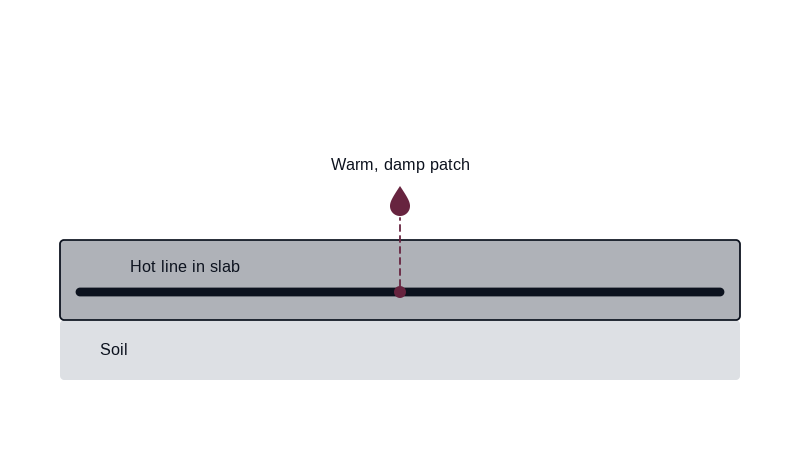
Fixing a single spot is the cheaper first move if only one line has failed and the others are sound. A repipe sends new lines through the attic or walls and leaves the buried ones unused. It costs more but settles the matter for good. Weigh pipe age, the number of earlier leaks and how much of the house is built on the slab. To get started, visit Slauson Plumbing and send the quote form with your details.
What tells you a leak is sitting beneath the slab?
Watch for these clues: floor that feels warm or hot underfoot, a faint rush of water audible when everything is switched off, a bill that rises although your habits have not changed, damp carpet or baseboards, and softer pressure at the taps. One clue justifies a closer look, and two together make a slab leak likely.
The first test costs nothing and needs no help. Turn off every tap and appliance, then watch the water meter dial for a few minutes. If it keeps moving, water is escaping somewhere. A comparable check appears in the EPA's Fix a Leak Week guidance, which compares meter readings taken two hours apart while no water is used.
Before concrete gets cut, the plumber locates the exact spot through leak detection. Common tools are an acoustic listening device held against the floor, thermal imaging that traces hot lines, and pressure tests which shut off one branch at a time. Paying for a proper detection visit spares you a hole in the wrong place.
Should you repair the slab leak or repipe the house?
Choose repair when one known leak sits in an otherwise healthy line and the house has no record of pinholes. Choose a repipe if copper has failed more than once, if several lines show pitting, or if the leak is hard to reach. A repipe usually reroutes the pipes, so the floors stay whole.
Think of it as a trade of money now against money later. Many Bell-area houses were built as small tract homes in the middle of the last century, and pipes under their floors are old. A second slab leak a year after a repair usually pushes owners toward a repipe. The repipe page for Bell covers what that job involves, and the repipe cost guide shows the budget side.
Renters should tell the landlord right away, in writing. In most cases, work on the slab is the owner's decision and cost.
How much should slab leak repair run?
In Fixr's national guide (updated May 2025), a typical slab leak repair averages $2,500 and usually falls between $1,000 and $4,000. Rerouting or repiping is listed at $4,000 to $15,000, and leak detection by itself at $100 to $400. Treat these as national averages from a cost website, never as a quote from Slauson Plumbing.
Price moves with the size and depth of the opening in the slab, whether the leak is beneath a bathroom, a kitchen or tile, how much flooring must be removed and put back, and how many lines run under the concrete. Water damage repair and new flooring are often billed separately. Ask the plumber whether the quote includes a permit and concrete patching.
A full breakdown sits on the slab leak repair cost page.
How should a house on a slab be repiped?
In a slab house the standard approach is an overhead or in-wall reroute. The plumber caps the old lines in the concrete and leaves them unused, then runs fresh water lines through the attic, walls or ceiling space. That puts any future leak within reach instead of beneath the floor. PEX and copper are the usual materials.
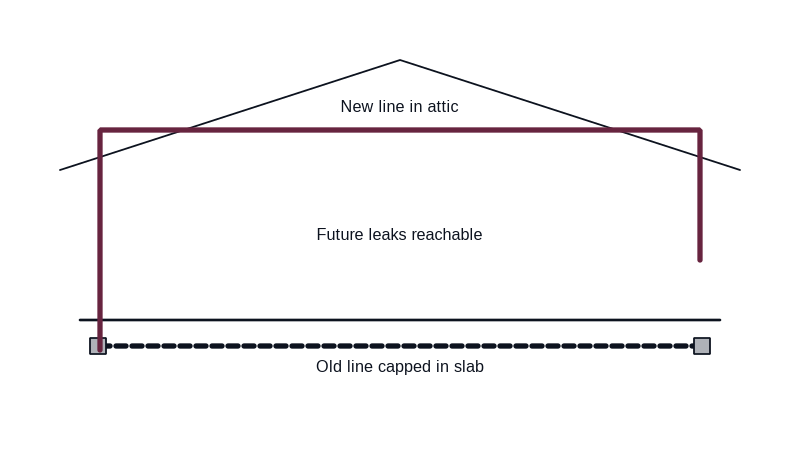
The PEX versus copper comparison sets out the tradeoffs for older bungalows. In a house with mostly copper, repiping part of the system, for instance one bathroom wing, may be an option, but a plumber should see the house first. Opening wall and ceiling finishes adds patching and painting, so ask who handles those.
Can epoxy lining fix a slab leak?
Epoxy lining seals a small leak or thin spot by coating the pipe from the inside. Its appeal is that the floor stays unbroken. It is not right for every pipe: one with a large hole, a bad fitting or a collapse may not take a liner, and some owners and plumbers choose a reroute because it replaces the pipe completely.
If a plumber suggests lining, ask what the pipe condition survey showed, what warranty the lining carries, how it affects flow and whether the city requires a permit. Compare it in writing against the reroute price. The method is the plumber's call after inspecting your pipes, and the quote should say why.
Who is allowed to do slab and repipe work in California?
CSLB rules generally call for a contractor license when labor and materials reach $1,000, and for any permitted job regardless of cost. Supply line changes in a slab house normally go through the city, which in Bell is the Building and Safety office at City Hall, 6330 Pine Avenue.
Look up the contractor's record on the CSLB site before you sign. The deposit is limited to $1,000 or 10 percent of the contract, whichever amount is smaller. Home insurance sometimes pays for access and the resulting water damage but seldom the pipe itself, so go through your policy and speak to the insurer before concrete is cut.
Common questions
What is the timeline for a slab repair or a repipe?
Expect one or two days for a spot repair including concrete patching, and flooring work after that. A complete repipe usually needs several days, since walls are opened, new lines installed, and everything pressure tested, inspected and closed up again. The local plumbing business sets the schedule, so get the water-off hours in writing.
Do we have to move out during the work?
Usually not for a spot repair; the water is simply off for some hours. A repipe disrupts more, bringing dust, noise and interrupted service, and some families stay with relatives for a night or two. Ask the plumber for the hours without water and the rooms that will be opened, then plan around them.
Does slab leak repair differ in Richardson, Encinitas, McKinney, Frisco, Edmond, OKC or New Braunfels?
The techniques are alike everywhere: detection, spot repair, reroute or epoxy lining. Soil, permit offices and local rules differ though. Slauson Plumbing serves Bell and the Gateway cities in California, so use a plumber near your own home for those places and check the local building office about permits.
What belongs on a slab leak quote?
Ask the method for locating the leak, and whether detection is a separate charge. Get repair and reroute prices next to each other, with patching and permit fees listed. Check insurance, request a California contractor license number you can verify, and learn who restores floors and walls after the work.