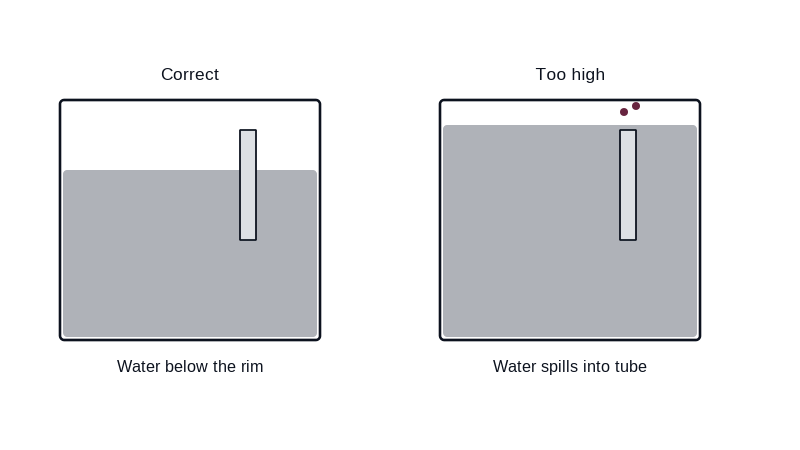
Lift the lid off the tank and you will see a plastic or brass standpipe beside the flush valve. That is the overflow tube. Its sole purpose is to send runaway water into the bowl so the bathroom floor stays dry. If water keeps spilling into it, the fill valve is shutting off too late, and adjusting or replacing it is usually a homeowner fix. Would you rather hand it over? Start at the Slauson Plumbing home page.
What does a toilet overflow tube do?
It works as an emergency drain. The open-topped standpipe is connected to the flush valve at the base of the tank, so when the fill valve sticks open, the extra water drains through the pipe and lands in the bowl, never over the rim. The right water height is about one inch under the top of the standpipe.
Attached to the top is a thin refill tube running from the fill valve, which sends a trickle into the bowl after each flush to reset the trap seal. Seeing that is normal. Seeing water pour over the lip of the standpipe is not: the tank is overfilling. Constant running wastes water, and the EPA's leak guidance reminds homeowners that these small losses add up.
Why is water running into the overflow tube?
The commonest reason is a float set too high, or a fill valve worn out and unable to close firmly. A missing refill-tube clip or a hairline crack in the standpipe can also send water down, and a leaking flapper makes the tank top up repeatedly, which looks alike but needs a different fix.
Watch the tank for two minutes. Water climbing right to the rim of the standpipe means the float or valve is at fault. A normal level with a refill every few minutes means the flapper is leaking into the bowl. The notes on a constantly running toilet and the flapper repair guide cover that second case.
How do you lower the water level in the tank?
Find the small adjusting screw on top of the fill valve, or the rod with a clip that holds the float. Slide the float or turn the screw so the stopping point drops, flush, and recheck. The final level should settle about an inch below the standpipe rim, or at the fill line molded into the tank wall.
If the valve ignores adjustment, mineral grit has probably jammed it. Close the supply, flush the tank empty and fit a new universal fill valve; kits are cheap and include instructions. The fill valve repair and inlet valve repair pages give step-by-step help. If the little supply stop under the tank will not turn, start with the shut off valve guide.
How do you fix a cracked or broken overflow tube?
Replace it. Glue and tape do not last under water. On most modern toilets the standpipe is molded into the flush valve, so you buy a flush valve kit. That means draining the tank, removing the two or three tank bolts, lifting the tank free, unscrewing the big nut underneath and fitting the new valve with fresh gaskets.
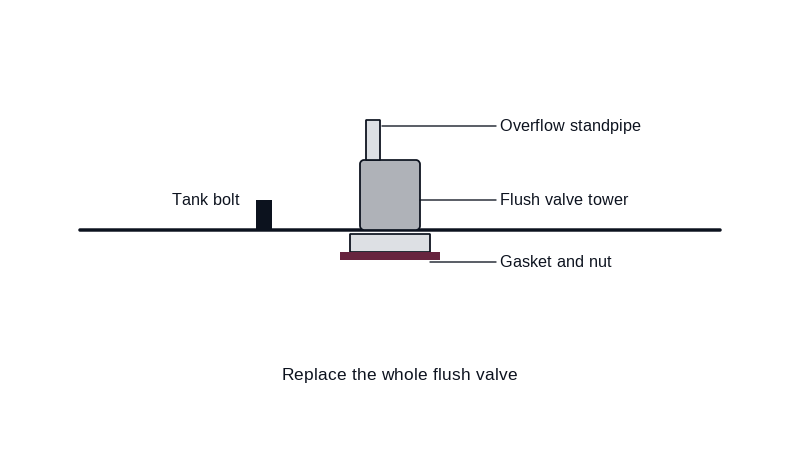
When the tank goes back on, tighten the bolts evenly, because porcelain splits under uneven pressure. If the toilet is decades old, or the tank shows hairline cracks, spending the money on a new toilet can make more sense. Figures for a swap appear under what a plumber charges to replace a toilet.
Is the overflow tube the reason a toilet overflows onto the floor?
No. A bowl that spills over its rim has a blocked drain. The standpipe only manages water inside the tank. When the bowl is rising, stop flushing, lift the lid, press the flapper closed or shut the supply stop, and let the level settle before doing anything else.
Then reach for a plunger. If blockages keep coming back, bring in a plumber; the page on the cost of unclogging a toilet sets out typical drivers, and the clogged toilet page for Bell explains how to arrange help.
At what point should a plumber take over?
Hire one when the tank is cracked, the tank bolts are rusted solid, the supply stop will not shut, the floor around the base is soft or damp, or you are renting and the landlord has not approved the work. Small fixture jobs generally fall under California's $1,000 threshold for contractor licensing.
Request itemized parts and labor, look up the contractor through the CSLB site, and remember the deposit ceiling: the lesser of $1,000 or a tenth of the price. Tenants should report the problem to the landlord in writing, since the fixtures belong to the owner.
Common questions
How quickly can this be repaired?
Moving a float takes a few minutes. Swapping a fill valve is usually under an hour for a plumber. A flush valve replacement takes longer, because the tank must come off the bowl and be sealed again. Visit times are set by the local plumbing business, not by us, so ask for the arrival window in writing.
What belongs in the quote?
Look for parts, labor, any tank gasket work, and what changes if the tank turns out to be cracked. Confirm the plumber is insured and can give a California contractor license number, which the state board lets you verify online. Ask what coverage, if any, applies to the work, and have everything on paper before the visit.
Does anyone have to be there while the plumber works?
Yes, an adult should let the plumber in, show which toilet is affected and flush it together at the finish. Tenants may need the landlord to approve and arrange access. Water to that toilet is off for a short spell, so mention pets, parking or entry limits on your request.
Can the overflow tube be replaced on its own?
On most current toilets, no. The standpipe forms one piece with the flush valve, so you replace the valve kit, including its seal and nut. A few older two-piece designs use a loose tube, but a universal flush valve kit is the common and dependable route, and it also renews the seal that often leaks.