Of every ten occupied homes in Cudahy, more than eight were rented in 2020: the share was 82.3 percent. With 22,811 people in just 1.23 square miles, the city is one of the most crowded in the region. If you manage a building or live in a unit here, the details below will save you time. The areas page shows where Cudahy sits among its neighbors, and a request begins on the quote form.
How does the shape of Cudahy's lots affect plumbing?
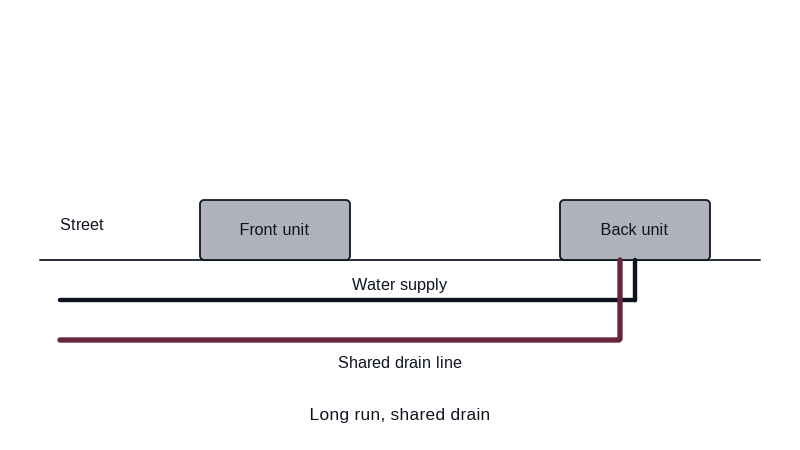
Michael Cudahy sold his land in 1908 as lots of roughly one acre, 50 to 100 feet wide and 600 to 800 feet deep. Those strips were later divided and built over, which is why many Cudahy properties are long and narrow, with buildings stacked front to back. Narrow lots mean long runs from the street connection to the rear units.
A long run has consequences. Water has farther to travel, so pressure at the back unit can sag, and the hot water takes longer to arrive. A drain from a rear unit crosses the whole lot to reach the street, passing under driveways and paving, so one blockage affects every unit upstream of it. Slow drains in the back units of a property deserve a camera inspection before anyone replaces fixtures.
If one fixture group drains slowly while others are fine, it is likely local. If every unit is sluggish, suspect the shared line. The drain guide separates the two.
Why are there so many apartment buildings, and what do they need?
Stucco apartment complexes were added after the 1970s factory closures, according to the city's history, and they now sit beside the older single-family lots. Buildings from that wave are decades old; their water heaters, supply risers and shared drains are the parts that usually need attention first.
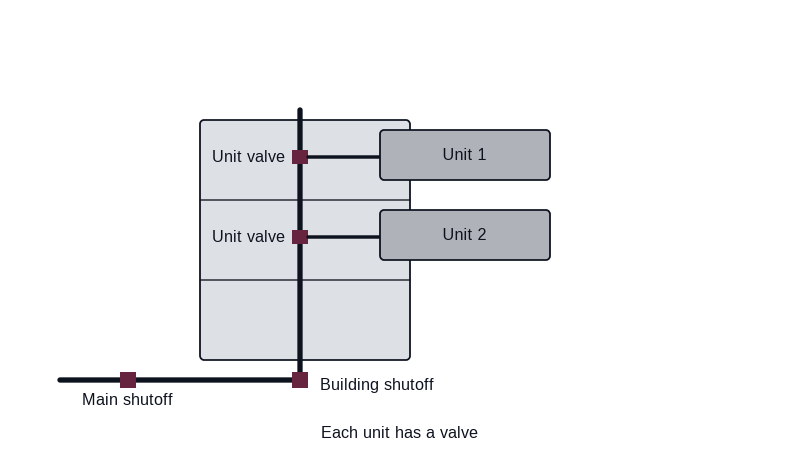
For a manager, the most useful habit is keeping a simple map of shutoffs: one per unit, one per building and the main. Label them, photograph them and share the photos with whoever handles after-hours problems. In a stucco building, a small leak inside a wall can run a long way before showing, so stains on a ceiling two floors down often trace to a bathroom above.
Water heaters in multi-unit properties vary: central boilers, one tank per floor or one per unit. Request a quote that matches the setup you have, and compare it with water heater replacement costs. When a heater leaks from its base, replacement is usually the fix, and what to do in the meantime is on the page about emergency water heater repair.
Where do you go about permits in Cudahy?
Cudahy City Hall is at 5220 Santa Ana St. A county directory lists the City Hall line as 323-773-5143, open Monday through Thursday, 7:00am to 6:00pm. We could not confirm a separate Building and Safety number, so ask City Hall to route you. Replacing a water heater usually needs a permit.
A plumber normally applies on your behalf. Permitted work, and generally any job of $1,000 or more in labor and materials, calls for a California contractor license. If a quote lacks a license number, request it, then verify it with the state board. Gas shut-off valves and lines are contractor-only work, and if you smell gas you should get out and report it to the gas utility from outside.
What is a Cudahy tenant's first move on a leaking pipe?
Shut the valve closest to the leak, take photos, and notify the owner or manager in writing. With 82.3 percent of homes rented, this is the standard path, and a dated message protects you. Then send the form with the address, unit number, a description and the manager's contact so the plumber can arrange entry.
Do not attempt to open walls or cut pipe. In a rented unit, the owner decides on repairs to the structure, and a mistake can turn a small drip into a flooded neighbor's ceiling. The cost depends on access and scope; the plumber cost page lists what drives it.
California tenants have rights about habitability, and a hot-water failure or active leak is part of that conversation. We cannot give legal advice, so for a dispute use official tenant resources rather than a plumber's opinion.
Who supplies water in Cudahy?
Golden State Water serves portions of Cudahy; its Central Basin West page lists Cudahy among the cities it covers in part. We could not confirm whether the city runs any water system of its own, so look at the name on your bill. That supplier is the contact for pressure, meter and leak-adjustment questions.
A building owner with one master meter may see a hidden leak raise every tenant's share of the bill. The guide to a water bill spike with no visible leak describes the meter test: close every tap and see whether the dial moves. An irrigation line or a leaking toilet flapper is a common find.
Common questions
Why are Cudahy lots so long and narrow?
In 1908, Michael Cudahy sold his land as lots of about one acre, 50 to 100 feet wide and 600 to 800 feet deep. Later divisions kept the narrow shape. The practical effect is long pipe runs, shared drains across a whole lot and back units far from the street connection.
Is my landlord responsible for plumbing repairs in Cudahy?
Generally the owner answers for the plumbing of the building, which is why a leak should be reported in writing. Details depend on your lease and California law, and we cannot give legal advice. You can still send a request on this site's form, listing the owner's contact so the plumber can arrange access.
Does Cudahy have its own water department?
We could not confirm one. Golden State Water lists portions of Cudahy in its service area, so the bill for your address settles it. The supplier named there handles pressure, meter and leak questions, and hardness figures are in its annual water quality report.
The full range of services we arrange is on the home page.