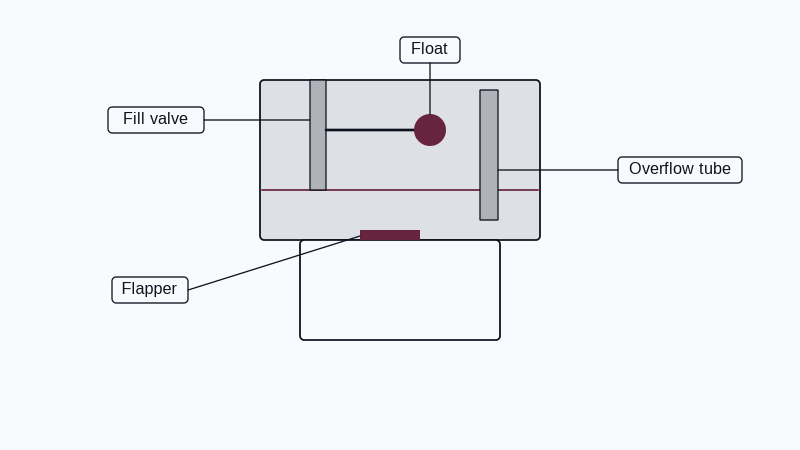
Usually found at the tank's left side, the fill valve is a tall plastic stem with a float that opens at the flush and shuts once the tank is full. Should it stick, leak or refuse to close, adjusting it, cleaning it or replacing the whole unit for a few dollars often works. Other bathroom jobs we arrange in Bell are listed on the Slauson Plumbing home page.
How does a toilet fill valve work, and what signals failure?
Its task is topping up the tank after a flush and halting the water when the float hits the set level. Wikipedia names the older design a ballcock, a float-driven valve closing the inlet before the tank overflows. When failing it hisses, runs nonstop, fills slowly, clanks, or lets water spill into the overflow tube.
Slow filling typically points to debris in the valve or a partly open supply valve. Nonstop running with water down the overflow tube means the valve cannot close. A hiss after the tank fills is a sign of a worn seal inside the valve.
A quick test: flush, then watch. A healthy valve fills quietly and stops with a click or silence. If the sound goes on for minutes after the water looks full, the valve is the suspect, not the flapper. If water stays calm but the tank refills now and then, the flapper is the better guess.
What are the steps to repair or replace a fill valve?
Close the supply valve beneath the tank, flush to drain it, then sponge up what remains. Detach the supply line, loosen the locknut under the tank, remove the old valve and position the new one at matching height. Snug the nut by hand and add a quarter turn, reattach the line and test.
Try inexpensive options before swapping. Turn the adjustment screw, or lower the float, so the water stops sooner. Remove the cap and flush with the supply barely open to wash out grit, holding a cup over the stem against spray. Plenty of valves have a seal or washer you can replace.
Photograph the old valve and its supply connection before shopping. Most valves are universal, though tank height and side or bottom entry can matter. After the swap, set the water level under the top of the overflow tube. For the related parts, see toilet inlet valve repair and toilet flapper repair.
Two cautions. Don't overtighten plastic nuts, which crack. Also replace a rubber supply line that looks swollen or corroded while you are at it, as the water is already off.
Does a flapper gasket need replacing too?
The flapper is the rubber seal on the tank floor. Once worn, water leaks into the bowl and the fill valve keeps refilling the tank. Replacing the flapper, or the gasket on models with one, often beats buying a new valve. The EPA advises replacing flappers at least every five years.
A dye test identifies the culprit: add food coloring to the tank, leave it roughly 10 minutes unflushed and watch for color in the bowl. Color means the flapper or its seat leaks.
According to the EPA, a worn flapper can leak thousands of gallons yearly in silence, so the repair costs little next to the water bill. Take the old flapper to the store, compare the width and check for a foam float. A rough seat will make even a new flapper leak, and that is the time to ask a plumber. The page on toilets that keep running takes you through the sequence.
What if the toilet supply line bursts?
Shut the valve beneath the tank. If it refuses to turn, close the house main water valve. After that, mop up and photograph the damage. A burst supply line, the short braided or plastic tube from the wall to the tank, can pour water fast and needs replacing, not patching.
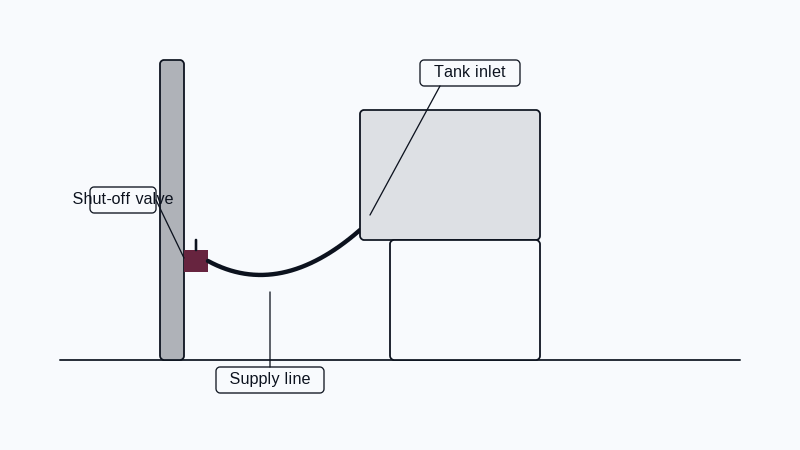
Turn the water back on only after a new line is fitted with new washers. Many supply lines fail at the nut or from age, and one that bursts once tends to have neighbours at the same age in the same bathroom.
A leaking pipe inside the wall or floor, or a failed shut-off valve, belongs to a plumber. Read emergency plumber for a burst pipe for more. In Bell Gardens, 76.5 percent of occupied homes are rented, so a tenant should tell the owner or manager quickly, since the building's damage is the owner's concern.
When is it time to ask a plumber for toilet repair?
Seek help when the shut-off valve leaks or won't close, the new valve keeps running, water appears around the base, or the tank has cracked. Repair then may mean a new shut-off, a new toilet or work under the floor, none of it a quick DIY fix.
Fill in the quote form and a local plumber will be lined up to visit. Staff read forms on weekdays, 9am to 5pm. If a whole new toilet is on your mind, what a toilet replacement costs gives the national picture.
Check with the plumber that parts come with the price and that the plumber is insured, and get the figure on paper before the visit.
Common questions
What does a toilet fill valve cost?
No sourced price for a fill valve is on hand, so none is given. Hardware stores sell them among the cheapest repair parts. A plumber's visit brings labor, so get parts and labor priced in writing before agreeing to anything.
What is the time needed to replace a fill valve?
A handy person normally finishes inside an hour once the water is off, draining and testing included. A stuck shut-off valve, corroded nuts or a cramped bathroom slow things down. A plumber may do it faster, and should give you a time window with the price.
Can I fix the fill valve without replacing it?
Sometimes. Adjusting the float, cleaning grit from the valve or replacing a worn seal can fix running or slow filling. If the valve still won't shut off after that, or it is cracked or very old, replacement is cheaper than repeated adjustments.
Must I be home during a toilet repair?
A person should unlock the bathroom, point out the fault and inspect the result at the end. When you can't attend, arrange access and request a photo of the completed job. The toilet's water is off briefly while the remainder of the house typically keeps running.