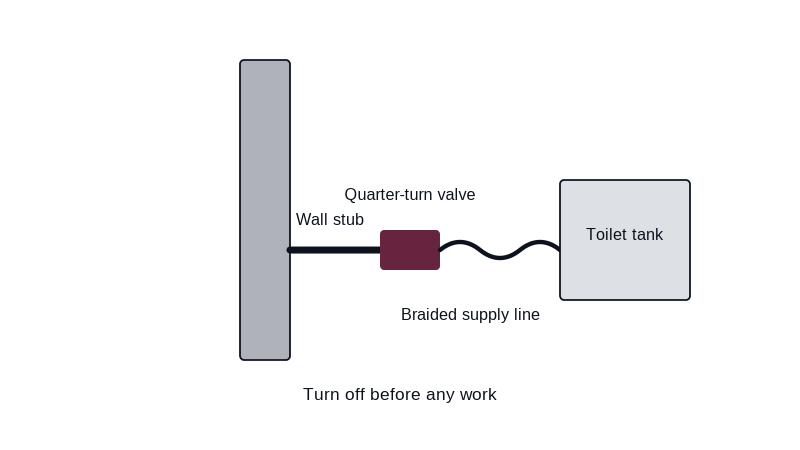
Often called an angle stop, this valve is the small fitting on the wall or floor that feeds the tank. A drip at the stem can be repaired, but a valve that is stuck, corroded or unable to seal should be replaced. The job is short, and this page helps you judge which case you have. Go to Slauson Plumbing when you would like a local plumber to take it on.
Why does the valve under a toilet fail, and what is it?
It is a small valve sitting between the supply pipe in the wall and the flexible line running to the toilet tank. Closing it cuts water to that toilet only, which lets you fix the fill valve or flapper without shutting the main. Failure comes from a hardened rubber seat, mineral deposits jamming the stem and old valves seldom being turned.
Many valves in houses built between the 1920s and 1950s are the multi-turn kind, and some sit on galvanized or old copper stubs that have been painted over many times. They seize because nobody has used them in decades. Newer quarter-turn valves have a ball inside and fail less, and they show clearly with a lever that points along the pipe when open.
What is the fix when a leaking stop valve drips?
The leak location decides the fix. A drip from the handle stem often stops after tightening the packing nut by about an eighth of a turn. A drip at the joint with the toilet supply line means the nut or washer needs tightening or replacing. Water weeping from the valve body itself calls for replacement.
Find the wet spot first with a dry towel, because water runs along pipe and drips from a lower point. Close the main water valve before touching anything stiff, since an old valve can snap or fail when turned. Overtightening a nut on brass can crack it. EPA leak guidance also suggests a dye test on toilets, which tells a tank leak from a valve leak. The page on a toilet that keeps running helps with that part.
What should I do if the valve will not turn or will not close?
Never force it. Apply a little penetrating lubricant to the stem, wait, then try a gentle back and forth motion. If it still refuses to move or does not shut off fully, the valve has failed. Two options remain: close the water at the main and replace the valve yourself, or arrange for a plumber.
A stuck valve is a cue to learn where your main shutoff is. An old valve that breaks under force can flood the bathroom, and a toilet lacking a working valve means shutting off water to the whole house for every future repair. Replacing it is worth doing once, with a quarter-turn type.
What are the steps to replace the valve?
Close the main, flush and sponge the tank and bowl dry, then unscrew the supply line. Take off the old valve by loosening the compression nut or, with a soldered copper stub, cutting the pipe. Fit a new compression valve using a new ferrule, restore the supply line, reopen the main slowly and watch for drips.
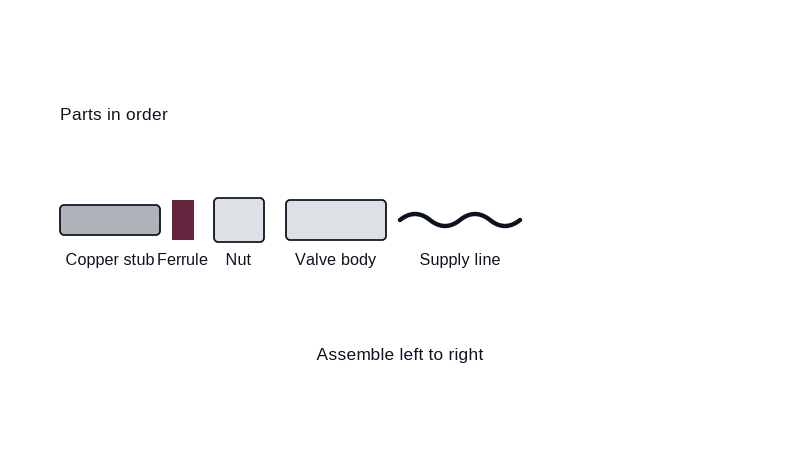
The task is simple on a clean copper stub, and awkward when the stub is galvanized steel, soldered, corroded or hidden behind drywall. Pick a quarter-turn valve with a braided stainless supply line. Renters should ask the landlord first. Any work that opens the wall or needs soldering belongs to a plumber, who arrives with suitable parts. The page on repairing a toilet inlet valve covers the other valve in the tank.
When does a stop valve job need a plumber?
Pick a plumber when the valve is soldered, the pipe behind it is corroded, the wall is wet, the stub will not accept a new valve, or the main shutoff will not close. Small swaps usually sit under California's $1,000 contractor-license threshold, but any job needing a permit still requires one.
Ask for the valve, supply line, labor and any wall patch itemized. On larger work, verify the contractor's license number on the CSLB website ahead of agreeing. Many plumbers will replace the house's other stops in one visit, which often costs less than separate trips. Replacing a whole toilet is the bigger job covered on another page.
Which replacement valve and supply line should you buy?
Buy a quarter-turn angle stop that matches the pipe coming out of the wall, most often a 1/2 inch nominal copper stub with a 3/8 inch outlet for the toilet line. Combine it with a braided stainless supply line of the right length. Look at what the old valve connected to before shopping, and take it with you.
Compression valves slide over a bare copper stub and seal with a small brass ring, so the stub must be round and smooth. Sweat valves are soldered and suit a plumber. Push-fit valves are fast but pricier. A line that runs too long kinks, and one too short strains the fitting. Finger-tight with a slight extra turn is enough for the nuts.
Common questions
What time does a valve swap require?
On clean copper a plumber typically needs under an hour, leak test included. Tightening a packing nut takes minutes. Soldered stubs, corroded pipe or wall repair add time. The local plumbing business sets visit times, so none can be promised. Request an arrival window in the written quote.
What belongs in the quote?
Learn whether the price covers the valve, the supply line and any drywall patch, and how a too-corroded old pipe would be handled. Confirm insurance and a California contractor license number that you can verify on the CSLB site, and have the price on paper.
Should somebody be home?
An adult should admit the plumber, approve the work and check for leaks at the end. Renters may need the landlord's approval before anyone opens the wall or replaces fixtures. Water is off briefly, so mention pets, gates and parking on your request.
Can I just use the main valve instead of a bad stop?
For a single repair, yes. As a standing plan it is poor, because every future toilet job then shuts water to the whole house, and a failed stop can seep between repairs. A working valve at each toilet is a small cost that saves a bigger problem.