Most households give backflow no thought until a notice arrives from the water company. That notice means a device on your line must be tested by someone the supplier accepts, and the result goes back to the supplier. If the topic is new to you, the plain version follows. For other plumbing questions, the Slauson Plumbing home page lists the jobs we arrange, and the quote form is how you ask for a tester.
What is backflow, and what does a prevention assembly do?
Backflow means water moving the wrong way, from a garden, pool, sprinkler line or boiler back into the pipes that feed the neighborhood. A prevention assembly is a valve arrangement that stops it. Wikipedia describes backflow as the unwanted reversal of flow into a potable water supply, and lists the usual designs: vacuum breakers, double check valves, reduced pressure devices and the plain air gap.
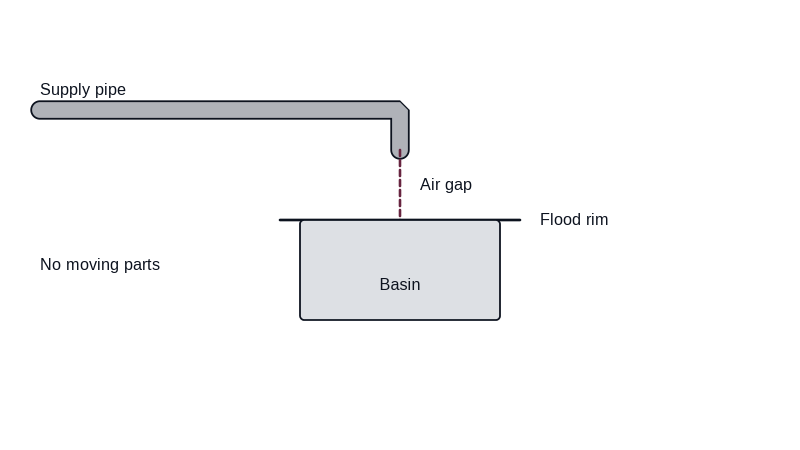
The air gap, which has no moving parts, is the simplest and most dependable protection. Everything else relies on springs and seals that wear, and that is why a test exists.
Why does a device need testing at all?
A valve with moving parts can stick or leak without showing anything at the faucet. Testing proves that the check valves close tightly and the relief opening works. Wikipedia notes that many states and local authorities require annual testing, and that a test is also expected when an assembly is installed, moved or repaired.
Because the supplier carries the risk of contamination for the whole neighborhood, it is the supplier, not the city building office, that usually sets the schedule. Your water bill names who it is.
Who sets the testing rules in Bell and the Gateway cities?
Your water provider does, and in this area that is not one company. Golden State Water serves parts of Bell, Bell Gardens, Cudahy, Huntington Park and South Gate. Cal Water's East Los Angeles district serves Bell, Commerce, East Los Angeles and Montebello. Some cities run their own water departments. Check the bill, then ask the provider what it wants.
Do not assume a neighbor's notice applies to you. Properties differ: a home with a lawn sprinkler system, a pool fill line or a fire sprinkler connection is more likely to have an assembly than one without. Maywood is reported to be served by mutual water companies, so confirm with the company named on your bill.
Does a typical house have a backflow device?
Many homes have a small one without knowing. Hose bibbs often carry a vacuum breaker, the little cap on the outdoor faucet, and irrigation systems are commonly fitted with a pressure vacuum breaker on the sprinkler line. Larger assemblies belong to fire sprinkler systems, pools, commercial buildings and shops.
Look for a brass or bronze device with test cocks on the side, usually above ground near a meter or sprinkler valves. If you cannot locate one and the supplier has never asked, you probably do not have a testable assembly. The supplier's list is the authoritative answer.
What happens during a backflow test?
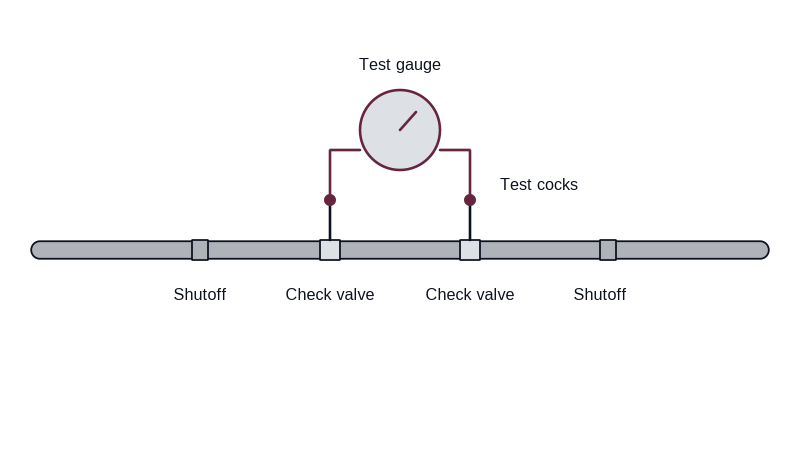
The tester hooks a gauge to the test cocks, closes the shut-off valves in sequence and reads the pressure drops to see whether each check valve holds. Water goes off briefly at the property, and the tester writes the readings on a form for the supplier. A device that fails is repaired or replaced and tested again.
For a house the test is usually a brief visit, though a failed one adds repair time. Parts for repair or replacement depend on the model, so the quote follows the test. Plumbers commonly offer testing alongside repair; some water suppliers keep a list of testers they accept.
What is the biggest red flag in a home inspection?
There is no single one. Wikipedia describes inspectors flagging structural distress, moisture leaks, mold or excessive moisture, and improper electrical conditions, and insurers may ask for a four-point inspection of roof, heating, electrical and plumbing. For plumbing, the red flags are active leaks, damp stains, low pressure and old supply pipe.
A missing or unlabeled backflow device is rarely the headline item, but an irrigation system with no vacuum breaker, or one that fails its test, is worth fixing before closing. The inspector describes condition on the day and does not promise life expectancy of the parts.
What does a mobile home plumbing inspection cover?
It looks at the same things: supply pipe, drains, the water heater, shutoffs and any exposed leaks, with extra attention to the underside of the floor, where pipes and drains run. Backflow rarely comes into it unless the lot has irrigation or a separate service line. Ask the inspector what the scope is before the visit.
Can you test a backflow assembly yourself?
No. Testing needs calibrated gauges and a tester the supplier accepts, and the result is recorded for the supplier. A homeowner can look for leaks and keep the assembly clear of weeds, but should not open or adjust it. Repair work on the assembly is plumbing work, and in California a contractor license is required once labor and materials reach $1,000 and for any job needing a permit.
Use the quote form to send your address, the water provider named on the bill and what notice you received. Forms are read on weekdays between nine and five.
Common questions
How long does backflow prevention testing take?
For a house, expect a short visit with the water off for part of that time. A failed test adds the time needed for repair or replacement, and the supplier may set a deadline for retesting. Larger commercial assemblies and fire sprinkler lines take longer. Ask the tester for an estimate when booking.
What should you confirm with a tester before booking?
Ask whether your water supplier accepts them, whether they file the report or you do, what a repeat test costs and what happens if the device fails. Have the price put in writing, including repair parts. Compare the test date with the notice's deadline so you are not penalized for being late.
Does the tester need someone at the property?
Usually someone needs to let the tester in to reach the assembly and shut off water, and to be told the result. If the device is outdoors and accessible, you may only need to be reachable. Mention pets, gates and the location of the shut-off valve to the tester before the visit.
How often does backflow prevention need testing?
Many suppliers ask for a test every year, and also after an assembly is installed, moved or repaired. Your supplier's notice states its own interval and deadline. Keep the test report: the supplier may ask for it, and a plumber can use it when something is repaired.