National guides quote a typical installed price of $200 to $6,000 for a water softener, with an average near $1,500, and labor for a whole-house unit of $150 to $1,000. Those are national figures for a guide, not a quote from us, and a Bell job can land outside them. If you want the work explained first, read water softener installation service, or start at the Slauson Plumbing home page.
What do typical water softener prices look like?
One national guide lists the full range as $200 to $6,000 with a $1,500 average, and labor for a whole-house unit at $150 to $1,000, more when new pipe must be run. System type shifts the total most, so it matters more than the average.
| System type | National guide range |
|---|---|
| Magnetic | $200 to $600 |
| Ion exchange unit | $500 to $3,000 |
| Salt-free | $800 to $4,000 |
| Dual-tank | $1,000 to $5,000 |
| Reverse osmosis | $1,500 to $1,800 |
| Well water systems | $500 to $1,500 |
An ion-exchange softener swaps the hardness minerals for sodium on resin beads, then recharges the beads by flushing them with brine. That is the style most people mean by a softener. The table shows how system types compare; it is no price sheet for any single house.
What are the ongoing costs after the softener is in?
Salt is the main running cost: in the same guide a 40-pound bag costs about $5 to $10, and yearly maintenance (inspect, flush, refill) about $100 to $300. A salt-free unit trades salt for a potassium replacement at roughly $50 to $70. Add these to the install price when comparing options.
Renting is another route. The guide lists $25 to $50 a month for a rental unit, which spreads the cost but adds up over years. Self-cleaning features add $300 to $1,000 to the unit price.
None of these numbers covers extra plumbing. A new drain connection, bypass, electrical outlet or section of pipe goes on top. The guide puts new piping at $0.50 to $1.00 per linear foot and electrical rerouting at $3 to $5 per square foot.
Which factors move the final figure?
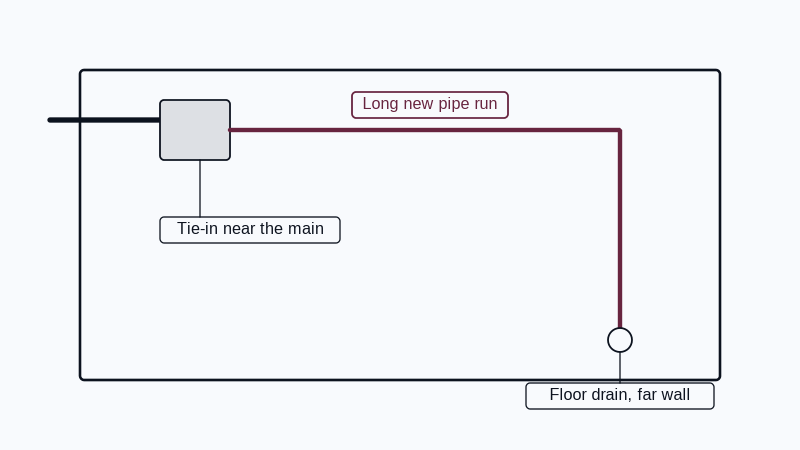
Capacity, system type and the amount of pipework that must change set the number. A bigger household needs a larger unit, rated in grains, while a cramped garage or a faraway drain adds labor. Local hardness affects sizing, so check your water provider's annual report before shopping.
Bell has more than one water provider by area, and your bill names yours. As one example of reading a report, Cal Water's 2025 report for the Commerce system gives average total hardness of 146 ppm, or about 8.5 grains per gallon by the usual conversion. That figure belongs to Commerce, not to your street, so check your own.
Other factors worth raising while you collect prices:
- Location of the unit. Garage, side yard or closet each change pipe runs and drain access.
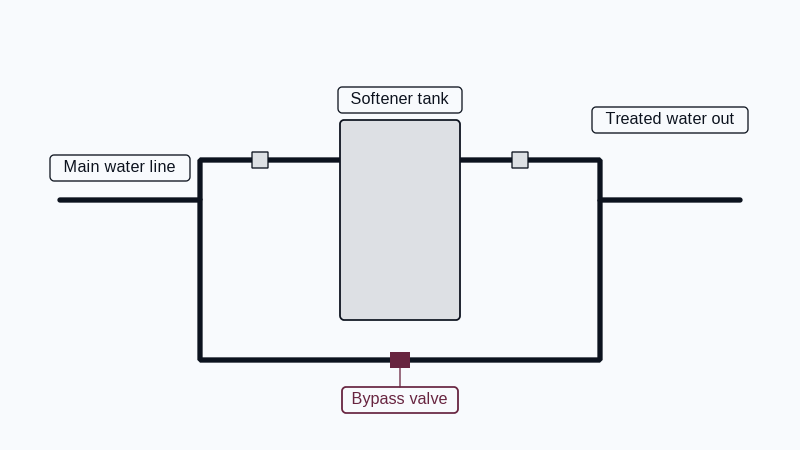
- Bypass and shut-off valves. A softener normally needs a bypass so water keeps flowing during service.
- Drain air gap. The discharge line needs a proper gap; ask who installs it.
- Permit. The guide says a permit may be required but names no price. Ask Bell Building and Safety, or the plumber will.
- Older pipe. Many Bell homes are bungalows and small tract houses built between the 1920s and 1950s, so a plumber may need to clean up corroded sections before tying in.
What do brand and kit prices look like for Kinetico, Culligan, Rheem, Costco and AquaSure?
The national guide gives no brand-by-brand prices, and we found no brand figures worth quoting here. Kinetico, Culligan, Rheem, Costco and AquaSure sell units at different price points, and some bundle installation. Ask each seller for the equipment price and the install price as two separate lines.
A loop installation, which sends softened water to only part of the home, usually needs extra pipe and valves and prices above a simple tie-in at the main. Have the plumber quote the loop and the simple version together.
Two things to confirm with any retailer-bundled install: who the installing plumber is, and whether the plumber pulls any permit. The brand name on the box doesn't answer either question.
How can you estimate your own installation cost?
Build a rough budget in steps: pick a system type from the table, include $150 to $1,000 for the installer's labor, then add whatever your layout demands. A simple tie-in beside the main stays at the cheap end of labor, whereas a long pipe run, a loop or a new drain pushes it higher. No reliable online calculator can see your garage.
A worked example using only the guide's figures: an ion-exchange unit at $500 to $3,000, combined with $150 to $1,000 in labor, totals $650 to $4,000 before extras. The span is wide because it ignores your house, and the written quote will narrow it.
Treat the average ($1,500) purely as a reality check. If a quote sits far above or below it, ask what is different.
How should I compare softener quotes?
Set the quotes next to each other and go line by line: unit size and model, installer labor, bypass valve, drain connection, new pipe or outlet, permit, removal of an old unit and start date. A low total missing the drain or permit often ends up costing more. State law limits a deposit to the lesser of $1,000 and 10 percent of the contract price.
A contractor license is generally required in California when labor and materials together hit $1,000, and for every permitted job. Verify the license through the state licensing site before signing. If a salesperson in your home pushes a same-day deal, step back and get a second price.
Compare long-term cost as well as the install fee: salt or potassium, yearly maintenance and whether a rental is cheaper over five years. For the effect on water use, see the page on whether a softener pushes the water bill up; the guide to preventing hard water scale covers the other side. To move ahead, fill in the quote form.
Common questions
What is the time needed to install a softener?
With an accessible line and a simple tie-in, the plumber may finish in a few hours with a short water shutoff. A loop, a new drain or tight quarters stretch it out. Get the time window written beside the price, and ask what happens if the visit overruns.
Which question should come first with a softener installer?
Ask what the price covers, who holds the contractor license, whether the plumber pulls the permit, how the bypass and drain will be set up, and at what point the water is shut off. Ask who supplies salt or potassium and handles service later. Have everything in writing before any deposit leaves your hands.
Must I be present while the softener goes in?
Yes, first to show where the unit will sit and then at the end to watch it work. The water stays off for part of the visit. If that is impossible, arrange access with the plumber beforehand and request photos of the finished work.
Is a water softener worth it in Bell?
It depends on what comes out of your tap. Hard water builds scale on faucets and within water heaters, and a softener reduces that. Start by reading the hardness figure in the yearly report from your water supplier. Prices vary widely, so weigh install cost, salt and maintenance against the scale you actually see.