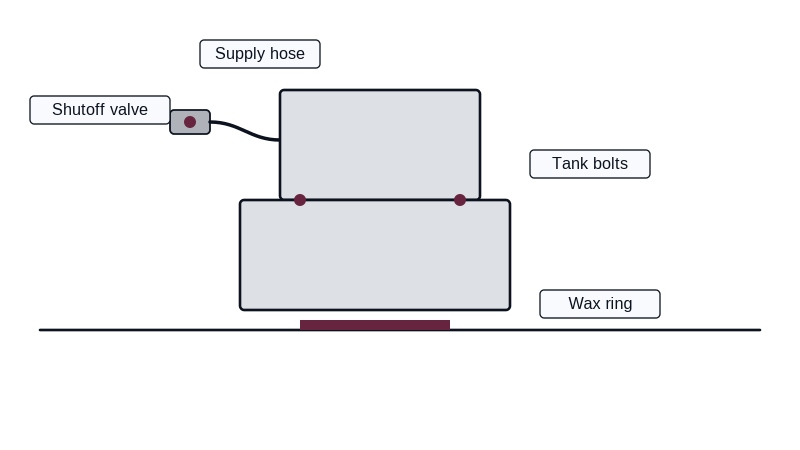
Puddles near a toilet come from a short list: a flexible hose, the wall valve, the tank bolts, the seal under the bowl, or sweat on a cold tank. A dry paper towel and a flashlight will find it. An obvious leak is easier than the silent kind inside the bowl, and both are covered below. Want someone to look at it? Send the quote request, or read on the home page about who runs this site.
Where is my toilet leaking from?
Wipe every surface dry, then press a fresh paper towel against one joint after another. Begin at the wall valve, move to the flexible hose and the underside of the tank, then the bolts joining tank and bowl, and finish at the floor seal. Whichever spot soaks the towel first is the source. Dampness right at the foot of the bowl usually means the wax ring or floor bolts.
Match what you see to the likely cause:
| Where the water shows up | Likely cause | Who fixes it |
|---|---|---|
| Drips from the wall valve stem | Packing nut or worn valve | Owner can try a snug turn; plumber if it keeps weeping |
| Wet supply hose, top or bottom | Loose nut or failing hose | Owner often replaces the hose; shut the valve first |
| Dripping from the bolts under the tank | Worn tank-to-bowl gasket or loose bolts | Owner with care; plumber if porcelain is cracked |
| Puddle at the base of the bowl | Failed wax ring or loose floor bolts | Plumber, or a confident owner |
| Beads of water all over the tank | Condensation, not a leak | No repair, but check the room's ventilation |
Cracked porcelain, on tank or bowl, cannot be repaired dependably. If a hairline crack seeps, replace the toilet; what a toilet replacement costs shows the prices.
If the water stops once you wipe and wait, the cause may have been an overflowing flush or a damp bath mat. Give it an hour, dry the area again and inspect each joint before drawing conclusions.
What if the floor stays dry but I suspect a leak?
Stir a few drops of food dye into the tank and leave it ten minutes with no flushing. If the bowl water turns tinted, the flapper is seeping into the drain. The EPA describes the test and notes that a worn flapper can quietly lose thousands of gallons a year. If the water meter still creeps while every fixture is off, a leak exists somewhere in the house.
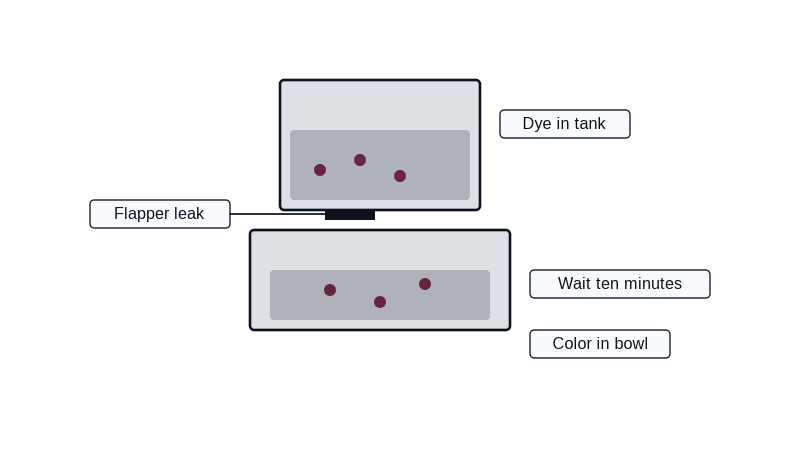
This is the stealthy kind: nothing wet, but a bill that rises. If the tank tops itself up without anyone flushing, see toilet flapper repair or the page about a running toilet.
The EPA puts household leakage at more than 9,300 gallons per year for the average home. A silent toilet leak ranks among the likeliest sources, so the ten-minute dye test deserves a try before you request a visit.
An overfilling fill valve is another quiet route, pushing water down the overflow tube. Look in the tank: if the level climbs to the rim of the tube and you hear trickling, head to repairing a toilet fill valve.
What is the first move when water is spreading across the floor?
Turn the wall valve at the rear of the toilet fully clockwise, then mop until the floor is completely dry. Pooled water can creep under flooring, soften the subfloor and stain a ceiling below. Keep the valve closed until the cause is fixed, and photograph the area in case a landlord or insurer asks.
Practical steps, in order:
- Close the valve. If it is stuck, or drips as you turn it, go to the main valve that serves the entire house or unit instead.
- Soak up the water. Towels first, then a fan.
- Look underneath. For a toilet on an upper floor, check the ceiling below for stains or sagging.
- Do not flush with the valve closed. The tank holds one flush, which is enough to prevent a mess.
- Photograph the damage and note the dates.
A ceiling that is already wet is covered under ceiling water leaks. Tenants should give the landlord or manager written notice promptly and keep a copy.
Which fixes are reasonable for an owner to try?
A careful owner can handle a supply hose swap, a gentle tightening of a tank bolt and a new flapper. Swapping a wax ring requires pulling the toilet off the floor. It is heavy, and the porcelain can crack or the closet flange can snap. Most homeowners hand the job over at that stage.
A sensible split:
- Reasonable for an owner: a new flexible hose, gradual tightening of the tank bolts, a fresh flapper, a wobbly seat (see loose toilet seat repair).
- Better for a plumber: resetting the toilet on a new wax ring, a rotted flange, a stop valve that refuses to close (see toilet shutoff valve repair), and any toilet upstairs.
- Replace the toilet: porcelain cracked through, or a base that leaked so long the floor has gone soft.
California generally requires a contractor license when labor plus materials total $1,000, and for every job that needs a permit. A single toilet reset seldom gets there, but repairing the floor after a leak might, so ask before agreeing to open it up.
The form below sends your details to a nearby plumbing business that can look at the problem. Staff read new forms Monday to Friday, 9am to 5pm, and the business that answers states its own price once it has seen the work.
Common questions
What is the typical duration of a toilet leak fix?
Changing a hose or flapper takes under an hour. Resetting the toilet on a new wax ring tends to need an hour or two. Damage to the floor stretches the timeline, since the subfloor has to dry before the toilet goes back on. The plumber can give a firmer time once the room has been seen.
What questions come first when I hire someone for a toilet leak?
Find out whether a fresh wax ring and bolts are in the price, what happens if the flange turns out damaged, and whether a dye test for hidden leaks is part of the visit. Have the price written down ahead of any work, and ask who hauls the old toilet away if it is replaced.
Does anyone need to stay at the property during the job?
Yes, an adult ought to let the plumber in, approve the price and check at the finish that the toilet is dry and sealed. Renters should tell the landlord or manager when the plumber arrives. If the ceiling below is damaged, the neighbor underneath may need notice too.
Does a sweating toilet tank mean a leak?
No. Water beads on a cold tank when warm, humid air touches the chilled porcelain, so only the outside is damp. It points to humidity rather than a plumbing fault. Better ventilation helps. A tank that stays dry when the room is dry, with a dry bowl, is just condensation.