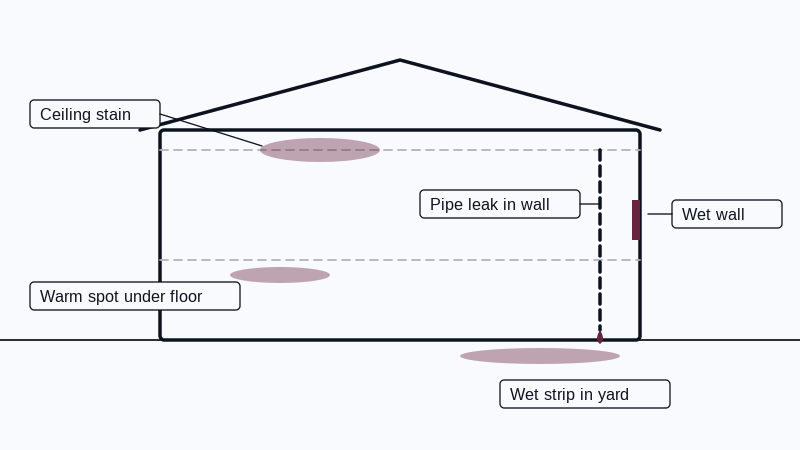
Forget the geyser from the movies. In the older bungalows and duplexes around Bell a failed pipe is more often a faint hiss in a hallway wall, a bubble in the paint or a meter dial creeping round at 3am. Settle the question with the checks below, then hand it to a plumber by sending the quote form. We are Slauson Plumbing, and this page stops where repair work starts.
What gives a burst pipe away before the ceiling comes down?
Unexplained water is the giveaway: a wall that is cold and damp to the touch, paint lifting in blisters, a stain that widens week by week, flooring that cups, a musty cupboard, a hiss when the house is quiet or weak flow at the taps. Then see the meter hand crawling with every outlet off, and the debate is over.
Try a slow walk-through at a quiet hour, hand flat on suspect walls. Typical clues, roughly in order of how soon they show:
- A faint trickle or hiss that dies once the main valve is shut
- A spot on the wall that is cool, or warm if a hot line is involved
- Blistered or peeling paint, soft baseboard, swollen door casings
- Flow that has dropped at several taps
- A sunken, soggy strip of yard between the curb and the front door
- A bill that leapt although nothing changed at home; a bill that suddenly leaps is its own puzzle
Can the water meter settle it in one afternoon?
Yes. Close each tap, note what the meter says, give it two quiet hours, then check again. The EPA guidance is blunt: if the meter moved at all during that quiet spell, a leak is the probable cause. The test catches breaks indoors and in the underground run to the house.
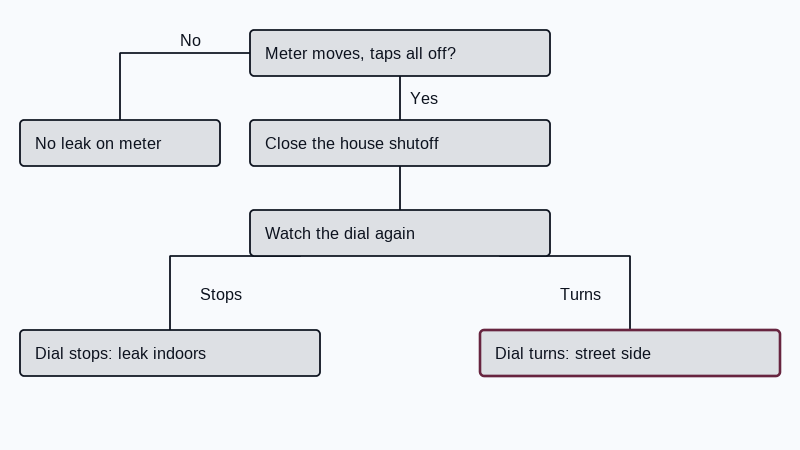
Fine print that helps:
- Look at the little spinning wheel or triangle as well; it reacts before the digits.
- Count the quiet consumers: ice maker, softener, sprinkler timer, a toilet refilling on its own.
- Dial still moving? Shut the house valve and recheck. Now frozen means the problem is indoors; still turning means the trouble is out toward the street, ahead of your valve.
Another EPA yardstick: a four-person household burning past 12,000 gallons in a cool month may well be losing water to a serious leak. Small everyday drips alone lose over 9,300 gallons per household annually, so a spike rarely means nothing. Different providers serve the cities near Bell; the bill carries the name of whoever owns your meter.
Burst pipe or just a stain from something else?
A burst pipe stain keeps growing, follows the path of a supply line and shows up at times when no one has used water. Condensation, a shower splash or a roof leak tend to come and go with weather or use. When in doubt, run the meter test and let a plumber check the wall.
Galvanized steel supply lines installed in the mid-century decades rust from within and tend to give out at threaded joints. Copper from later decades tends to develop pinholes. What actually splits a line is covered in what makes pipes fail and in burst water pipe basics.
Do not demolish a wall on a hunch. One small inspection hole at the stain is reasonable; a hunt with a hammer usually finds the wrong spot. Take photographs for the plumber, and for the insurer if you may claim.
What if the break is outside or under the concrete?
Beneath a slab, expect floor spots that feel warm, a rushing sound after dark, a meter spinning in an empty house and a bill on the rise. A wet stripe across the yard between meter and house points at the buried pipe. The slab leak guide covers that case.
Locating a buried leak requires electronic listening gear, which makes it a job for a plumber. Leave the valve shut, and ask in advance by what method the leak is found, and which items the quoted price already covers.
Which step comes first when a burst looks likely?
Shut the main, let the pipes drain from the lowest tap, kill the water heater and keep away from wet electrics. After that, move belongings off the floor, take photos and file the request, so a plumber nearby can be arranged for the repair.
Two hard rules. Water working its way into a light fitting or a breaker panel means keep out and tell the utility or emergency services; water coming through a light fitting is covered separately because of the shock risk. Gas odor: everybody walks outside, the gas utility is told from the sidewalk, and 911 is reserved for injury or threat.
For visit costs and timing, see what an urgent burst-pipe visit involves.
How long should a soaked ceiling or wall take to dry out?
No one timetable fits, since it hinges on the volume of water and the airflow. On mold, the EPA tells homeowners to mend leaking plumbing quickly and dry every item completely, noting that absorbent things such as ceiling tile and carpet can have to go in the bin once mold sets in.
Put fans on the area, open windows when the air outside is dry, and run a dehumidifier if you own one. A drywall ceiling with a belly can be relieved with one small puncture where the bulge hangs lowest, bucket underneath. Sagging, stains that return or a smell after drying all say the board should come out. Ceiling leak signs helps you judge it.
What can hold the leak until the plumber gets there?
Something can, for hours or days but never permanently. On a dry pipe with the supply off, a rubber-lined clamp, a wrap of self-fusing tape or water-grade epoxy putty will hold a small hole shut. The damaged length should still be cut out and replaced.
Matching the stopgap to the failure:
- Copper pinhole. Clamp or putty. A single pinhole often has siblings coming, as the copper pinhole repair notes explain.
- Weeping PVC joint. A clamp or a slip coupling once the pipe is dry. A joint that was never properly glued needs recutting.
- Yard pipe. Close the supply, clamp the split and keep water from pooling against the foundation.
Swapping out a stretch of supply pipe, touching the main or doing any gas work is contractor territory in California, with a license held by whoever does it, as soon as a permit enters the picture or the total reaches $1,000.
Common questions
Weeks, if it sits in a wall, beneath concrete or in the yard. The warnings are slow ones: a pale stain, a stale smell, a bill that edges up. The two-hour quiet check on the meter finds it with no demolition, so assume a leak whenever the dial turns in an idle house.
Pinhole or burst: does the difference matter?
To the plumber, slightly. A pinhole is a tiny puncture, often corrosion working outward in copper, squirting a fine jet at the drywall. A burst is a split that dumps far more water. Both need fixing, and a string of pinholes hints that the line is tired.
Will a homeowner's policy cover the damage?
Cover turns on wording and cause. Check your own policy, or ask the insurer, before anything gets thrown away. Photograph the damage, keep receipts and note when the valve was closed. Our burst pipe insurance guide collects questions worth putting to the insurer.
Should you try fixing the burst yourself?
A clamp or putty on a small hole buys a little time. Proper repair belongs with a plumber, and California wants a contractor for permit work, main-line work and gas piping. Weak repairs fail inside walls, where the harm is greatest.
Why switch the water heater off once a pipe lets go?
Because the tank may be left short of water, and electric elements can burn out dry. Close the main first, then turn the heater off with its gas control or its breaker, and keep it off until the plumber says restarting is safe.