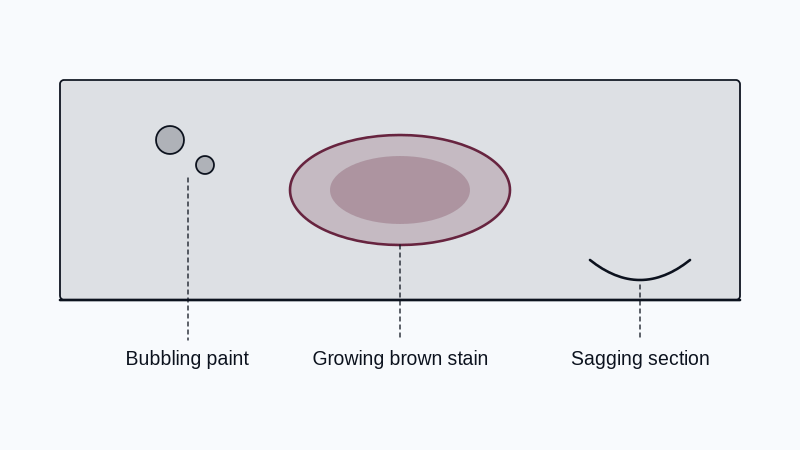
A brown or yellow stain that keeps growing is the obvious sign. Earlier ones are easy to miss: bubbling or peeling paint, a ceiling that looks slightly bowed, a musty smell with no other explanation, or a faint dripping sound inside the wall. Catch the stain stage and the fix is a pipe repair; wait until it sags and the ceiling comes down too. A stain with no drip is covered in water spots on a ceiling but no leak, and the Slauson Plumbing home page lists the other jobs we arrange.
Which warning signs point to a leak above the ceiling?
Watch for brown, yellow or rust-colored stains, especially with a ring at the edge, blistering or peeling paint, swollen drywall, a ceiling that sags or feels soft, drips during or after rain or while an upstairs fixture runs, and a musty smell. Any of these means moisture in the ceiling cavity, and a growing stain is the clearest.
Look for patterns. A stain below a bathroom, near a light fixture or along a straight line suggests a supply or drain pipe, a duct or the roof, while one that spreads after every rain suggests the roof. Outline the edge in pencil with the date to learn whether it is still growing.
Why would a ceiling start to leak?
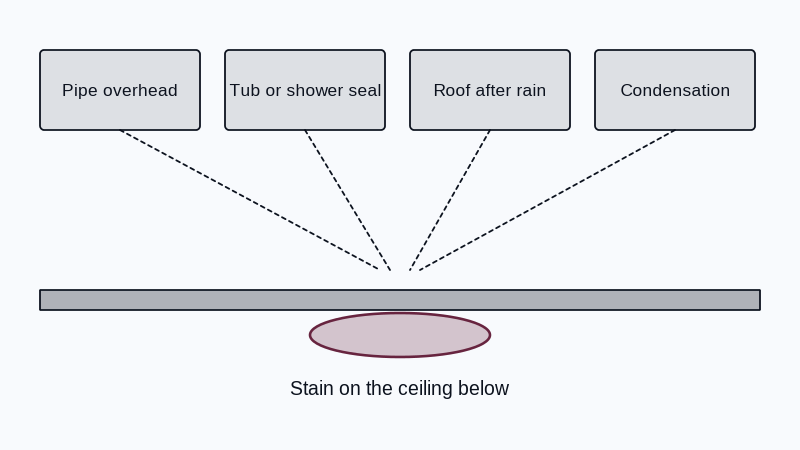
Common causes are a leaking supply or drain pipe overhead, a failed seal around an upstairs toilet, tub or shower, a roof leak after rain, condensation on cold pipes or ducts, and an upstairs fixture overflowing. In homes with an attic, a leaking air conditioner drain pan is another frequent source, especially in summer.
In a duplex or apartment building, both common around the Gateway cities, the source is often the unit above. That makes it a matter between neighbors or through the landlord, so report it in writing as soon as you notice it, with photos.
How does a burst pipe sound?
Often like running water when no tap is open: a steady hiss or rushing noise in a wall or ceiling. A smaller leak may sound like faint dripping or tapping inside the wall, and a sudden bang followed by water noise can be the pipe splitting. If you hear it, check the meter and close the main water valve.
Banging as a tap shuts is something else, usually water hammer from fast-closing valves or high pressure. The page on the water hammer sound explains it. Running-water noises that persist with every fixture off are the ones to act on.
How can you spot a burst pipe outdoors?
Outdoor signs include damp or soggy ground without rain or sprinklers, a lawn patch greener or boggier than the rest, water bubbling up near the meter or along the foundation, a sudden pressure drop, and a water meter that spins with everything off. A burst on the supply line between meter and house can run unseen for days.
Wikipedia lists slab leak signs such as unexplained damp spots in carpet, lower water pressure and wet discoloration on exterior foundation walls. See how to tell if a pipe burst underground for more, and how to know if a pipe burst for the indoor version.
What explains a big water bill when no leak is visible?
A hidden leak is the usual answer: a toilet silently leaking into the bowl, a leak in a wall or under a slab, or an irrigation line. Check the meter by closing every tap and appliance, reading the dial, then reading it again after 15 minutes. Movement means water is escaping. The EPA reports that household leaks can waste upward of 9,300 gallons of water per year.
A still meter means the bill may reflect real use or a billing error, so have the provider verify the reading. A bill that jumped around when the ceiling stain appeared points the same way. See a high water bill with no visible leak.
How does a copper pipe develop a pinhole leak?
Corrosion eats through the pipe wall from the inside or outside. Wikipedia notes pinholes can form from stray electrical current when copper piping is improperly grounded or bonded, and that damage can appear within months. Aggressive water, age and pipe touching concrete are other suspects. A single pinhole can be repaired, but several in one house suggest the pipe is wearing out.
Many homes around Bell date from the 1920s to the 1950s, and some contain older copper or galvanized steel. Repeated pinholes are a reason to ask about repiping. See repairing a pinhole leak in copper pipe and repiping a house.
What are the first steps when a ceiling starts leaking?
Contain the water, then find the source. Set a bucket beneath a drip, move furniture and stay clear of a sagging area. Flip the breaker for the circuit if a light fixture or outlet is wet. Close the main water if a pipe is leaking. Photograph the damage and note the date. Dry the area, since wet materials grow mold.
The EPA advises repairing plumbing leaks promptly and drying items completely, and warns that mold damages what it grows on. After that, have a plumber trace the source. The ceiling water leak guide covers the next steps and whether insurance may apply.
Which ceiling leaks count as emergencies?
It is an emergency when water is pouring, the ceiling is bulging or sagging, water is close to electrical fixtures, or you cannot stop the flow. Close the main valve, cut power to the affected area and get help immediately. A slow stain is pressing but not an emergency, and still should not wait weeks.
Send the quote form with photos and what you have noticed. Forms are read on weekdays from nine to five. California requires a contractor license for jobs of $1,000 or more in labor and materials, and for any job needing a permit.
Common questions
Is my ceiling stain old or still active?
An old stain is dry, crisp and unchanged, while a new or active one is damp, soft or growing. Outline it in pencil with the date and look again after rain and after upstairs fixtures run. A fresh stain that changes shape is active, and a plumber or roofer should inspect it.
Could a leaking ceiling collapse?
Yes. Drywall and plaster soaked with water can sag and fall, and water can pool above and release all at once. If the ceiling bulges, stay clear, move furniture and arrange help. Do not poke at it from below. A plumber can release trapped water safely.
What is the way to trace a ceiling leak to its source?
Run each fixture upstairs one at a time while watching the stain, inspect the roof after rain and check ducts and cold pipes for condensation. If the cause stays hidden, a plumber can bring moisture meters, cameras or pressure tests. Finding the source first avoids opening walls at random.
Is a ceiling leak always caused by plumbing?
No. Roof leaks, condensation and air conditioner drain overflow also stain ceilings. The pattern helps: stains after rain suggest the roof, stains under a bathroom suggest plumbing and stains along a duct suggest condensation. If you cannot tell, a plumber's leak check rules the pipes in or out.