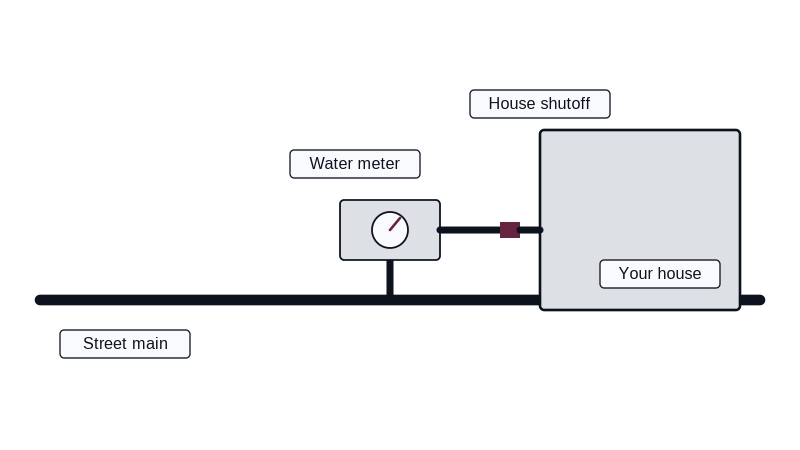
When the bill is big yet nothing looks wet, one of three things is usually behind it: a toilet quietly seeping into its bowl, a crack in a concealed or buried pipe, or consumption that crept up unnoticed. Take a meter reading, wait two hours while nobody touches a tap, and read it a second time. A moving dial means water is escaping. Slauson Plumbing takes leak requests, and the tests below cost almost nothing.
How do I find a hidden leak when every surface is dry?
Start with the water meter. Make sure every tap and appliance is off, note the reading, leave the house unused for two hours, then look at the meter again. The EPA describes this very check: if the figure has changed, a leak is probable. A low-flow dial or leak indicator that turns, even slowly, signals the same thing.
You will find the meter in the front yard or at the curb, usually under a lid, so jot down what it shows. If the number moved, close the main valve at the point the supply pipe comes into the house and repeat the test. If the meter now stays still, the leak is inside, past that valve, in a fixture or pipe you can inspect. If it keeps turning, the loss lies in the stretch linking meter to house valve, most often a buried line.
For outdoor clues such as a soggy lawn, warm soil or pavement and the sound of running water, read the guide on spotting a broken pipe beneath the ground.
Could the toilet be the culprit?
Often it is. A worn flapper lets water creep from tank to bowl with no sound and no drip. Squeeze some food dye into the tank, hold off flushing for ten minutes and check the bowl. The EPA says tinted water there confirms a leak. Flush straight afterwards so the tank is not stained.
Such a leak never stops. According to the EPA, the average household loses over 9,300 gallons yearly, and about 9 percent of homes lose 50 gallons or more per day. Flappers cost little and mostly swap easily. Related reading: toilet flapper repair and a toilet that keeps running.
Look at other fixtures as well. That EPA page notes a faucet dripping once a second wastes upward of 3,000 gallons annually, and a shower head losing 10 drips each minute wastes over 500 gallons. Drips like these rarely stain a floor, so the bill is the first place they appear.
What else raises a water bill without a leak?
Extra use raises a bill without any leak. Common causes are irrigation timers changed for hot weather, a guest or tenant who moved in, a new pool or fountain, a garden hose left running, a water softener stuck in a cycle, or a billing cycle that ran longer than normal. Check the bill's dates and the usage line before you assume a fault.
Look at the meter readings printed on the bill and compare them with the same months last year. A single odd month points to something temporary. A steady climb points to a leak that is growing. In duplexes and homes with a backyard ADU, check whether one meter feeds more than one household, because added occupants add use. Also confirm that an irrigation system is not running at night.
Your water bill names your provider. In this area that may be a city system, Golden State Water, Cal Water or a mutual water company, depending on the street. Ask the provider whether it can check the meter or review the account. Some providers offer a leak adjustment, but policies differ, so ask rather than assume.
Where do hidden leaks hide in Bell-area homes?
Much of the housing here was built between the 1920s and 1950s, and older galvanized and copper supply lines corrode from the inside. Leaks can sit under a slab, inside a wall, under a bathtub or along a buried line to the street. Warm spots on a floor, damp baseboards, musty smells and a hissing sound at night are common signs.
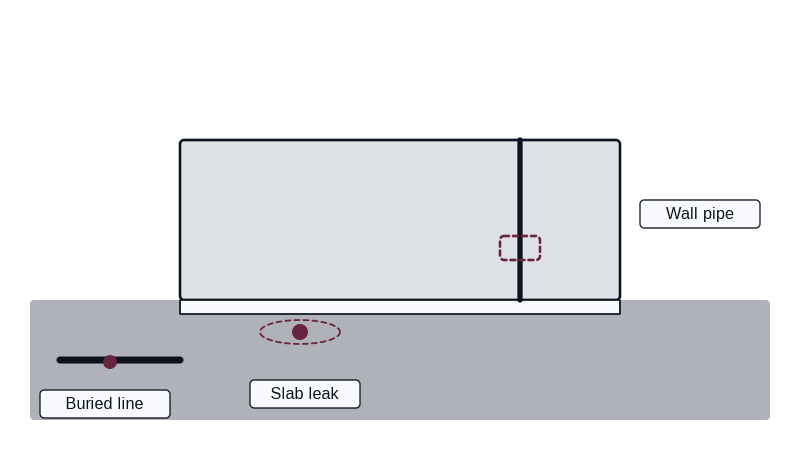
A hot-water slab leak shows as a warm floor or a water heater that runs constantly. A buried line leak may show as a green patch of lawn or wet soil near the meter. Inside walls, look for stains, peeling paint or bubbling plaster. Floor leaks get a page of their own: finding and fixing slab leaks.
Who finds the leak, and what will that cost?
The national price guide from This Old House puts slab and main water line leaks from $500 to $4,000 and a leaking pipe at $150 to $450, with no separate line for detection. Diagnosis adds labor time, which runs $25 to $200 per hour for plumbers and averages close to $100. These are guide figures, not quotes from us.
Bring in a plumber if the meter test proves a leak but you cannot find it, or if it is buried, beneath a slab or behind a wall. Permitted work in California needs a contractor license, and repairs of any kind generally fall under that rule at $1,000 or more. Check the CSLB site for a license number. For pricing detail, read about leak detection cost, and about why a water bill may be so high.
Common questions
Can a leak raise my bill if the ground is dry?
Yes. A pipe under a slab can leak into soil that drains away, or into a cavity under the house, so the surface stays dry. Underground leaks sometimes surface only when the soil is saturated. The meter test is the dependable check, since it shows flow whether or not water appears anywhere.
What quantity of water can a running toilet lose?
How much escapes depends on the flapper gap: a tiny one wastes little, a bad one wastes plenty. The EPA figure for a typical home is over 9,300 gallons lost annually, and toilets account for many of those losses. Tank dye answers the question in ten minutes for free.
Will my water provider fix a leak or refund the bill?
The provider normally owns the pipe as far as the meter, while the owner is responsible for what comes after. Some offer a one-time adjustment on bills that spiked because of a leak, but each has its own policy. Ask your provider, and keep the plumber's repair receipt, since it is often the proof asked for.
How do I stop the loss while I look for the leak?
When the meter reveals a leak, turn the house main valve off and open it only for water you need. For a suspect fixture, use its own stop valve beneath the sink or behind the toilet. Either step isolates the fault and halts the loss until the repair is arranged.
Does an adult need to be present while the leak is traced?
Yes. A person aged 18 or older must give access to the meter, main valve, bathrooms and crawlspace, and agree to the work. Pass on the meter test result, since it narrows the search. Expect the supply to be switched off for a portion of the appointment.
Want a plumber to find it? Send a quote request including the meter test result and the dates of the high bills.