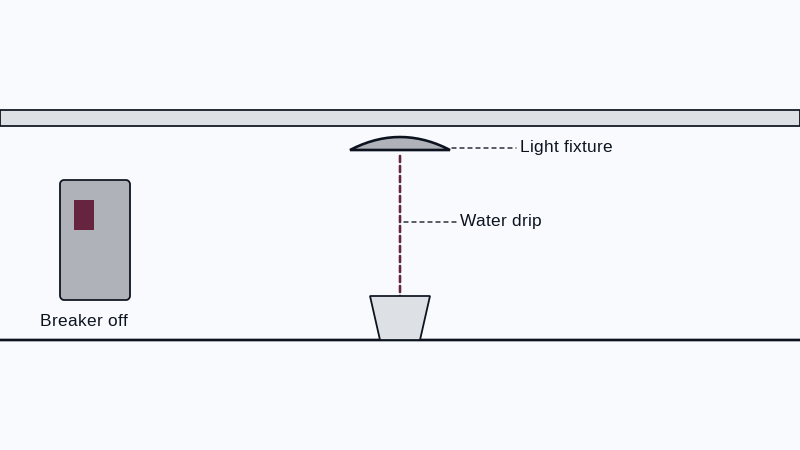
Leave the light and its switch alone. At the breaker panel, cut power to that room, provided you can get to it without standing in water, set a bucket beneath the drip and shut off the water to whatever sits above the light. After that, trace where the water comes from. This page walks through those steps, and the home page at Slauson Plumbing explains how to request a plumber.
Is a leaking ceiling light dangerous?
Yes. Water inside a fixture can reach live wires, and wet ceiling wiring can short, spark or energize the metal around it. Consider the fixture, the switch and the ceiling beneath it live until the circuit is off. Do not stand under it on a wet floor, and keep children and pets away.
If the electrical panel is reachable and dry, flip the breaker for that room, and turn off the main if you are unsure which breaker it is. If the panel is wet or the floor between you and it is flooded, stay out and ask the electric utility or an electrician for help. Never flip a light switch to check whether the light still works.
What should you do in the first ten minutes?
Cut the power, then catch the water. Place a bucket or tub under the drip, move furniture and rugs aside and keep a towel handy. A bulging ceiling means water is pooling above it, and a small hole at the lowest point can let it drain into a bucket, as long as the spot is away from the fixture and any wiring.
Next, stop the source. When a bathroom or laundry sits above, shut off its water: use the valve under the sink or toilet, the washing machine hoses or the main shutoff. Keep showers, washers and dishwashers above the leak switched off. Photograph the ceiling, the fixture and the wet area for insurance and for your landlord, if you rent.
Where is the water coming from?
Common sources are a leaking supply or drain line from a bathroom above, a failed toilet seal, a shower pan or tub drain, an air conditioner condensate line, an attic water heater or a roof leak after rain. Timing offers a clue: leaks that follow showers or flushes are plumbing, and leaks that follow rain are roof.
Check the meter: with all water off in the house, a meter that keeps turning points to a supply line leak, the same test EPA recommends. If it stays still but water drips only after use, the drain or a fixture seal is the likely cause. In older houses and two-story duplexes, galvanized and copper lines inside ceilings corrode with age. The guides on ceiling water leaks and signs of a water leak in a ceiling help narrow it down.
Who do you hire for a leak that comes through a light?
Two trades may be involved. A plumber locates and repairs the water source, while an electrician inspects and replaces wet wiring or the fixture. If the water comes from the roof, a roofer is needed. Start with whichever trade matches the source, and ask the plumber whether leak detection is needed before the ceiling is opened.
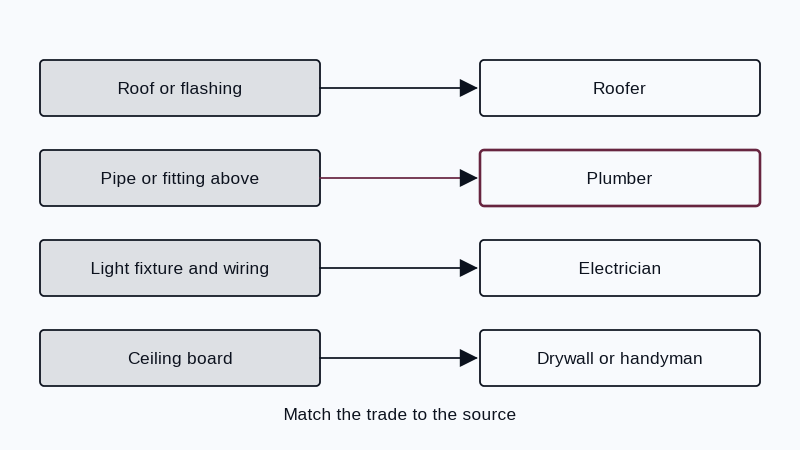
Keep the light off the circuit until an electrician has checked it, since wet insulation on wires can fail weeks later. If you cannot tell whether it is a roof or plumbing leak, a plumber can pressure test the supply lines to rule one in or out. For urgent cases see the emergency plumber page for burst pipes, and for the background read about what causes a pipe to burst.
How much of this can you do yourself?
You can stop the water and catch it. Repairing the source is often a plumber's task, and anything touching wiring belongs to an electrician. Both are regulated trades in California, with a contractor license required from $1,000 in labor and materials and for any permit job. Opening a wet ceiling can also expose mold or old insulation.
If the house predates the 1980s, handle ceiling texture and insulation with care, since some older materials can contain asbestos. Ask a professional before scraping or cutting. Tenants should report the leak in writing and let the landlord arrange repairs. Never cut into a ceiling near a fixture or wiring.
What happens to the wet ceiling and light fixture afterwards?
After the leak is repaired, the ceiling must dry fully. Soaked drywall and insulation may have to be cut out and replaced, since damp material grows mold within days. An electrician should inspect the light fixture, and often replace it, before the circuit is switched on again. Paint and texture come last.
Ask the plumber whether the quote includes opening and repairing the ceiling, or covers only the pipe. Many plumbing quotes stop at the pipe, and a drywall contractor or handyman finishes the ceiling. Photograph the stages and keep receipts, because an insurer may request them. The page on whether insurance covers a burst pipe lists what to check.
Common questions
How much time does the repair take?
A simple supply-line or fitting fix can run a couple of hours once the source is found. Locating it, drying the ceiling and checking the wiring can stretch to days. The local plumbing business sets the visit time, so none can be promised here. Ask for a written estimate that splits plumbing, electrical and ceiling work.
What should the quote include?
Look for whether it covers finding the leak, fixing it and opening the ceiling. Confirm insurance and a California contractor license number on the CSLB site, who will check the wiring and fixture, and the plan should the water turn out to come from the roof.
Should I be home for the visit?
An adult should let the plumber in, show the leak and shutoff and approve the plan. In a rental, the landlord gives access and approves repairs. Mention pets, parking and any wet areas near outlets on your request, and keep the room's power off until it is checked.
Why does water come out of a light when it rains?
Rainwater from a roof leak can follow framing and wires and drip at the lowest point, often a light fixture. If it only happens after rain, hire a roofer rather than a plumber, and still keep the room's power off until an electrician has checked the circuit.