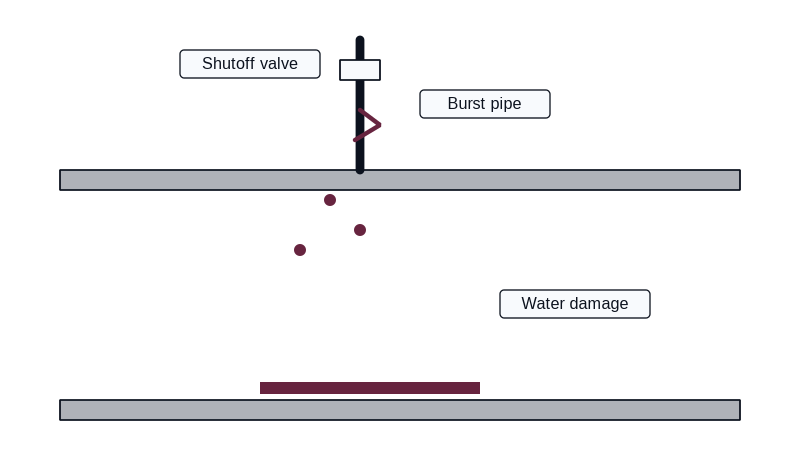
Ask ten homeowners and you get ten confident answers, so here is the usual rule: standard policies generally pay for sudden and accidental water damage caused by a burst pipe, subject to the policy's terms, and generally exclude slow leaks, wear and neglected maintenance. This page is general information, not advice on your policy. The Slauson Plumbing home page explains how we arrange plumbers, and the quote form handles the repair side.
Will homeowners insurance pay for a burst pipe?
Usually yes for the damage, if the burst was sudden. AAA's insurance guide says coverage is generally available for sudden and accidental water damage from a burst pipe, subject to the policy's terms. That tends to include wet flooring, drywall and belongings. It does not promise payment, because every policy has its own wording, deductible and exclusions. Read the water damage section of yours.
The word that matters is "sudden". A pipe that splits overnight is the textbook case. A pipe that has seeped for months is a different claim, and the insurer will look for signs of how long water has been escaping.
Does insurance pay for the broken pipe itself?
Often it pays for the damage the water caused, not for the plumbing that failed. Several insurance guides make that distinction, and some policies cover the cost of opening walls or floors to reach the leak while others do not. Do not assume the repair bill is included: ask the insurer whether "tear out" access to the pipe is covered.
That means the plumber's invoice and the insurer's payout may not match. Keep both. For rough repair prices, see how much slab leak repair and burst pipe repair cost.
What about slow leaks and wear and tear?
They are usually excluded. AAA says slow leaks that build up over time are usually not covered, and that damage from wear and tear or neglected maintenance is typically not covered either, because it is not a sudden accident. The same guide calls it the homeowner's responsibility to schedule inspections and make prompt repairs, and notes that neglect can lead to a denied claim.
This is why catching a leak early matters twice over. According to the EPA, leaks in an average household waste more than 9,300 gallons of water every year, which is money and also evidence that a leak ran for a long time. Read the signs in how to know if a pipe burst.
What should you ask the insurer?
Ask whether the burst is covered as sudden and accidental, what the deductible is, whether tear-out access is included, whether mold has a limit, and how long you have to file. Ask what proof they want from the plumber. AAA notes filing deadlines vary by insurer and state, so check your own policy and report the loss promptly.
Get answers in writing where you can, and note the date, the person and what was said. If your policy is unclear, an insurance agent or your state insurance department can explain how the wording applies.
Are floods and sewer backups treated the same way?
No. Standard policies generally do not cover flooding, which AAA says is available through FEMA's National Flood Insurance Program and some private insurers. A sewer or drain backup may not be covered either, though some insurers offer it as an endorsement or optional coverage. A burst supply pipe inside the house is a different event from rising water outside or a backed-up drain.
If your damage came from the drain side, ask your insurer specifically about sewer backup coverage before you assume. The plumber can identify which part failed, and that detail matters to the claim.
What should you do in the first hour after a pipe bursts?
Stop the water first: shut the main valve, then open a low tap to drain the lines. Cut electricity to wet areas if you can do so safely, and never stand in water near outlets or appliances. Photograph and film the damage before you move anything, then contact the insurer and arrange a plumber.
Dry the area quickly. The EPA advises fixing plumbing leaks and water problems as soon as possible and drying items completely, because standing water and wet materials are a breeding ground for mold. Insurance policies usually expect reasonable steps to limit further damage, so keep receipts for fans, extraction and emergency repairs.
How does a plumber help with a claim?
A plumber can stop the leak, identify the cause and write down what failed and where. That written note, plus photos of the broken section, helps show whether the damage was sudden or gradual. Keep the failed part if you can. The plumber's invoice supports the repair claim, and the insurer will usually ask for it.
Plumbing work has its own rules in California: a contractor license is required for work of $1,000 or more in labor and materials, and for any job needing a permit. Ask any plumber how they are set up before agreeing, and use the quote form to arrange a visit. Forms are read on weekdays between nine and five. For an urgent burst, see emergency plumber for a burst pipe.
Common questions
How long does a burst pipe claim take?
It varies by insurer and by how much damage there is. Simple claims can settle quickly, while larger ones need an adjuster visit, estimates and drying records. Report the loss promptly, keep receipts and ask the insurer for a timeline in writing. AAA says filing deadlines differ, so do not wait.
What should I tell my insurer about a burst pipe?
Say when you found it, what you did to stop it, which rooms are damaged and which items are affected. Send photos and video, and the plumber's findings when you have them. Stick to facts: when it happened, what you saw and what you did. Do not guess about causes you have not confirmed.
Will my premium go up after a burst pipe claim?
It can, and some insurers also ask about water damage history at renewal, but this depends on the insurer and the claim, and this page cannot predict yours. If the damage is small, compare it with your deductible before filing. Ask your agent how a claim may affect renewal before you decide.
Does renters insurance cover a burst pipe?
A renters policy may cover your belongings if water damage is sudden and accidental, while the building itself is the landlord's responsibility. Tell the landlord about a burst straight away, and your own insurer if your things are damaged. Read the policy for limits and exclusions. Renters are a large share of Gateway-city households, so this question is common.