A house built on a concrete slab whose water bill rises for no obvious reason may have a broken pipe under the floor. These leaks hide well: nothing drips and nothing stains, but the meter keeps turning, one floor patch feels warm underfoot, or a thin trickle sounds in a quiet house. Locate the break before planning any repair. For money questions, the page on slab leak repair pricing helps, and the home page explains how we work.
How can I tell water is escaping under my floor?
Watch for four clues together: a bill that grew though usage did not, a meter that spins with every tap shut, a floor spot that feels warm, and the sound of flowing water. Wet carpet, a musty smell, cracked grout or lifting flooring strengthen the case. Each clue alone can have other causes, so verify with a meter test.
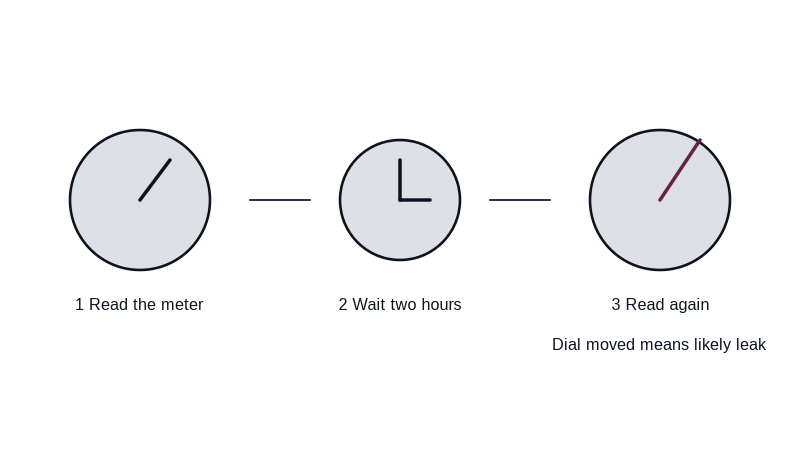
The EPA's meter test is the place to begin. Record the meter number, then keep all taps and appliances idle for two hours before checking it a second time. A changed figure, says the EPA, makes a leak probable. Toilets cause most leaks, so check them first by adding food coloring to the tank: color reaching the bowl in about ten minutes means a bad flapper, not a slab problem.
What each sign points to:
| Sign | What it suggests |
|---|---|
| Warm patch on a floor | A hot-water line leaking under the slab |
| Water sound with everything off | A pressurized line leaking somewhere |
| Meter keeps turning while taps are closed | A leak after the meter, indoors or out |
| Damp flooring or baseboards | Water coming up through or beside the slab |
| Low pressure everywhere | A large leak taking water before the fixtures |
According to the EPA, a typical household loses upward of 9,300 gallons per year to leaks. A break under the floor can exceed that, because it runs day and night. If the bill is climbing and nothing looks wet, the guide to a high water bill with no visible leak helps you read the clues.
How do plumbers pinpoint a leak in the concrete?
Detection relies on gear that does not damage anything, so the floor is cut open only at the exact spot. Common methods include listening devices, thermal cameras for warm hot-water lines, pressure tests that isolate the line losing water, and tracer gas for stubborn leaks. All of them narrow the hunt long before a concrete saw is switched on.
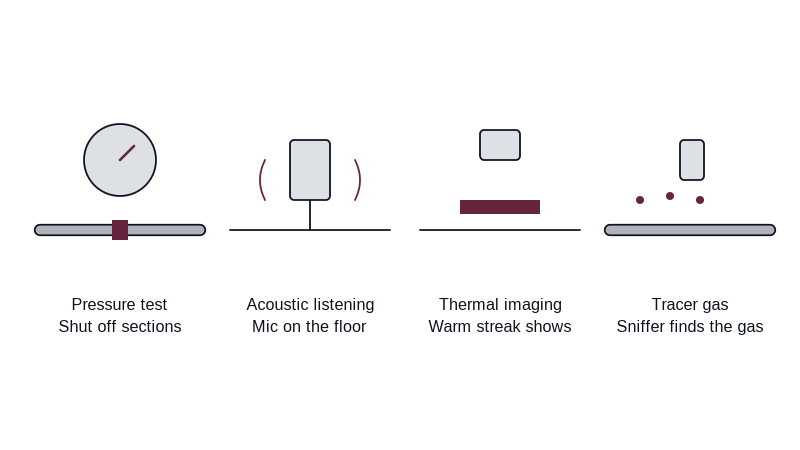
A plumber will usually combine two or more:
- Pressure test. Shut off sections of the system to see which loses pressure.
- Acoustic listening. Sensitive microphones catch escaping water, and the spot where the noise peaks marks the leak.
- Thermal imaging. A camera shows warm streaks from a leaking hot line.
- Tracer gas. A harmless gas is injected into drained lines, and a sniffer finds where it escapes.
Detection is a service in its own right, and its price is separate from repair. Figures are in the leak detection cost guide. The accuracy depends on pipe material, slab depth and background noise, so ask the plumber how certain they are before opening anything.
Where homes in the Gateway cities were built in the 1920s to 1950s, plumbing may be galvanized or copper, and later repairs may have mixed materials. Aging galvanized pipe rusts away internally, whereas copper can develop pinholes. See pinhole leak repair in copper pipe for that pattern.
How is a leak under the slab repaired?
Three routes are common. One is cutting into the concrete over the break and mending the pipe. Another is retiring the failing line and routing fresh pipe overhead in the attic or inside the walls. The third, where it suits, is coating the pipe from inside. A spot repair is cheapest if the leak is isolated. Rerouting or repiping suits a house with several failing lines.
A plain comparison:
| Route | Best when | Trade-off |
|---|---|---|
| Spot repair (open the floor) | One accessible leak, pipes otherwise sound | Concrete work, flooring removal, dust |
| Reroute around the slab | The line is old or a repair would be hard | New pipe in walls or attic, wall patching |
| Repipe the house | Several leaks or aging pipe throughout | Largest job, but a new system |
| Pipe lining | Some pipe types, when the line is reachable | Not suitable for every leak or material |
Reroute and repipe jobs raise the question of whether it is smarter to replace everything. The page weighing repairing a slab leak against repiping covers that question, and the repipe page describes the bigger job.
The price guide from This Old House lists slab leak work at $500 to $4,000 nationally for non-emergency work. It is a wide range, and it does not include flooring, drywall or other repairs afterward. Ask the plumber what is included and who restores the floor.
Which steps come first when water may be escaping beneath the floor?
If water is plainly getting out, close the main valve, do the meter test, and request a plumber once the result is in. Never break concrete yourself. Lift belongings off soaked flooring, photograph the damage with dates, and read your insurance policy before any work begins.
Steps, in order:
- Confirm the leak. Meter test, toilet dye test, outdoor hose-bib check.
- Shut off the main if it is flooding, and note where the valve is for every adult in the house.
- Photograph damp areas, warm spots and the meter dial with dates.
- Check your policy. Coverage for the pipe repair itself versus the damage it caused often differs. Our write-up on insurance and burst pipes shows where the line is usually drawn.
- Get a written quote that itemizes detection, repair and restoration separately.
Hidden leaks close to a gas line or electrical slab penetrations are a hazard. If you smell gas, leave the building, then contact your gas utility from outside, or 911. Stay away from switches and flames.
For help comparing providers, read what to ask a slab leak repair company. Tenants ought to notify the landlord in writing. In California a contractor license is generally required once labor and materials total $1,000, a line slab work normally crosses, so check the license before agreeing.
To reach a nearby plumber, submit the quote form. Messages are read on weekdays from 9am until 5pm, and the business that replies sets its own price.
Common questions
What is the typical duration of a floor leak repair?
After detection narrows the spot, a local repair runs a day or two, with flooring work afterward. Rerouting pipe takes more time, and repiping a whole house can need several days. Drying, inspections and restoration add to the schedule. The plumber sets dates after detection, because the number of lines involved decides it.
Ask how the break will be located and how confident they are, whether detection is billed apart, what each repair route would cost, whether flooring and drywall are part of the price, who obtains permits, and what the plan is if another leak appears later. Request the contractor license number and verify it with the state.
Must someone be at the house during the work?
Yes. An adult needs to be present when the plan is agreed and again at sign-off, and every household member should know which rooms will be opened. Expect noise and dust, and arrange for pets and valuables. For rentals, the landlord or manager normally sets up access.
Can a slab leak damage my foundation?
A long-running leak can soften the soil under a slab and, in some conditions, lead to settling or cracking. We found no source putting a number on that risk, so the safest step is to find and stop the leak quickly. A structural engineer, not a plumber, should assess any visible cracks or movement in the slab.