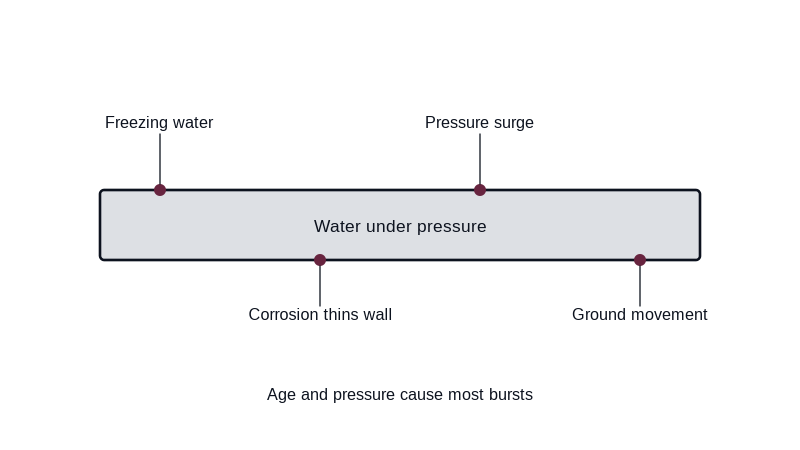
Pipes burst for four main reasons: freezing water expanding inside the pipe, corrosion and old age thinning the metal, sudden pressure surges, and physical movement or damage. A burst pipe is different from a slow leak, because it releases a lot of water quickly. If one has happened, close the main water valve before anything else, then read on. How to send a repair request is explained on the Slauson Plumbing home page, and the quote form is the fastest route.
What will cause a pipe to burst?
Pipes fail once the force inside beats the strength of the wall. Freezing water expanding is the textbook cause, but corrosion, aging material and sudden pressure changes also lead to bursts, according to cost guides from home-services publisher Fixr. Damage from digging, tree roots or a shifting slab can do it too.
Each cause behaves differently. Ice splits a pipe along its length, while corrosion often shows as a pinhole that grows into a split. A pressure spike, like the slam of water hammer when a valve closes fast, can break a weak fitting instead of the pipe itself. The outcome is the same: water where it should not be. The page on burst pipe prevention shows how to lower the odds.
Why do pipes fail in hot weather?
Summer bursts are mostly about pressure and age, not ice. High street water pressure, a failed pressure regulator, a water heater that is overheating or thermal expansion in a closed plumbing system can all stress old lines. Heat also softens some plastics. Add worn joints and a pressure surge and a weak spot gives way.
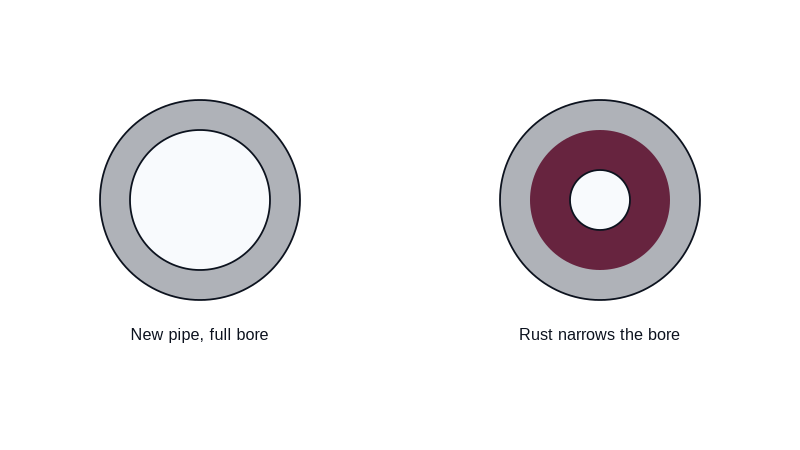
Older copper and galvanized steel suffer most. Galvanized pipe rusts from within, narrowing the bore and thinning the wall, and many homes built around the 1920s to 1950s still have some of it. Copper can develop pinholes after decades. If your home has pipes of that age, the galvanized pipe replacement guide is worth reading. A pressure check is also cheap, and the page on the water pressure regulator shows what a regulator does.
What makes pipes split in cold weather?
Water expands as it freezes, and a sealed length of pipe has nowhere to go with that expansion. Pressure builds between the ice plug and a shut tap, and the pipe splits at that point. The split often shows only after thaw, when water flows again. Pipes in unheated walls, attics and crawl spaces are the first to go.
In the Bell area this is a smaller worry than in colder states, because freezing nights are uncommon in the mild Los Angeles climate. It still happens on a cold clear night with exposed outdoor spigots or an uninsulated pipe on a north wall. Older homes with little wall insulation have more exposure. Wrapping exposed pipes and covering outdoor faucets for the few cold nights is cheap protection.
How can you tell a pipe has burst or is close to failing?
Look for a sudden loss of pressure, a hissing or running noise while every tap is shut, wet or stained walls and ceilings, a warm patch on the floor, a musty smell and a jump in the water bill. A burst usually announces itself fast, while a failing pipe whispers first.
Check the water meter: with all taps and appliances off, a meter that keeps turning shows water escaping, the same test EPA recommends for finding leaks. A brown stain spreading across a ceiling means water is collecting above it. The page on spotting a ceiling water leak explains what to look for before the drywall sags. In a slab house, a hot spot on the floor suggests a hot line leaking beneath the concrete, covered further in slab leak repair or repipe.
What is the right response in the minutes after a burst?
Close the main water valve, open the lowest tap to empty the lines and cut power to any wet area, but only if the panel can be reached without standing in water. Clear belongings from the wet zone, take photographs for your records and notify your landlord or insurer. Then arrange a plumber.
Do not turn the heater back on until the lines are refilled, because an electric element burns out dry. For a ceiling that is bulging with water, a small hole in the lowest point can release it safely into a bucket, but only if no light fixture or wiring is in the way. The burst water pipe guide covers the first hour in more detail.
Common questions
What is the time needed for a plumber to fix a burst?
A short, reachable split can be mended in a couple of hours. Pipes in finished walls, beneath a slab or damaged in several places take longer, and drying plus drywall work carry on once the plumbing is finished. The local plumber business gives the estimate after seeing the damage, and we cannot promise one. Ask for it written down.
What belongs in a burst pipe quote?
Get repair, parts and any permit written out. Confirm the plumber is insured and has a California contractor license that can be checked on the CSLB site. Ask what caused the burst and whether pipes of the same age are at risk. For jobs of $1,000 or more, the law caps the deposit.
Does someone need to be home for the visit?
Yes, an adult should show the shutoff and the damage and approve the work. In a rental the landlord should provide access and may need to approve repairs. Mention pets and parking on your request, and keep off wet floors near outlets until the power is checked.
Does a burst pipe always show up as a wet ceiling?
No. Many bursts hide inside wall cavities or beneath floors and first appear as a high bill, weak pressure or running-water noise. Ceiling stains only form when water pools above. When you suspect a hidden leak, read the meter with all taps off and request leak detection before any wall is opened.