Shut the main valve before anything else, since each minute of flow adds damage. After that, handle electricity, move what you can, record the damage and book a plumber for the repair. The guide follows that sequence and closes with a likely repair cost. For other water problems in your house, the Slauson Plumbing home page lists what we arrange in Bell and nearby cities.
What comes first when a pipe bursts?
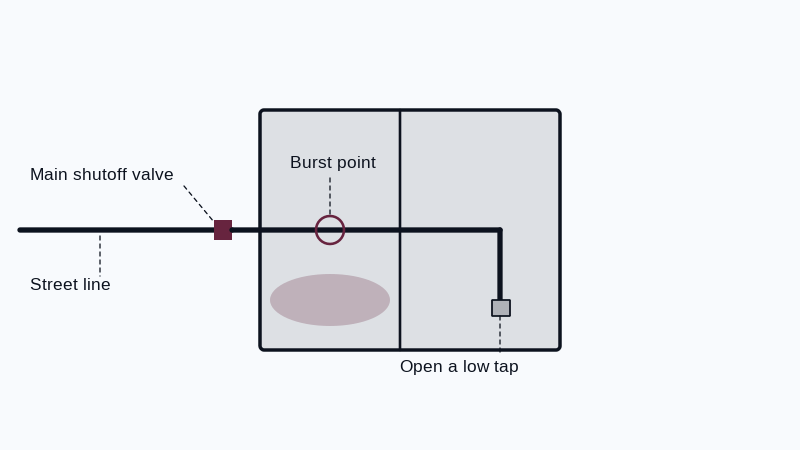
Shut the main shutoff valve, usually found at the water meter, on the front of the house near the hose bib, or where the line reaches the garage. Turn the handle clockwise, or a quarter turn for a lever. Next, open a faucet at the lowest point of the house so the remaining water drains from the pipes.
Can't find the valve? Check the meter box near the street for a shutoff inside; some need a meter key, a good reason to learn where yours is before trouble starts. Tell everyone at home what happened. Keep children and pets away from the wet area. Water pouring through a ceiling light fixture must not be touched, and the page on a water leak in a ceiling light applies.
Is electricity safe while water spreads?
Not near the wet area. Water mixed with electricity is dangerous. If you can reach the electrical panel without crossing standing water, switch off the breakers for the wet rooms. When the panel is wet or the floor around it is flooded, stay clear and ask the utility or an electrician for help rather than risk a shock.
Never plug anything in or out while standing in water, and skip wet-dry vacuums on a flooded floor until power is isolated. A bulging or dripping ceiling near wiring is a hazard. Leave the room and let the water drain by a safe path. Take photos before touching anything.
How can you limit damage before the plumber comes?
Raise furniture onto blocks, roll up rugs, move wet books and electronics out of reach, and soak up standing water with towels, a mop or a wet vacuum after power is off. Open windows and run fans to move air. Drywall and insulation left wet for days grow mold, so speed beats neatness.
Photograph and film every wet area, the broken pipe and any damaged belongings before cleanup. Save receipts for towels, fans and hotel nights, since they support an insurance claim. Renters should give the landlord written notice with photos the same day. What policies commonly include is explained in whether insurance covers a burst pipe.
How do you find the spot where a pipe burst?
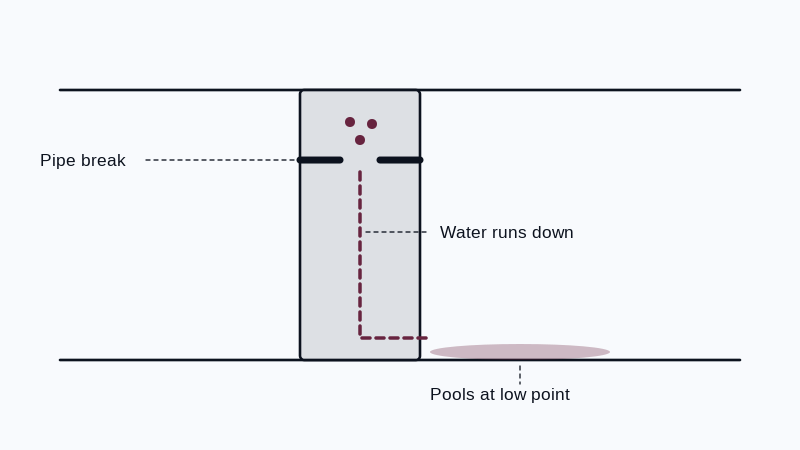
Look for the wettest wall or ceiling, the lowest point where water pools, and a hissing sound. If the sound stops once the main is closed, the break is on the house side. A meter still spinning with every tap off means water is escaping, a test the EPA uses for leak checks. Shut the main until a plumber confirms the spot.
Underground and under-slab bursts are harder: look for a soggy patch in the yard, a warm floor or a sudden drop in pressure. More detail sits in how to know if a pipe burst and telling if a pipe burst underground. Aging galvanized and copper lines, common in houses from the 1920s to 1950s, often fail first.
What does burst pipe repair cost?
Fixr's burst pipe guide (last updated August 2022) lists typical repair at roughly $200 to $1,000, averaging near $500, with about $2,000 at the high end for difficult jobs. It is a national figure several years old, so a current Bell quote may differ. Water damage cleanup and drywall cost extra.
Price depends on pipe material, access through walls or floors, the number of damaged sections and whether the pipe lies under a slab. When more than one section has failed, ask if a repipe makes more sense; the longer fix is covered on the repipe page. For urgent visits, read emergency plumber for a burst pipe.
Who is allowed to repair a burst pipe?
The CSLB says a contractor license is generally required once a job reaches $1,000 in labor and materials, and always where a permit applies. A skilled homeowner might patch a short accessible run, but main lines and anything inside walls suit a plumber better.
Check the contractor's number on the CSLB site and get the scope on paper. Deposits are capped at $1,000 or 10 percent of the price, whichever is lower. If the fix means replacing the main, ask whether Building and Safety must issue a permit first.
Common questions
How soon is a burst pipe fixed?
A split in a short, reachable pipe can be mended in a couple of hours. Longer runs, pipes in walls and slab breaks take longer, and drying plus drywall work can run for days once the plumbing is finished. The local plumber business sets the visit time and we cannot promise one. Ask for a timeline on paper.
What should the quote list?
Parts, labor and any permit, along with the plumber's minimum visit charge. Confirm insurance and a California contractor license number through the CSLB site. Ask what caused the failure, whether similar pipes are at risk, and whether wall opening and closing are in the price.
Do I have to be there?
An adult needs to be home to point out the shutoff and damage and approve the plan. In a rental the landlord must give access and may need to approve the repair. Mention pets, gates and parking on the form so nothing delays the visit.
Can I turn the water back on after a burst?
Only once the broken section is repaired or capped. Open the main slowly, watch the area and the meter, and keep a tap open until the air clears. If the pipe was frozen, check others for splits before restoring full pressure. Should water show up again, close the main and book a plumber.