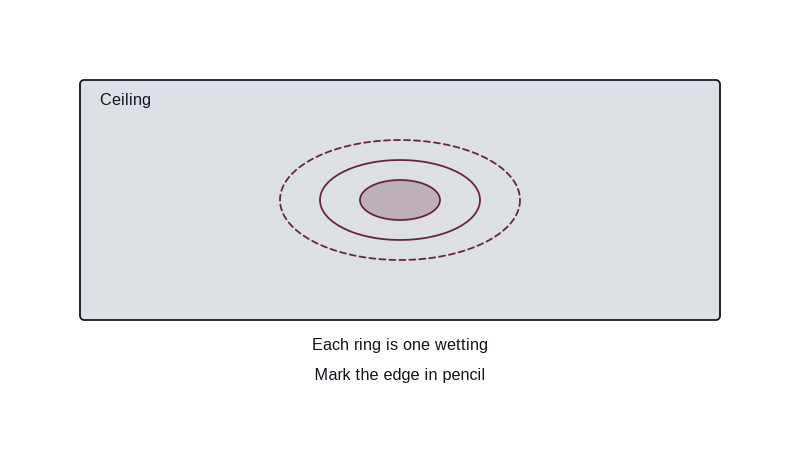
The first job is to find out whether the stain is still wet. Press a dry finger on it. Dry, crisp and unchanged for weeks usually means an old leak that stopped. Cool, damp or soft means water is still arriving, even if no drip has shown up. Either way a stain means water got there once. When the situation is unclear, the guide to spotting a ceiling leak covers the active case, and the Slauson Plumbing home page explains how a plumber gets arranged.
What explains ceiling stains when nothing seems to leak?
Because the water is not always where you can see it. Usual causes include a leak that dried up, condensation forming on cold ducts or pipes above the ceiling, a roof or pipe leak that only runs during rain or when a fixture upstairs is used, and moisture that collects around fasteners. The stain stays after the water has gone.
Water leaves a ring. As a wet patch dries, it deposits minerals and tannins at its edge, which is why old stains show rings that look like tree growth. Each ring can mark one wetting. Several rings point to a leak that comes and goes, and that is likelier to need a repair than a one-off.
How can you tell an old stain from an active leak?
Mark it. Outline the stain in pencil and write the date beside it. Look again following rain, once a shower upstairs has been used, and after a week of dry weather. A stain that grows, darkens or feels damp is active. A stain that stays inside the pencil line and is dry is old. Photographs on the same dates help a plumber or roofer.
A moisture meter, sold or rented at many hardware stores, answers more clearly than a fingertip, though you can manage without one. Do not paint over an unexplained stain. Primer hides it, the cause continues, and the next sign appears as peeling paint or a soft patch.
Could condensation cause ceiling stains?
Yes. Cold surfaces above a ceiling sweat when warm humid air touches them: an uninsulated air-conditioning duct, a cold water pipe in an attic, or a bathroom fan whose exhaust ends in the attic rather than outdoors. The water drips onto the ceiling below, sometimes in a pattern that follows the duct run, and it does so without any broken pipe.
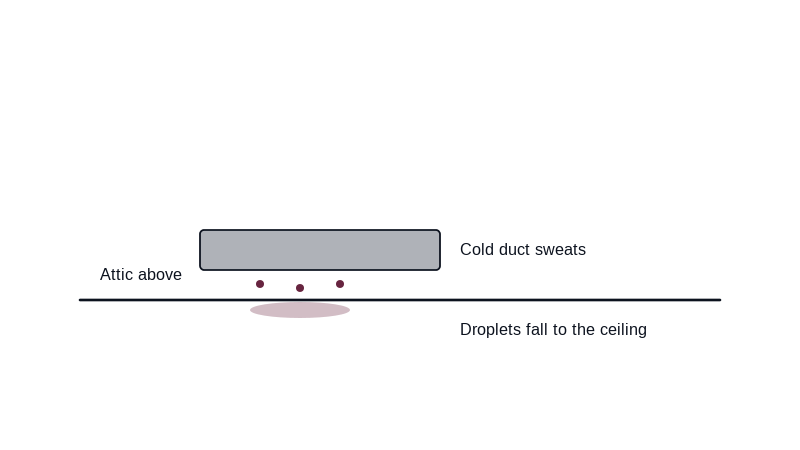
Condensation stains are often worse in warm, humid weather and along straight lines. Insulating the duct or pipe and venting the fan to the outside are the usual fixes, and an HVAC contractor may be the right person. A plumber still helps if a cold supply pipe is sweating.
Could an upstairs bathroom or a pipe leak intermittently?
Yes. A leak at a tub drain, a shower pan, a toilet seal or a loose fitting may run only while that fixture is in use, so you see a stain but never catch a drip. Duplexes and small stacked units are common around the Gateway cities, so the source may sit in the unit above and not in your own walls.
Test it by running one upstairs fixture at a time and watching the ceiling, with someone to watch the stain. Check the toilet base for a rocking seat or a stain at its flange. When the leak stays hidden, a plumber's leak detection is the next step, and the page on leak detection costs describes what it involves.
Could the roof be the cause?
Yes, especially if the stain appears after rain. A cracked flashing, a loose tile or a flat roof that ponds can leak only in certain winds or after heavy rain, and the water may travel along a beam before it shows up some distance from the cause. Look at the roof from the ground, and have a roofer check it. A plumber cannot fix a roof leak.
If the stain only appears after storms and the plumbing tests clean, the roof is the first suspect, even in a dry climate where rain is infrequent. Keep notes with dates so the roofer can match them to weather.
Is it a hidden plumbing leak or a high water bill?
A stain below a bathroom, kitchen or laundry, or a water bill that climbed for no reason, suggests a supply or drain leak in the ceiling cavity. Leaks in an average household, says the EPA, waste upward of 9,300 gallons annually. Check the meter: a dial that moves while every tap is off means water is escaping somewhere.
The meter test is described in the guide to a water bill spike with no visible leak. If the dial is moving and the stain is wet, close the main valve and arrange a plumber.
What is safe to do, and when does it become urgent?
Treat wet ceilings near lights or outlets as an electrical hazard: switch off the breaker serving that area and keep away from fixtures. A bulging ceiling full of water can collapse, so if one sags, keep clear of it, move furniture away, put a bucket under it and arrange a plumber to release the water safely.
Mold is the other risk. The EPA says to fix plumbing leaks and water problems as soon as possible and dry items completely, because wet materials support mold. If the ceiling is damp or smells musty, dry it, and have the source found. A ceiling water leak that is active needs a plumber without delay.
How do you decide who to call: plumber, roofer or HVAC?
Match the pattern. A stain that follows rain suggests a roofer, one beneath a bathroom or after a fixture runs suggests a plumber, and one along a duct in humid weather suggests an HVAC contractor. If you cannot tell, begin with the plumber's leak check, since it rules the pipes in or out.
Submit the quote form with photos of the stain, the dates and what you tested. Forms are read on weekdays between nine and five. Work worth $1,000 or more in labor and materials, or any job needing a permit, requires a California contractor license, and the plumber should explain their setup.
Common questions
Why is there a ceiling stain but the ceiling is dry?
The water has stopped or dried. It could be an old leak, condensation that comes and goes, or a leak that runs only in rain or when a fixture is used. Dry does not mean fixed. Mark the stain, watch it for a few weeks and test the likely sources one at a time.
Could a stain come from a leak that is already repaired?
Yes. Stains do not fade after a repair. A fixed leak leaves its mark, which is why a stain alone proves nothing about the present. Check it is dry, mark its edge and look again after rain. If it has not changed, it is probably history, and you can prime and paint.
Is it okay to paint a stained ceiling?
Not until you know the cause. Paint hides the stain but not the moisture, and a hidden leak can rot the ceiling and grow mold. Once you have shown the stain is dry and stable, use a stain-blocking primer first, then paint. If it returns, the leak is active.
Does a ceiling stain signal mold?
It can, if the area stayed damp, smells musty or shows dark growth. The EPA says to act quickly, scrub mold off hard surfaces with detergent and water and dry completely. Porous ceiling tile or drywall that has been wet often needs replacing. For large or recurring growth, get the moisture source fixed first.