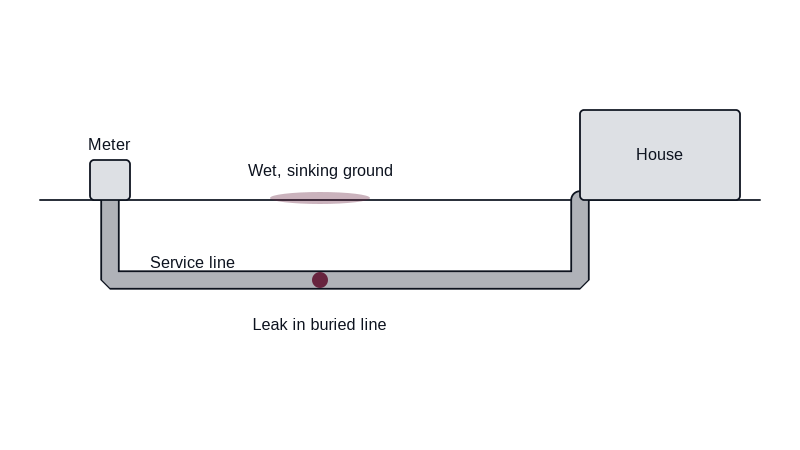
You can tell a pipe has burst underground when the water meter keeps turning although every tap is off, pressure drops suddenly, a patch of ground stays soggy or sinks, or your bill spikes with no explanation. Confirm it with the two-hour meter test below. Burst pipes and hidden leaks are among the things our Slauson Plumbing home page lists, and this page covers the diagnosis.
What are the signs of an underground burst pipe?
The clearest sign is a meter that moves when no water is being used. Others are a sudden drop in pressure, the sound of running or hissing water, a wet patch or green lawn strip with no rain or irrigation, warm ground over a hot line, a sinking section of driveway or yard, discolored water, and a high bill.
Not all signs appear at once. Free-draining soil can swallow a buried leak, so the surface may stay dry for a while. Slab leaks may appear as a warm floor patch, a damp carpet edge, or a moldy smell by a wall. Inspect the stretch joining the meter to the house, because buried supply pipe runs along it. In small lots in Bell and Bell Gardens that line is often short, and the leak may be under a driveway, path or planter.
How do you test for an underground leak?
The meter test has two stages. Begin with every tap and water-using appliance switched off, and write down the meter reading. Leave the water unused for two hours, then check the dial again. The EPA describes this check: a changed number probably points to a leak. Next, close the main valve at the point where the pipe enters the house and observe the meter for a few minutes.
That second stage shows where the leak is. A meter that stops after the house valve closes means the fault is in the plumbing indoors, past that valve. A meter that keeps moving with the valve closed implicates the buried pipe running from the meter to the building, the break you are looking for. Plenty of meters carry a little triangle or dial that spins at even tiny flow, making this easy to spot.
Do not guess from a wet spot alone. Water can travel along the pipe trench or under concrete and surface far from the break. A meter test is the dependable method, and it costs nothing.
What are the first steps when a buried line may be broken?
Close the main valve in the house, leave it closed and line up a plumber. Should the valve be seized, or the leak sit upstream of it, the water provider may need to cut supply at the meter. Your water bill names your provider, and in this area it can be a city, Golden State Water, Cal Water or a mutual water company.
While the water is off, take photos of the wet area and note the meter readings, since you may need them for the provider or insurance. Stay and park away from ground that has sunk. If water is surfacing near electrical equipment, keep clear. Do not dig along the line on your own: before any digging starts, the national 811 call-before-you-dig service gets buried utility lines marked.
For the cleanup side, read about whether insurance pays for a burst pipe, and for a break inside the house, burst water pipe.
How is an underground leak found and fixed?
Plumbers equipped for leak detection pinpoint the spot with sensitive listening microphones, gas or camera tracing, and pressure tests on sections of pipe. Once the break is found, the fix is to dig down to the pipe and replace the damaged section, or sometimes to lay a fresh line.
Precise detection is worth it because digging in the wrong spot costs money. Repairs may mean breaking and patching concrete, so ask who restores the surface. In the national price guide from This Old House, a burst pipe costs $1,000 to $4,000, while slab leaks and main water line leaks each run $500 to $4,000, with no separate detection fee. Those are guide figures, not quotes from us. For more on pricing, see what leak detection costs, and for floor leaks see slab leak detection and repair.
Contractor licensing in California covers permitted work and, generally, anything of $1,000 or more, so give a buried line repair to a contractor whose license you checked on the CSLB site. Trenching in public space or near the street may need a city permit; ask the plumber who takes care of it.
Who pays for a leak underground, and what does it do to the bill?
Generally the provider owns the pipe as far as the meter and the owner owns everything beyond, though providers differ, so ask yours. A buried leak can swell the bill because water runs day and night. The EPA says average household leaks top 9,300 gallons yearly, and underground bursts can far exceed that.
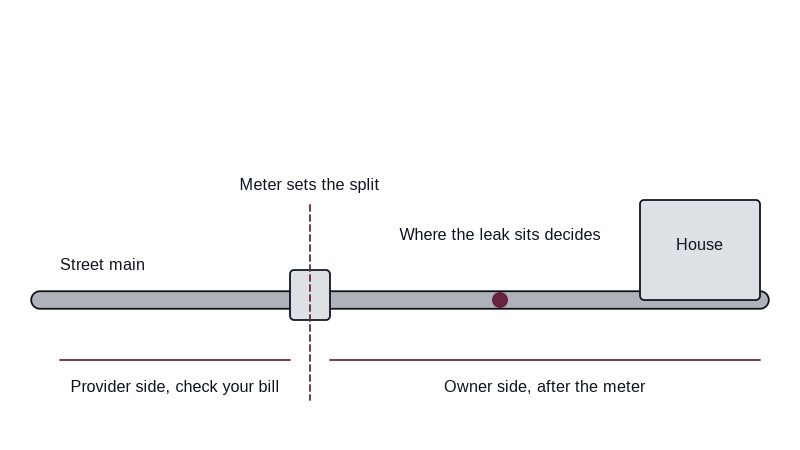
Ask the provider whether it offers a leak adjustment on a bill that spiked because of a repaired leak. Policies vary and it may ask for the plumber's repair receipt and the readings you took. In a duplex or a home with a backyard unit, check whether one meter feeds more than one household before you start, since that changes who pays. For related problems, see why a water bill may be so high and the guide on leaking water pipe repair.
Common questions
What is the timeline for locating and repairing a buried break?
Locating gear can narrow down the spot within one or two hours, and a simple dig and repair often fills a day. A longer run, concrete, tight access or permits add time. Expect the water to be off for much of the repair. Request a time estimate from the plumber before work starts.
What should I ask about a leak in the ground?
Ask how the break will be found, whether detection is extra, how much digging is expected, who restores concrete or landscaping, and whether a permit applies. Have the work and price written down. If the plumber suggests replacing the entire line, ask why and what the alternative costs.
Can a burst pipe underground cause damage to my foundation?
It can. Water running under or near a house can wash out soil, soften the ground and, in time, shift slabs or footings. That is one reason to act fast once the meter shows a leak. If you see new cracks, doors that stick or a sinking floor, tell the plumber and consider a building professional.
Does damp ground in the yard always mean a burst pipe?
No. It could be an irrigation leak, a sprinkler valve, a hose, a drain or just runoff. The meter test separates a supply line leak from other causes. If the meter does not move with all water off, the wet spot is not coming from the pressurized supply line.
Does an adult need to be around during the dig?
Yes. Someone must open up the meter, main valve and yard, and sign off on any digging or concrete work. Share what the meter did in your test, because that narrows the search. The water could stay off for several hours, so fill a few containers beforehand.
Need a plumber to find it? Send a quote request along with the meter test result.