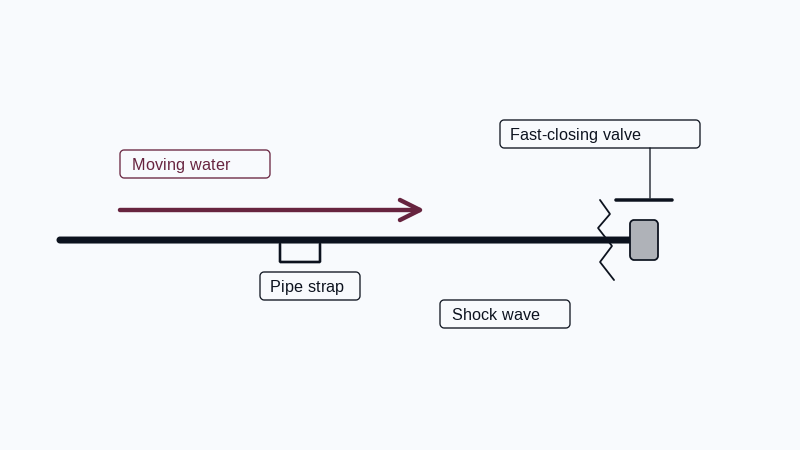
Water hammer is a loud bang or shudder in the plumbing after moving water stops abruptly, as when a dishwasher, washing machine or toilet valve shuts off. The moving water strikes the closed valve and sends a shock wave back along the pipes. The Slauson Plumbing home page shows the work we arrange; this guide covers what the noise means and how to quiet it.
An occasional bang is a nuisance. Repeated hammering strains joints and fittings as time passes, so it deserves a search for the cause.
How does water hammer sound, and what triggers it?
Like a hammer on the pipes: a sharp knock, a run of bangs, or a shudder after a valve closes. It happens when flowing water is forced to stop or turn suddenly. Common triggers in a home include a washing machine, dishwasher or toilet valve snapping shut, or a check valve slamming.
It is the same effect as any fluid stopping fast. High supply pressure worsens it, loose pipes rattle against framing, and long straight runs give the water more speed to shed. If the noise shows in just one room, the search narrows. Note which fixture sets it off, and whether it happens on hot, cold or both.
How much does it cost to cure water hammer?
Prices vary too much for one number, and no sourced local range is available to us, so treat any figure as a guide to confirm with a written quote. A simple arrestor at one appliance is a small job, while a new regulator, an expansion tank or re-securing pipes behind walls costs more. Wall openings add repair cost.
Prepare your quote request by noting which fixture bangs and since when. Have the plumber itemize each part, the labor and any wall repair. A plumber who tests pressure before selling parts is doing it the right way around. Some businesses advertise Heating Air Conditioning and plumbing together, so confirm who handles the plumbing work.
What are the ways to stop water hammer?
Usual fixes include a water hammer arrestor on the line, a pressure regulator to lower supply pressure, air chambers or expansion tanks, slower-closing valves, and securing loose pipes. The cause decides the choice. An arrestor acts like a shock absorber between pipe and appliance, and is a common first step at a washing machine.
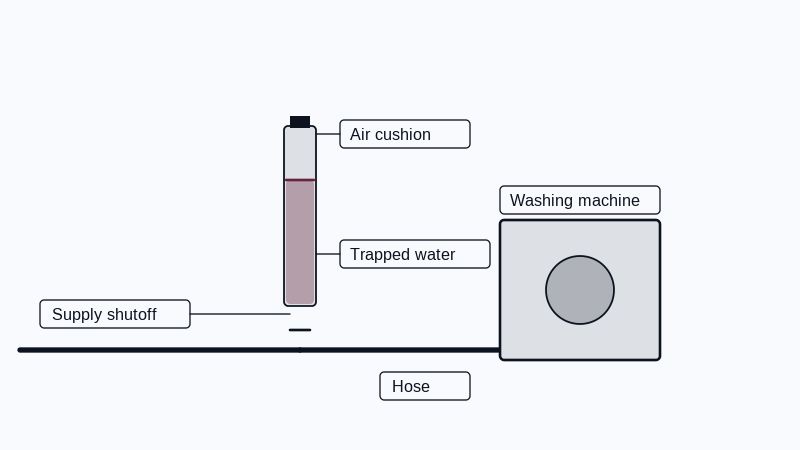
Published references name other remedies too: keeping flow speeds low, shortening long branch runs and adding elbows, and using quiet-fill or non-slam valves. Fasten any visible pipe to a stud with a cushioned strap. If the whole house bangs, look at supply pressure first, where a regulator for the whole house is often the answer.
Can high water pressure lead to water hammer?
Yes. Higher pressure drives water faster, so the shock at valve closing is bigger. A pressure regulator lowers the building's supply pressure and is listed among the remedies. A failed regulator is a common reason a quiet house suddenly starts banging, as are changes in your provider's supply pressure.
A plumber can attach a gauge to an exterior spigot to read your pressure. See replacing a water pressure regulator and low water pressure help for related symptoms. It is fair to ask the plumber to name the pressure the regulator is set to, and to check whether an expansion tank is needed.
At what point should you get a plumber for water hammer?
Bring one in when the banging is loud or constant, spreads through the whole house, comes with leaks or stains, or survived a DIY arrestor. Work on supply piping or a regulator may need a permit, and California requires a contractor license for jobs of $1,000 or more or any job needing a permit.
In Bell, building and safety is at City Hall, 6330 Pine Avenue, and other Gateway cities keep their own. Request a plumber through the quote form and say where the noise begins. Never cut into walls yourself, because a plumber knows where the lines run. Renters should tell the landlord or manager first.
Does water hammer do harm?
One knock does no damage, but repeated hammering can loosen fittings, stress soldered or glued joints, and eventually cause a leak. It can also shorten the life of appliance valves. It is seldom an emergency. A wet wall or ceiling after the bang means a leak, so close the main.
A burst joint inside a wall can go unseen for days. The EPA reports that an average home's leaks can waste upward of 9,300 gallons a year, so do not shrug off a noise that may accompany a drip. If hammering coincides with a rising water bill, check the meter with every fixture off and call a plumber if it moves.
Common questions
Why do pipes bang right after the water is shut off?
The water is in motion, and closing the valve halts it instantly, so the shock runs back through the pipe. Loose pipes amplify it. It is likelier with fast-closing valves such as those on washers, dishwashers and toilets, and with high supply pressure.
Is a water hammer arrestor the cure?
Often, when a fast valve at one appliance is the cause. An arrestor works like a shock absorber. If high house pressure is behind it, the arrestor may only mask the problem, and a regulator is the lasting answer. A plumber can say which one fits.
How much time does a water hammer repair take?
A single arrestor is usually a short visit. A regulator swap or pipe securing takes longer, and pipes inside walls add repair time. The plumber should test pressure before and after so you can hear and measure the difference for yourself.
Which questions go to a plumber about water hammer?
Cover which causes they will test for, whether they will read the supply pressure, which parts they plan to fit, the total cost, whether a permit is needed, and which contractor license appears on the quote. Have it in writing before work begins.