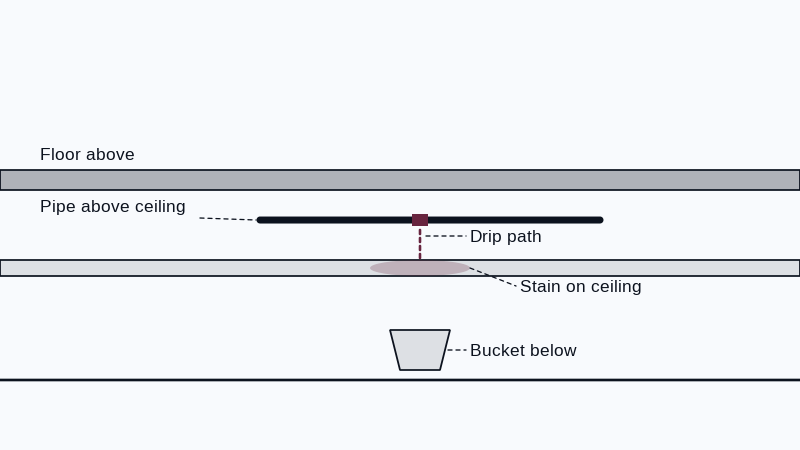
Work in this order. Cut the electricity to the wet area, close the main water valve, catch the drips, and only then go looking for where the water begins. A ceiling stain marks where water emerged, not where it started; the source may be an upstairs bathroom, an attic pipe, a water heater or the roof. The Slauson Plumbing home page lists the jobs we arrange, and a local plumber is sent to you through the quote form.
What should I do right away when water starts coming through the ceiling?
People come before property. Stay out of the wet room, switch off the breaker for any light or outlet near the water, close the main water valve, put buckets beneath the drips and shove furniture aside. A bulging ceiling can hold a great deal of water, so never stand below it. Photograph the damage before cleanup, since an insurer or landlord will ask for pictures.
More steps while you wait:
- With the main closed, run the lowest tap in the house until the pipes drain.
- If a ceiling sags with water, you can let it out by piercing a small hole at the lowest point, with a bucket beneath and your face turned away. Do this only if no light fitting or wiring is nearby; see a leak in a ceiling light.
- Spread towels, run fans and take soft items out of the room.
- Mop standing water so the floor does not swell.
- A leak that stops once the main is closed came from a pressurized supply pipe. One that continues points to the roof, a drain pipe or the unit above.
Get outside and call 911 from there if you smell gas or notice sparks.
Which source is behind the wet spot on my ceiling?
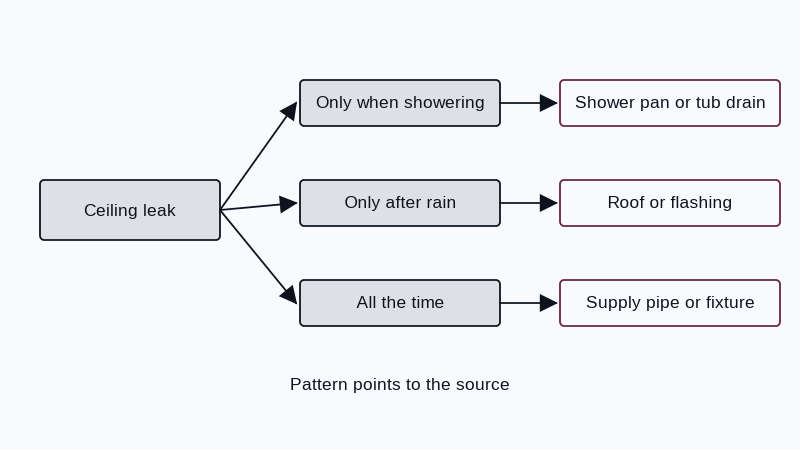
Common culprits are a supply or drain pipe overhead, a leaking tub or shower, a water heater or air handler in an attic, or the roof. Inspect the room above first. Note whether water appears only when the bathroom is used, only after rain, or constantly, because each pattern suggests a different origin.
Quick tests:
- Meter test. Shut every tap and keep an eye on the water meter. If the dial moves, water is escaping somewhere. The EPA recommends this as a first leak check, and says a typical household can lose upward of 9,300 gallons per year.
- Rain-only leaks. Probably the roof or flashing, so call a roofer instead of a plumber.
- Leaks only during a shower. Suspect the shower pan, tub drain or a wall valve overhead.
- Stain with no wetness. It may be condensation or an old mark. See water spots on the ceiling with no leak and the checklist of warning signs of a leak overhead.
Older homes around Bell, Maywood and Huntington Park built between the 1920s and the 1950s often have galvanized or old copper pipe in walls and attics, and a pinhole or split joint can drip for months before the paint blisters. The guides on a leaking water pipe and pinhole leaks in copper pipe describe the usual faults.
Will sealant stop a leaking ceiling pipe?
Briefly, at best. Epoxy putty, a repair clamp or self-fusing tape can slow a small pinhole or joint leak, which helps as a stopgap. None is a lasting repair, and none suits a split pipe, a corroded fitting or a pipe you cannot see clearly. Only removing the damaged stretch and installing new pipe repairs it for good.
Whatever the label promises, a patch on old, thin pipe tends to fail right next to the patch. Inside a ceiling, that failure does hidden damage until it surfaces through the paint. Use a temporary product to gain time, close the main whenever you can, and book the repair. Pipe inside a ceiling may need an access hole, which the plumber plans for.
How much time does a ceiling leak or burst pipe repair take?
An accessible pipe repair is often a few hours once someone arrives. Locating a hidden leak can take longer, and a slab leak or long run takes more. Drying and finishing are slower still: a wet ceiling needs days to dry, followed by patching, priming and painting. Treat the plumbing and the cosmetic repairs as two separate jobs.
A burst pipe that has flooded part of a house is a larger event. Start with the steps after a pipe bursts, then recognizing a burst pipe. For hidden leaks, the leak detection cost guide lists sourced national ranges. Slab leaks are a separate subject, treated on the page about choosing between a slab leak repair and a repipe.
Is mold a worry after a ceiling gets wet?
The EPA advises repairing plumbing leaks promptly and drying everything thoroughly. Absorbent materials like ceiling tiles and carpet may need to be discarded once moldy. A household can usually handle a moldy area smaller than about 10 square feet, but bigger growth, or water from sewage, calls for professionals.
Watch for dark spots, a musty smell, peeling paint or a sagging board. Ventilate, run a dehumidifier, and cut out soaked drywall instead of painting over it. Anyone in the home with asthma or other health concerns should ask a health professional before cleaning. Avoid scrubbing dry growth, which stirs up spores.
Who pays when a rental or condo ceiling leaks?
The source decides. For a rental, California Civil Code 1941.1 counts working plumbing among the basics, so the landlord repairs pipes; you report it in writing and keep copies. A leak coming from the unit above falls to that unit's owner and the building manager. Your belongings need your own renter's policy.
Check how much damage came through, and photograph it. In the dense, renter-heavy blocks of Bell Gardens, Cudahy and Maywood, a leak often crosses units, so tell the manager the same day. For a house, a sudden burst may be covered by homeowner insurance, though slow leaks and worn pipe often are not.
The state's contractor-license line sits at $1,000 for labor plus materials, and permit jobs fall under it too. This is not emergency dispatch; requests are read Monday to Friday from 9am to 5pm.
Common questions
How do you properly fix a leaking pipe?
Close the water, remove the damaged section and join in new pipe using fittings suited to the material. A clamp or putty can hold a pinhole for a time, but cutting out and replacing lasts. With old, corroded pipe, the plumber may propose renewing a longer run, since a fresh patch next to aged metal tends to fail.
Which sealant works best on leaking pipes?
No sealant fits every pipe. Epoxy putty and self-fusing tape are common emergency products for small joint or pinhole leaks, and a repair clamp suits a pinhole on a straight run. Each is temporary next to pipe replacement. Pick the product for your pipe material and follow its directions on dry surfaces and cure time.
Can I paint over a ceiling stain?
Not until the cause is fixed and the ceiling has dried. Paint over a damp stain peels or bleeds through, and it covers mold you should have seen. Once repairs are done, roll on a primer that blocks stains and finish with paint. Drywall that sags or crumbles has to come out and be replaced first.
Which questions come first when hiring for ceiling leak work?
Find out how the source gets traced, who opens and patches the ceiling, whether drying is included and whether the plumber carries insurance. Get a written price and ask about permits. For a big job, look up the contractor's license number on the state licensing board's site.