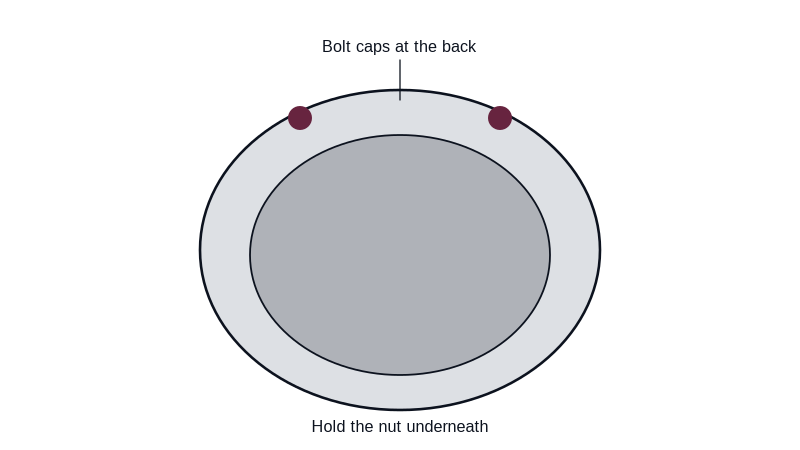
Seats wobble when the two bolts at the back of the bowl work loose, or when the plastic nuts underneath have worn round. Snugging them takes minutes. If the whole toilet moves instead of just the seat, the issue is lower down, at the floor. All of this is plain home repair. The Slauson Plumbing home page lists the jobs a local plumber handles, and the quote form is available if a fault goes beyond this guide.
How do I stop a toilet seat from wobbling?
Lift the two little covers at the rear of the seat to expose the bolt heads. Steady the nut beneath the bowl, using fingers or pliers, while a screwdriver turns the bolt clockwise until the seat no longer shifts. A nut that just spins needs gripping with pliers, or a fresh bolt set. Stop at snug, because excess pressure may split the porcelain.
Some seats use another system. Quick-release seats slide off with a button or tab and sit on a bracket, and the bracket screws may be what has loosened. Bidet seats and soft-close seats come with their own mounting plate. Whatever the type, center the seat on the rim before the last tightening. Cracked bolt holes in the bowl, or a snapped plastic bolt, call for a replacement set, which is cheap and usually packed with a new seat.
For rusted metal bolts that refuse to turn, give them a few minutes in penetrating oil, or saw through them with a hacksaw blade, taping the porcelain to protect it.
Why does a toilet rock on the floor?
Rocking means slack at the base, most often loose closet bolts on each side or a floor that has settled. Pry off the bottom caps, then tighten each nut by a quarter rotation per step, switching sides, and test for motion after every step. Still rocking? Slide plastic shims under the low side. Never force it, or the bowl cracks.
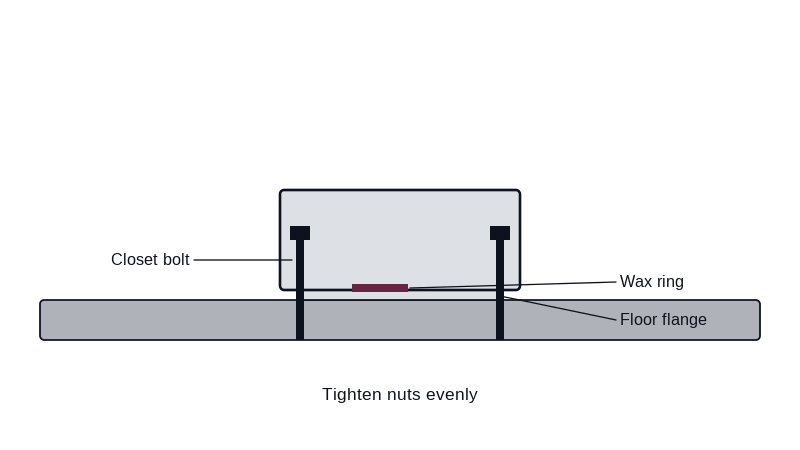
A rocking toilet with water around the foot has probably lost its wax ring seal, and replacing the ring means lifting the toilet. Shut the supply, empty tank and bowl, detach the supply line, take off the nuts, raise the bowl straight up and scrape away the old wax. Press a new ring on, lower the bowl evenly and tighten the nuts bit by bit. The job is heavy and messy, and a rotted floor beneath needs a plumber or carpenter.
In older Gateway-city houses from the 1920s through the 1950s, years of small leaks can leave soft spots in the floor near the toilet. Press the floor around the base. If it feels spongy, stop and arrange help.
What do I do when the flush button sticks?
Lift the tank lid and check how the button is linked to the mechanism. Sticking or weak buttons usually come down to a loose or detached link, a bent rod or a cap sitting crooked. Press the cap back into place, snug the nut and confirm the rod moves freely. Dual-flush units have two buttons and two pull rods, so try each one.
Many push-button lids are secured by a nut or clip. Photograph the parts, then unscrew the button ring from the lid to release it. A spongy feel suggests the plastic rod has cracked or slipped. Replacement button assemblies are standard parts sold by brand and model, so look for the model number stamped inside the tank or on the lid before buying.
When the button works yet nothing flushes, the trouble sits in the tank, where a flapper or the flush valve is failing to lift. Toilet flush repair covers the flapper and valve checks.
How is a flush handle replaced, with or without a chain?
Inside the tank, undo the old handle's nut (it loosens clockwise on most models because the thread runs backward), pull the handle free, and fit its replacement so the arm points at the flapper. Attach the chain to the arm, leaving a couple of links of play. A chainless handle uses a lift rod or direct lever instead, and needs the same alignment check.
A toilet with a lift wire or a fixed arm and no chain takes a handle and rod set matched to its flush valve. Photograph the setup before you begin. Flush a few times to test. A loose handle wants a bit more on the mounting nut, and a partial flush wants chain slack or rod adjustment. Handles are cheap and widely sold in brushed, chrome and white finishes.
What causes a weak flush?
Blocked rim jets, a low tank level, a half-shut supply valve or a partial clog in the drain usually explain a lazy flush. Check the tank level first, clear the tiny holes beneath the rim with a wire or brush, then try the plunger. If the plunger fails, a toilet auger reaches farther.
Hard water scale can shrink the rim holes over time. Hardness figures appear in the annual water quality report from your supplier, whose name is on your water bill. For a stubborn blockage, see plumber for a clogged toilet and repairing a blocked toilet.
How do I fix a faulty flush tank, flapper or flush valve?
If the tank fills but keeps emptying into the bowl, the flapper is the first suspect. Seepage at the tank base hints at a worn flush valve seal, while drips at the tank bolts need new rubber washers. Replacing the whole flush valve means draining the tank and swapping the central tower and its seal.
Each fault has its own page: toilet flapper repair for the flapper, fixing a toilet fill valve for the fill side, and a bowl that keeps running for constant running. Per the EPA, a typical household loses upwards of 9,300 gallons of water annually to leaks, so a running tank deserves a repair.
When is a toilet fault too much for DIY?
Get help if the base leaks, the floor feels soft, the bowl or tank is cracked, the shutoff valve refuses to close, or a repair keeps failing. Tenants should tell the landlord in writing, because California Civil Code 1941.1 lists working plumbing among the basics a rental must provide.
California sets the contractor license threshold at $1,000 for labor and materials together. A seat or handle falls far beneath it; a toilet replacement may come close, and any job needing a permit exceeds it. Someone reads requests on weekdays, 9am to 5pm, and no emergency dispatch exists. Replacement pricing is in the cost to replace a toilet.
Common questions
How long does tightening a seat take?
About ten minutes, with a few more when bolts are rusted or plastic nuts spin freely. A complete new seat takes roughly the same. A rocking base or wax ring swap needs an hour or longer, and a rotted floor takes more time and other trades.
Why does my toilet seat keep coming loose?
The nuts under the bowl may be rounded, the bolts stripped, or the seat a budget model with plastic fittings that wear. Heavy use loosens them over time. Replace the bolt set, try a seat with metal hinges, and tighten until snug rather than hard.
What should I confirm before booking a toilet repair?
Find out what the price covers, whether parts cost extra and whether the plumber carries insurance. Make sure the floor and wax ring will be inspected, and have the total put on paper. On a permitted or larger job, request the contractor license number and look it up on the state board's site.
Will any seat fit my toilet?
Seats come round and elongated, and bowls differ in length and bolt spacing. Measure the distance between the bolt holes and the bowl's front rim, then the widest width, and compare both with the seat's label. A quick-release or soft-close seat generally fits standard bolt spacing, but check before buying.