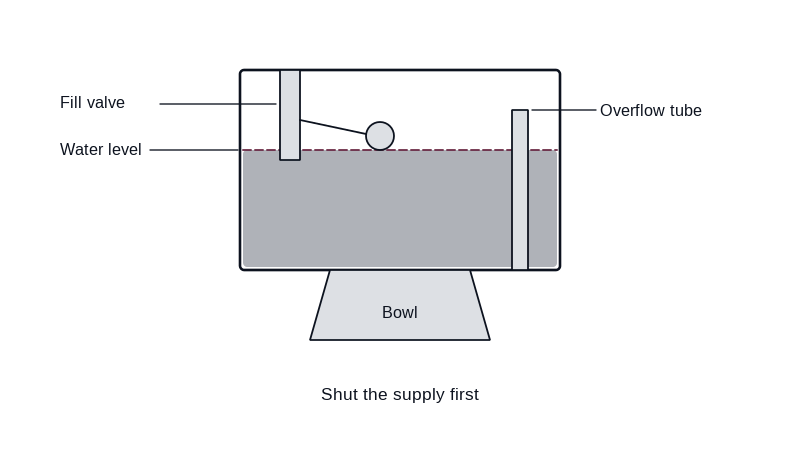
Take the tank lid away and find the upright part standing at one side. That is the inlet valve. As the tank empties it opens and lets water in, then a float tells it to stop at the right level. A failing one makes the toilet hiss, refill sluggishly, or run endlessly into the overflow tube. Alongside the main Slauson Plumbing home page, this guide helps you choose between an adjustment, a repair and a full replacement.
What is the inlet valve for, and what are the warning signs?
This part controls how much water goes back into the tank after each flush. When it is going bad you may hear a steady hiss or trickle, wait a long time for refills, see water streaming down the overflow tube, get a toilet that flushes itself, or notice gurgling in the pipes. Mineral grit, a worn seal or a bad float setting causes most of these.
Match the symptom to the likely cause:
- Hiss that never stops, water at the tube top. The float is set too high, or the seal in the valve is worn.
- Slow refill, weak flushing. Debris is blocking the valve's tiny inlet, or the shutoff behind the toilet is partly closed.
- Toilet refills every few minutes with no flush. That points to the flapper leaking into the bowl, not the inlet valve. See flapper repair first.
- Water on the floor after filling. The valve may be cracked, the supply line fitting loose, or the tank overfilling.
The EPA puts yearly household leak losses at over 9,300 gallons for an average home, and a toilet that hisses through the night is a frequent contributor.
How do I adjust a toilet inlet valve before replacing it?
Start with the float, the cheapest fix. Set the water level roughly one inch lower than the top edge of the overflow tube. A cup-style float slides along the valve shaft on a clip, while an arm-style float bends or turns on an adjusting screw. Flush, let the tank fill, and confirm the valve shuts off completely with no hiss.
Next, clear debris from the valve. Close the supply, twist off the valve cap a quarter turn (on most models), hold a cup over the valve, and open the supply for a second so water blows the grit out. Put the cap back and test. In hard-water areas, mineral scale and sediment can clog or roughen the seal, so an occasional flush helps. Hardness figures appear in the yearly quality report your water supplier publishes, and the water bill names that supplier.
If adjusting and flushing do not cure it, the rubber seal or the whole valve is worn. Most are cheap, and many people simply replace the entire unit.
What does swapping the inlet valve involve?
Close the supply, flush until the tank is empty and mop up the last puddle using a sponge. Detach the supply line beneath the tank, loosen the locknut holding the old valve, lift it out, and drop the new one in at matching height. Tighten the locknut by hand, reattach the line, reopen the water gradually and adjust the float. Watch for leaks over the following ten minutes.
Details that save grief:
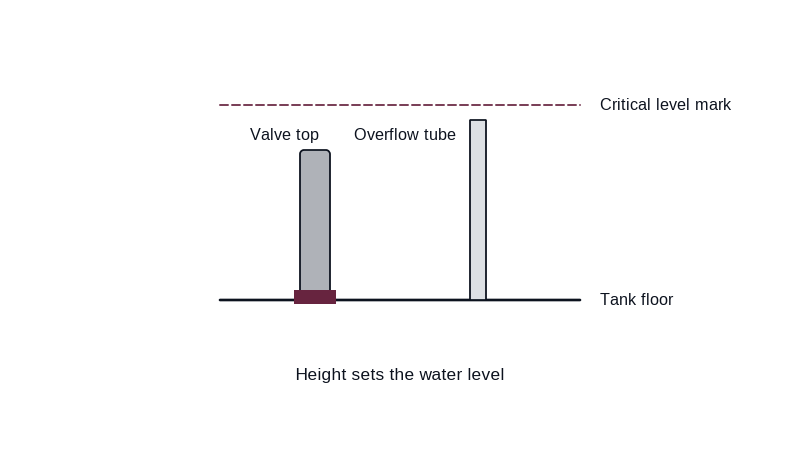
- Buy a universal valve and compare the height with the old one. The valve needs to sit so the critical level mark is above the overflow tube.
- Check the supply line. Old rigid copper or chrome lines are brittle, and a braided stainless hose is easier to fit.
- Do not overtighten plastic nuts. They crack, and cracks mean a flooded bathroom.
- Run the new valve's refill tube clip over the overflow tube so water goes into the tube, not onto the floor.
- Wipe all joints dry and check again after an hour.
Many houses from the 1920s to 1950s around Bell, Huntington Park and Maywood still have decades-old shutoff valves under the toilet. A valve that is stiff, weeping or unable to close fully should be swapped, not forced. Steps are on the toilet shutoff valve repair page.
When does a plumber make more sense than doing it yourself?
Hire one if the shutoff is stuck open, a fitting or the tank is cracked, water has reached the floor, or you rent and are not allowed to make the change. A plumber can also spot related faults such as a worn flapper, a failing wax ring or a bad shutoff, and handle them together in a single visit.
A few practical points:
- Rentals. California Civil Code 1941.1 makes the landlord responsible for working plumbing in a rental, so report the fault in writing.
- Cost and license. A fill valve swap is well below $1,000, so no contractor license is required for the job by itself; if a permit is needed for a bigger toilet replacement, one is.
- Water damage. If the overflow has soaked a bathroom floor, dry it quickly.
Messages are read on weekdays from 9am until 5pm, and there is no emergency dispatch. Describe the toilet through the quote form and a local plumbing business is lined up for you. Related reading includes the causes of a running toilet, toilet flush repair and repairing a toilet fill valve for the same part from a different angle.
Common questions
What time should I set aside for an inlet valve swap?
Adjusting the float takes a couple of minutes. A first-timer needs about thirty to sixty minutes to replace the valve, mostly spent emptying the tank and fitting the new locknut. A plumber normally works faster. Allow extra time if the shutoff or supply line also needs changing.
Can I use any inlet valve in any toilet?
Most standard toilets accept a universal fill valve, which adjusts in height. Some, such as one-piece or pressure-assist models, need specific parts. Take the old valve plus a photo of the tank and its brand along to the shop. Read the label inside the tank for the model name, and match the valve height.
Why is the tank still slow to refill with a new valve?
The shutoff behind the toilet may be partly closed, the supply line kinked, or debris may sit in the new valve. Open the shutoff fully, flush the valve with a quick burst, and check the line. Low pressure across the house is a separate problem, so see whether other taps are slow too.
Which questions should I put to a plumber ahead of a toilet repair?
Learn what the price includes, whether parts are part of it and whether the plumber is insured. See if a new shutoff valve appears in the quote, and have the figure written down. For anything bigger than a simple repair, ask for the license number and verify it on the state licensing site.