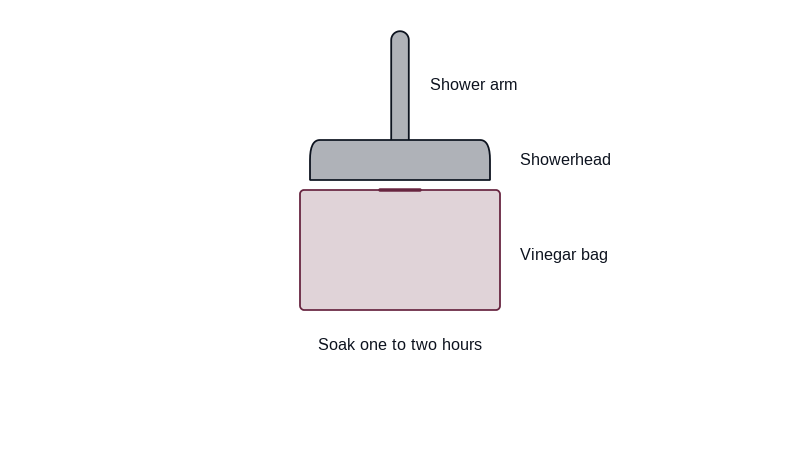
A mild acid dissolves scale. White vinegar or citric acid, left in contact with a crusted showerhead, aerator or kettle for an hour or so, softens most deposits enough to wipe or brush off. Scale deep inside a water heater or pipe needs a different approach. Because scale comes back wherever the water stays hard, removal is half the job. If you want a softener or a plumber to look, see water softener installation, the quote form and the home page.
What actually removes hard water scale?
Mild acids do. White vinegar, citric acid and commercial descalers react with calcium carbonate and dissolve it. Contact time matters more than strength: soak for thirty minutes to a few hours, scrub gently, rinse well. Abrasive scrubbing, which scratches finishes, and bleach, which does nothing to scale, are the wrong tools.
By surface, the usual routes are:
| Where | What to do |
|---|---|
| Showerhead | Fill a bag with white vinegar, tie it around the head so the nozzles are submerged, leave for one to a few hours, brush, rinse |
| Faucet aerator | Unscrew it, soak in vinegar, brush the screen, rinse and refit |
| Faucet body and tub | Wrap with a vinegar-soaked cloth for an hour, wipe, rinse |
| Glass shower door | Vinegar spray or paste of citric acid, then rinse and dry |
| Kettle and coffee maker | Follow the maker's descale instructions |
| Toilet bowl rim | A toilet-safe acid cleaner, used as directed |
The USGS explains the buildup this way: warming hard water leaves calcium carbonate deposits, and years of accumulation can constrict pipes, cutting flow and pressure. That makes scale a plumbing problem as well as a cosmetic one, and it explains why weak pressure in an older house can trace to deposits. The page on weak water pressure goes further.
Which mistakes should I avoid while descaling?
Never mix vinegar with bleach, which releases chlorine gas, and never put acids on natural stone, grout or marble, which they etch. Some plated or brushed finishes also react badly. Read the fixture maker's care guide first, wear gloves and keep the room ventilated. Keep descaler out of a water heater or gas appliance unless its manual instructs otherwise.
Cautions in detail:
- Natural stone. Marble, travertine and some granite can etch. Use a stone-safe cleaner.
- Special finishes. Some brass, bronze and coated finishes dull with acid. Test a hidden spot.
- Rubber and seals. Long soaks can soften rubber washers and gaskets. Keep soaks to what the product says.
- Mixing products. Never combine acids with bleach or ammonia cleaners.
- Eyes and skin. Wear gloves and eye protection when you handle strong descalers.
If scale has seized a fixture, do not force it. A cracked cartridge or snapped stem turns a cleaning job into a repair. Should the fixture leak once it is clean, the guide on repairing a leaky faucet applies.
How do I descale my water heater?
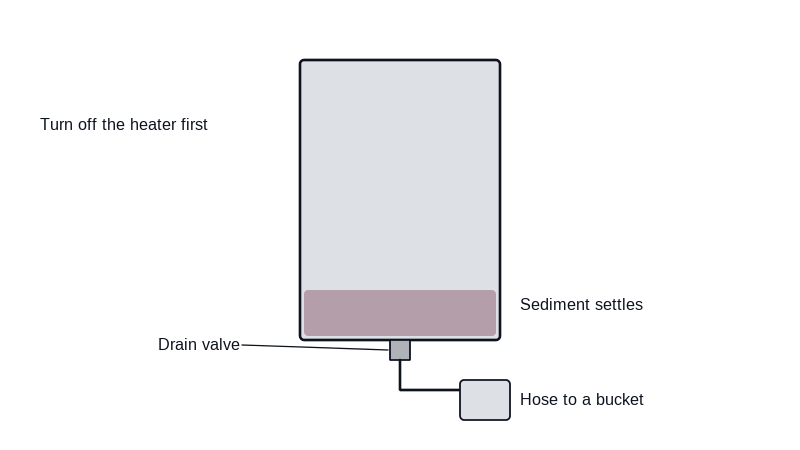
For a tank model, drain it and flush out the sediment and loose scale; most manuals recommend doing this regularly. A tankless unit gets cleaned by circulating white vinegar, a mild acid, through it with a small pump and a pair of hoses. Use the maker's manual for timing and hookups, and shut off the gas or electricity beforehand.
Points that matter:
- Tank heaters. Switch off the gas or electricity, close the cold supply, connect a hose to the drain valve and empty the tank, then run cold water through until what comes out looks clear. A tank never flushed before can hold a hard, packed layer that refuses to drain, which signals age.
- Tankless heaters. Scale in a heat exchanger causes noise, tepid water and error codes. See instant water heater repair.
- Anode rod. Hard water depletes the rod faster, and replacing it extends tank life. The guide to anode rod replacement covers it.
When a heater is old, thickly scaled or leaking, replacing it can beat another flush. Gas units carry their own safety rules. Smelling gas means you walk out of the building, then contact your gas utility from outdoors, or use 911 if anyone is at risk.
How hard is the water around Bell?
Hardness differs by provider, and the number sits in the annual water quality report that yours publishes. The USGS bands are: 60 mg/L or less counts as soft, 61 to 120 moderately hard, 121 to 180 hard, and above 180 very hard. The one figure we read for this area is the City of Commerce system's 2025 report, about 146 ppm, which makes it hard by the USGS scale.
We do not state hardness for the other Gateway cities, because several providers share the region and we did not read all of their reports. Bell, Bell Gardens, Maywood, Huntington Park, South Gate and neighbors are split among city systems, Golden State Water, Cal Water and mutual companies, so your bill names your provider.
The Commerce number comes from Cal Water's report for that system, measured 2024 to 2025, with a range of 140 to 155 ppm. We do not apply it to nearby cities. Look up your own provider's report, find total hardness and compare it with the USGS bands.
Will a water softener stop the crust coming back?
Most of the calcium and magnesium behind scale gets stripped out by a softener, so fixtures stay cleaner and heaters last longer. It does not remove scale already in place, and it does not suit every home. Cost, salt, drain connection and maintenance all matter. Treating hardness at the source is the only lasting answer to recurring scale.
What to weigh:
- Whole-house softener. Treats all water. See whole-house softener installation cost and softener installation service.
- Scale prevention. Other approaches are described in hard water scale prevention.
- Water bill. Usage can shift each time a softener regenerates; a separate page asks if a softener raises the water bill.
- Rental homes. Get the landlord's approval before anything is plumbed in.
A contractor license is generally required in California once labor and materials total $1,000, or whenever a permit is involved. A softener install may reach that level. Verify the license and ask whether the plumber handles any permit.
Someone reads submitted forms on weekdays, 9am to 5pm, and the business that follows up sets its own price.
Common questions
How long does descaling take?
A showerhead or aerator soak takes thirty minutes to a few hours. A kettle takes under an hour. A tankless heater flush usually takes about an hour with the right kit, a tank drain longer if sediment is heavy. Whole-house scale, such as in old pipe, is not removed by cleaning at all.
Which questions suit a plumber proposing a scale fix?
Find out whether the proposal is cleaning, a softener or new pipe, whether anyone measured hardness, what the price covers, and whether a permit applies. Also ask what upkeep a softener demands and what it costs to run. Insist on the price in writing before work begins.
Do I need to be home for a softener or descaling visit?
Yes. An adult should approve the work and test the water when it ends. The plumber must reach the heater, the main line and a drain, and the supply will be off for some time. Renters should tell the landlord or manager ahead of the visit.
Does vinegar damage pipes?
Brief contact with household vinegar will not harm most metal or plastic pipe, but long soaks can affect rubber seals and some finishes. Do not pour it into a water heater unless the manual says so, and never mix it with bleach. If you are unsure, check the maker's care instructions.