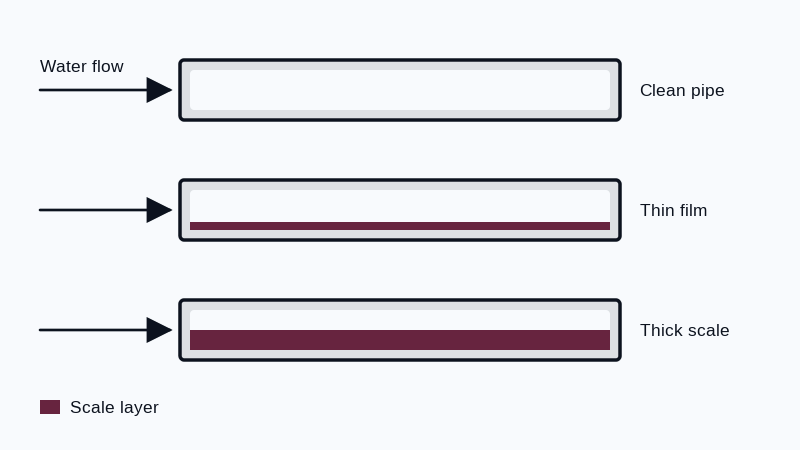
Calcium and magnesium that leave the water and stick to a surface form scale. Heat accelerates it, so water heaters, kettles, shower heads and the inside of hot pipes gather it first. To prevent it, look up your hardness number in your water provider's annual report, flush and descale on a schedule, and decide whether a softener or conditioner is worth installing. The Slauson Plumbing home page shows how to request a quote from a local plumber.
What is hard water scale, and what usually causes it?
Hard water scale is a hard, off-white deposit of calcium and magnesium minerals. Water picks those minerals up as it moves through rock and soil, and they drop out as solid when water is heated, evaporates or loses pressure. Hotter water leaves more behind, so scale is worst in water heaters, on shower heads and at faucet tips.
Scale builds layer by layer. A thin film is harmless, but over months it narrows pipe, insulates the bottom of a water heater tank from its burner or element, and clogs aerators. Your water supplier cannot remove it at source, and it is not a health problem, only an upkeep one. The same minerals cause the spots on glass and the stiff feel of laundry.
What is my hardness in ppm and gpg?
Look at the water quality report from your provider, which lists total hardness in milligrams per liter (the same as ppm). To convert to grains per gallon, divide by 17.1. Cal Water groups hardness as soft below 75, moderately hard 75 to 150, hard 150 to 300 and very hard 300 and above.
One report we read is Cal Water's 2025 report for the City of Commerce system, which gives an average of 146 ppm, about 8.5 grains per gallon, from two wells plus Metropolitan Water District supply. That figure applies only to that system. The Bell area is split between providers, including Golden State Water and Cal Water districts, so read the report named on your own bill. Do not assume a neighbor's number matches yours.
Does the pH scale or hardness rating matter for scale?
They are two different measurements. Hardness describes dissolved minerals, and the hardness rating scale in ppm or gpg tells you how scale-prone the water is. pH measures acidity. Very low pH makes water corrosive to metal pipe, while high pH and high hardness together make scale form faster. Hardness is the number to use for scale.
A water quality report may list both. If a plumber suggests a treatment, ask which number it targets. A softener lowers hardness. A neutralizer changes pH. Mixing the two up leads people to buy the wrong equipment. When pipes look green or show pinholes, discuss pH and corrosion with the plumber before you buy anything for scale.
How do you prevent scale buildup day to day?
Flush the water heater tank once a year to move sediment, wipe shower heads and faucet tips with a vinegar soak each season, and keep the heater at a moderate setting, since hotter water drops more scale. Do the cleaning in the morning, not on a busy bath night, so that hot water is available if something goes wrong.
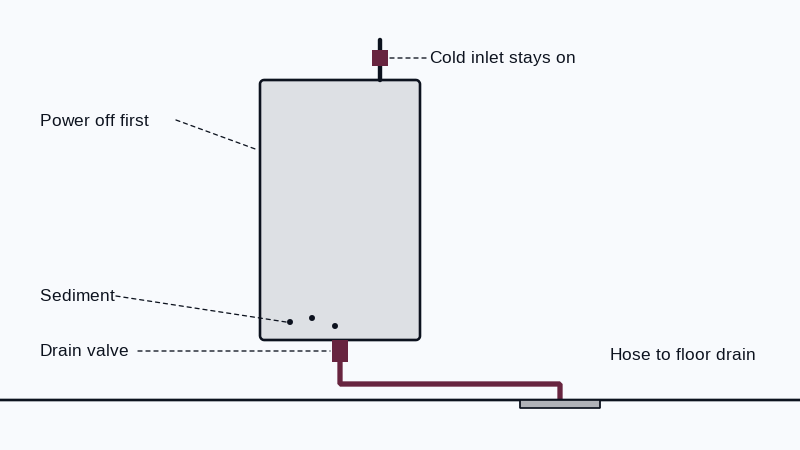
While you are at it, inspect the anode rod and relief valve, and watch for white crust at pipe joints that could be a slow leak. The page on removing hard water scale explains the vinegar method, and the hot water heater repair guide shows what a failing, scaled-up heater looks like. If a heater is draining slowly or knocking, scale is a prime suspect. Gas appliance work belongs to a plumber, so stop at the shutoff valve.
Do scale rescue products and anti-scale conditioners work?
Descaling products dissolve existing scale on fixtures and kettles, and they work, but they do nothing about the next load of minerals. Anti-scale conditioners, sometimes called template assisted crystallization units, change how minerals form so they cling less. They do not remove hardness, and results vary by water, so ask for the maker's test data.
A salt-based softener is different, since it exchanges calcium and magnesium for sodium and truly cuts hardness. It costs more to install and needs salt and a drain connection. Weigh the options on the water softener installation page and in the softener cost guide before choosing. Whatever you pick, ask who services it and how the backwash is drained.
Can a softener affect my water bill?
A softener uses a little water to regenerate, usually a small share of household use, and it can lower the energy needed to heat water by keeping scale off elements and tank bottoms. The effect is modest either way. If your bill rose after an install, check for a stuck regeneration cycle or a leak before blaming the softener.
The page on softeners and water bills explains the checks. Remember too that hard water scale in a toilet or a faucet can hide leaks, so a meter test with everything off is worth doing.
When does scale prevention need a plumber?
Equipment that ties into the water line, work on a gas water heater, and a tank that pops or rumbles from sediment all call for a plumber. A softener means cutting into supply pipe and often adding a drain. California's contractor license rule starts at $1,000 in labor and materials, and any permit job needs one.
Tenants should report scale in a shared heater or pipe to the landlord in writing. Ask any plumber for an itemized quote covering equipment, drain work, permits and servicing, and check the contractor's record on the CSLB website.
Common questions
How quickly does prevention start to work?
A vinegar soak on a showerhead takes under an hour and a tank flush a couple of hours, with visible results straight away. Installing a softener can run from a few hours to a day depending on the pipework. Real prevention is a habit: repeat the upkeep every few months and read your hardness report each year.
What do I ask a plumber about scale?
Begin with your hardness number and how the treatment would change it. Request a quote that separates equipment, install, drain work and permit. Ask about insurance, a California contractor license you can verify, how often salt or service is needed, and where the brine water goes.
Does someone need to be home for an install?
For a softener, yes. An adult should agree on where the unit goes, approve changes and watch the start-up. Tenants need the landlord's written permission. Water is off for part of the visit, so mention pets and parking on the form.
Is scale harmful to drink or touch?
Scale poses no health hazard; calcium and magnesium are minerals the body uses. The harm is mechanical: crusted fixtures, clogged aerators, shorter appliance life and a heater that works harder. If you watch sodium for medical reasons, ask your doctor before adding a salt-based softener to the drinking tap.