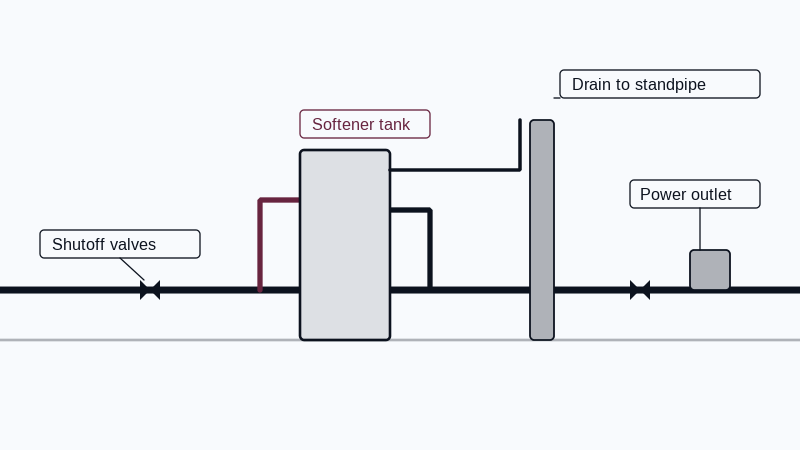
An installation service sets the unit where three things are within reach: the cold-water main, a backwash drain and a power outlet. The plumber sets the bypass valves so water keeps flowing during service, then tests for leaks and programs the head. A local plumber carries out the visit, and the Slauson Plumbing home page shows other jobs we line up in Bell.
What is covered by a softener installation service?
Positioning, plumbing connections, a bypass, a drain line fitted with an air gap, power and a first-run setup. The plumber places the tank, taps the main supply with fittings, runs a drain, programs the head's hardness and regeneration settings and adds salt. Expect the water to be off during part of the visit.
An ion-exchange softener trades hardness minerals for sodium on resin beads, then renews the beads using a salt brine flush, which explains the drain. The bypass allows you to isolate the unit for service or send hard water to the yard.
Extras vary by quote: new pipe, an outlet, a drain tie-in, haul-away of an old unit and a permit. Ask for each as a line item. Our installation cost page gives national figures.
Is a permit or contractor license needed for a softener installation?
A permit might apply, though that varies with the city and the job, so ask. The national guide notes a permit may be required without giving a price. Bell Building and Safety lists plumbing permits for all plumbing work including water service. Permitted work must go to a contractor holding a California license.
A contractor license is required in California once labor and materials combined reach $1,000. A softener installation including the unit often passes that mark, so verify the license on the state board's website before signing.
A deposit cannot exceed $1,000 or 10 percent of the contract price, whichever is less. When a salesperson in your home pushes a same-day deal, pause and get a second price. For long-term costs, read can a water softener cause a high water bill and hard water scale prevention.
What is a water softener air gap, and why does installation need one?
The air gap is a deliberate opening between the softener's drain line and the drain that receives it, which stops waste water from running back into the softener. The backflow reference describes air gaps as a vertical gap that prevents back siphonage and generally also guards against back pressure.
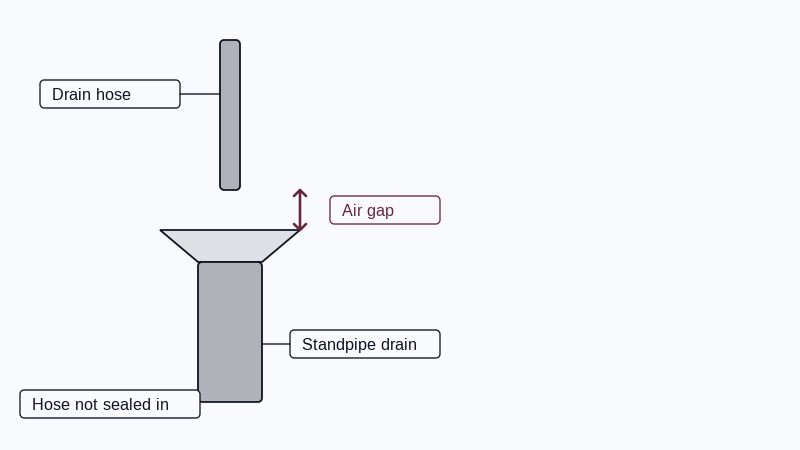
In practice the plumber fits the drain hose or pipe above the drain inlet, or uses an air-gap fitting, instead of sealing the hose into the drain. Brine and rinse water leave the softener through that drain, so the gap shields the clean side from dirty water.
Local rules decide how the drain connects, so ask the plumber how it will be done and whether Bell Building and Safety needs to see it. Don't stuff a hose into a standpipe and tape it, since a sealed drain defeats the purpose.
How do I book a softener installation in Bell?
Fill in the quote form and a local plumber is lined up for a visit. Staff read forms on weekdays from 9am to 5pm. Include the unit's brand and model if you already bought one, where it will sit, and whether you have city water or a well.
If you rent, check with the owner first: a softener is a fixture of the building. In Bell Gardens, 76.5 percent of occupied homes are rented, and changes to the water line usually need the owner's approval.
Ask the plumber whether the price covers the bypass, drain, air gap, any permit and the first-run setup. See whole-house softener cost for price context.
Where do the installation manuals fit in?
Each softener comes with an installation manual that the plumber should follow. Whirlpool, AquaSure and Rheem units all include one listing connection sizes, drain rules and settings for that model. Hold on to the manual and model number, and have the plumber confirm which version was used.
We don't reproduce manuals here, since each model differs and we haven't checked yours. If you lost the paper copy, the maker's site usually hosts one by model number. A manual is useful in a dispute, because it states what the maker expects.
Commercial installations are a different job: a restaurant, a laundry or a shop has larger flow and sometimes backflow rules. Ask for a plumber who has handled that scale. The DIY angle is in how to install a water softener.
Can a water softener be installed on well water?
Yes in many cases, but well water needs testing first, because iron, sediment or high hardness change what equipment is needed. The national guide lists well water systems at $500 to $1,500. We have no source for specific well water limits, so ask the plumber or a water tester what your water needs.
City water is the norm in the cities around Bell, and your bill names your provider: Golden State Water and Cal Water each serve parts of Bell. For hardness, check your provider's yearly report. Don't assume the same number across cities; Cal Water's 2025 report for its Commerce system gave an average of 146 ppm, and that belongs to Commerce.
If you do have a well, ask for a water test before you shop. A sediment filter often goes ahead of a softener, and the choice of unit follows the test.
How is a whole-home water softener installed?
On the main, past the shut-off but ahead of the water heater and branch lines. First the main is closed, then the line is cut, fittings and a bypass are added, connects the softener's inlet and outlet, runs the drain, plugs in the head and flushes the system.
Whole-home means the unit treats water for the house, not one tap. According to the national guide, labor for a whole-house installation is $150 to $1,000, more if new pipe must be run. That is guide data, not a quote from us.
Location counts: a garage wall near the main is simple, while a distant corner is not. In older Bell-area houses, the main may come in at a corner or under a sink, and corroded pipe can add work. A plumber should look at your layout before pricing.
Common questions
What is the typical duration of a softener installation?
A plain tie-in to an easy-to-reach main occupies a plumber for a few hours, with the water shut for some of it. Long pipe runs, a new drain, a loop or tight quarters add time. Request a time window and the period when water will be off.
Which questions suit hiring a softener installation contractor?
Check what the price covers, who holds the contractor license, whether the plumber is insured, who applies for any permit, how the drain and air gap are handled and which manual is followed. Have the scope on paper before paying any deposit.
Must I stay home for a softener installation?
A person should be present when work begins to point out where the unit goes, and at the end to watch it run and learn the settings. The water goes off for a portion of the visit. If you can't be there, arrange access with the plumber in advance.
Is it realistic to fit a softener on my own?
Small units can be DIY-friendly, according to the national guide, but whole-house installation is best left to professionals. Cutting into the main, setting the drain and meeting local rules are the hard parts. If you try, follow the maker's manual and check local permit rules first.