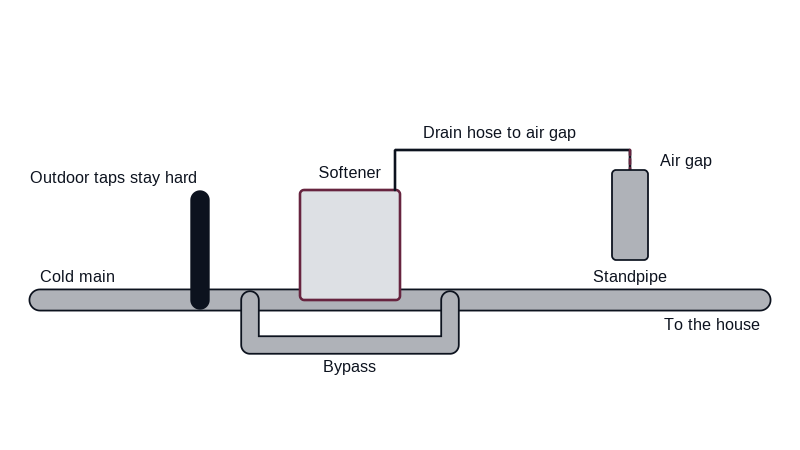
A whole-house softener is installed by cutting into the cold water main where it enters the building, fitting a bypass valve and two connections to the softener, running a drain hose to a legal air gap, and plugging in the control head. Plumbers finish it in a few hours, and a handy owner can manage it in a day when the pipe is accessible and local rules allow it. Still deciding between jobs? The Slauson Plumbing home page is the place to start, or read on for the steps.
What do you need in place before installing a water softener?
Three things come before any purchase: a spot with room around the tank, a drain within reach, and a standard grounded outlet close by. Your water's hardness matters too, since it sets the unit size. Find the figures in your water provider's annual report; the provider is named on your bill.
The U.S. Geological Survey classes water above 180 mg/L as calcium carbonate as very hard, 121 to 180 as hard, and 61 to 120 as moderately hard. Hardness comes from calcium and magnesium that water dissolves while moving through soil and rock. Sizing a unit to the household's daily use, not its looks, prevents wasted salt. The page on what a softener installation costs covers pricing, so this one stays on the work.
In a Bell bungalow, the main often rises through a wall or floor beside a water heater, and space is tight. Measure for the tank, the brine tank and a service gap, because a unit that fits on paper but blocks the heater door is a recurring annoyance.
How does a DIY water softener installation go, step by step?
Most homes follow one sequence. Close the main supply, empty the line, cut and fit the pipework, add the bypass, join inlet and outlet in the correct direction, set up the drain line with a gap in the air, load salt, then bring the water back gently and run a regeneration cycle. Steps three and five cause most mistakes.
In practice the order runs like this:
- Pick a point on the main downstream of the branch feeding outdoor hose taps and upstream of the water heater branch.
- Close the main, open a low faucet and let the pipe drain.
- Cut the pipe and fit the bypass assembly. Push-fit connectors are the easiest option for copper or PEX. Galvanized steel, still common in older houses, usually needs a transition fitting, and many DIY jobs end right there.
- Connect inlet and outlet. Arrows on the valve mark flow direction, and reversing them ruins the first regeneration.
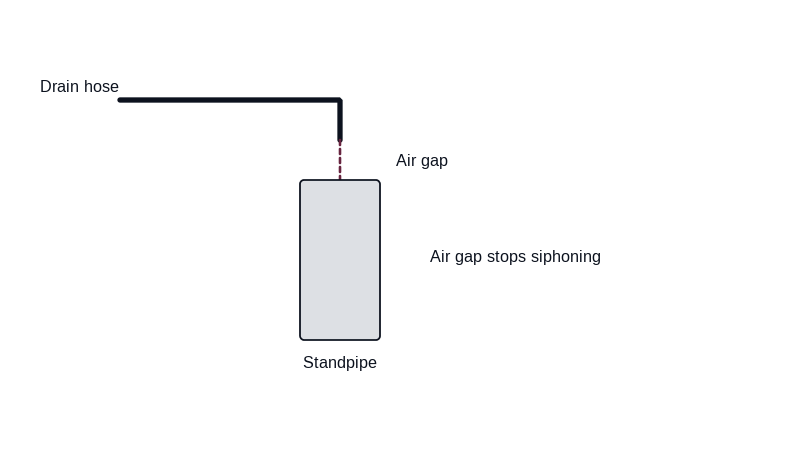
- Run the drain hose into a standpipe or the laundry sink drain, keeping a gap of open air above the water line so dirty water cannot siphon back.
- Fill the brine tank, plug in the head, set hardness and time, then open the water slowly and inspect each joint.
Why leave out the outdoor taps and the kitchen drinking line?
Soft water uses salt, and the extra sodium and lost minerals are not needed in garden water or, for some people, the drinking line. Many installers branch the cold line so outdoor faucets stay on hard water, and some leave one kitchen tap alone. That choice is made at the pipe, so decide it before you cut.
Placing the unit after the outdoor takeoff saves salt and keeps lawns and plants off softened water. If you share a duplex or have a rented unit upstairs, check where your supply splits first, because a shared main changes who may legally change the pipe.
Can you legally put in a water softener yourself in California?
Many cities let an owner do plumbing on their own home, though a permit may still apply, and anyone doing the job for pay needs a California contractor license once the work needs a permit or generally costs $1,000 or more. Every city sets its own rules, so check with your building office first.
One more California rule: state law allows local sewer agencies in some regions to restrict or prohibit salt-based self-regenerating softeners because of the brine they send down the drain. Whether your area does is a local matter, so ask the city or sewer agency before buying a salt unit. Salt-free conditioners, which do not regenerate, avoid the issue but do not remove hardness the same way.
For East Los Angeles, permits come from Los Angeles County. For Bell, the building office sits in City Hall. Both can say if a softener needs a permit.
Is there a way to remove hard water scale without a softener?
Existing scale yields to white vinegar held in a bag around a showerhead or faucet, a descaling flush for a tank heater, and descaling solution for a kettle or coffee maker. That clears what has accumulated but does not prevent new scale; only cutting the minerals, or flushing on a schedule, does.
For fixtures, soak an hour or two, scrub gently and rinse well. For a water heater, release a few gallons from the tank valve yearly so sediment flows out, and never mix vinegar with bleach or other cleaners. Fixture-by-fixture instructions are in the page on getting rid of hard water scale, and preventing scale in the first place explains which fixes truly lower mineral levels.
A softener does not inflate a bill on its own, but a leaking valve or stuck drain cycle can. If your bill spikes after an install, read about water softeners and high bills.
When does the softener job belong to a plumber?
Bring one in when the main line is galvanized or corroded, there is no safe drain or outlet nearby, the pipe is hard to reach, or your city requires a permit. The same goes if you cannot tell which pipe feeds the house, since a wrong cut can flood a floor.
Older Bell homes often mix old galvanized, copper and newer repairs. Corroded galvanized pipe can crack under cutting and wrenching, turning a one-hour job into a repipe decision. For that scenario, see the article on replacing galvanized pipe. For help, the water softener installation service page outlines how a local plumber visits and quotes.
Common questions
What is the usual time to fit a softener?
Expect a plumber to spend two to four hours where the pipe can be reached readily and a drain sits nearby. A first-time owner should reserve a full day for draining, cutting, fitting, testing and the first regeneration. Galvanized pipe, a main buried in a wall, or a missing outlet or drain adds time.
Which questions suit a softener installer before the job starts?
Ask how the unit gets sized, where the drain hose will run, whether outdoor taps and a drinking line stay hard, who obtains any permit, and what is included in the price. Raise the material of the main as well, since it dictates the fittings. Get every answer written down ahead of the first cut.
Is galvanized pipe suitable for a softener hookup?
Possible, yes, though this is the riskiest situation. Galvanized pipe corrodes from the inside and may be far weaker than it looks, so cutting it can strip threads or crack neighboring sections. A transition fitting joins steel to copper or plastic. If the pipe is badly corroded, repiping that stretch first is safer.
Should someone be home while the softener goes in?
Usually yes, to open access to the water main, the heater area and the drain, and to approve where the unit sits. Water service is interrupted for a portion of the work. Mention pets and shared units to the plumber so access is clear, and ask how long the water will stay off.
Ready to price it? Fill in the quote form and say what your pipe is made of and where the main enters the house.