One national price guide lists softener installation at $1,100 to $3,000, averaging near $2,500 for a dual-tank ion exchange system in a three or four bedroom home. The full spread of jobs runs from about $600 to $7,000. These are guide numbers, not a quote from us or any plumber. For a local figure, use the quote form, and Slauson Plumbing lines up the visit.
What does an installed whole-home softener cost?
That national guide gives $650 to $3,000 for an installed ion exchange softener, the type most people mean by "water softener", with the unit at $500 to $2,000 and labor at $150 to $1,000. A combined softener and filter system for the whole house is listed at $1,500 to $10,000. A plumber's real quote depends on your house.
Here is how the guide breaks down by type:
| Type | Installed total |
|---|---|
| Magnetic | $250 to $550 |
| Electronic | $250 to $750 |
| Descaler | $350 to $2,450 |
| Ion exchange (salt-based) | $650 to $3,000 |
| Distiller | $1,350 to $5,000 |
| Reverse osmosis | $2,400 to $3,100 |
Only ion exchange units actually soften water by swapping hardness minerals out of it. Magnetic, electronic and descaler devices are sold to reduce scale, but they work differently, so read the claims with care and compare like with like when you collect quotes.
What about running costs and lifespan?
Running costs are salt, water for regeneration, and a little electricity. A home-inspector association lists about 20 years for a water softener in its estimates, which is a long life for an appliance. Salt is the main recurring cost, and prices vary by store and by amount, so no figure is given here.
Maintenance is light: keep salt topped up, clear any salt bridge, and check that the resin recharges. The recharge cycle has three steps, backwash, brine draw and rinse, and the waste water typically goes down the drain. If your bill rises after installing a softener, a valve or settings problem may be sending too much water to drain. The page on whether a softener can cause a high water bill explains.
Pairing with a heater helps: scale shortens the life of heating elements and tanks, and a softener may extend it, though the benefit depends on your water.
Do I need a softener in the first place?
Not everyone does. A softener helps wherever hard water deposits scale on fixtures and inside heaters and pipes. Your water provider issues an annual water quality report stating hardness, so read that before paying for anything. Bell has more than one provider by area: Golden State Water and Cal Water's East Los Angeles district both list the city, so your bill names yours.
Do not guess at hardness from spots on glasses. Read the report, or use a test kit. If the water is only moderately hard, a cheaper step such as a descaling routine may be enough. Options are covered by the page on preventing hard water scale and the guide to removing hard water scale.
Soft water has trade-offs. An ion exchange unit swaps hardness for sodium and recharges with salt, and the discharge goes to the sewer. One study cited in a general reference found softened water at an average of 278 mg/L sodium, which may matter to people on sodium-restricted diets. Ask a doctor if that applies, and consider keeping a hard-water tap for drinking.
What does the installation involve, and how long does it take?
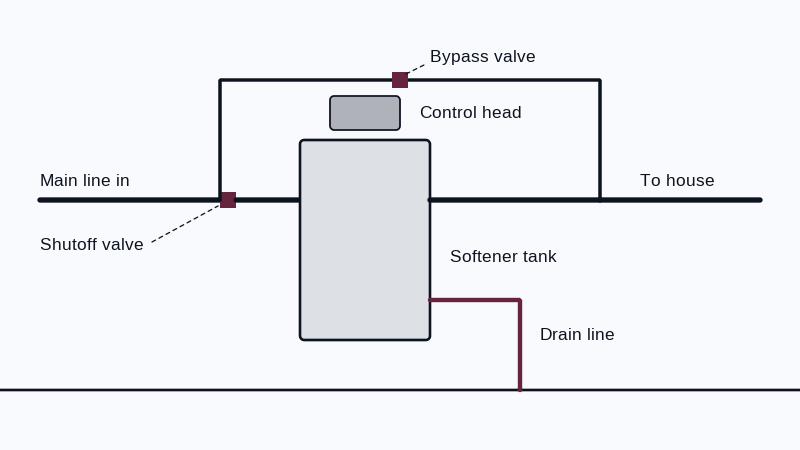
The plumber shuts the water off, taps into the main line past the meter and ahead of the heater, fits a bypass and the unit's inlet and outlet, runs the drain line, connects power, loads salt, sets hardness and regeneration, and tests. A straightforward job is typically a half day to a day, and the plumber confirms the time after seeing the site.
Where the unit goes is part of the price. Garages are common, because there is space and a drain nearby. The line to outdoor taps is usually left on hard water, since lawns and cars gain nothing from softened water. The plumber can arrange that during installation.
A whole-house installation normally goes to a contractor, because work of $1,000 or more in labor and materials, and any job needing a permit, generally requires a California contractor license. The steps themselves are described in installing a water softener.
Which factors move the price?
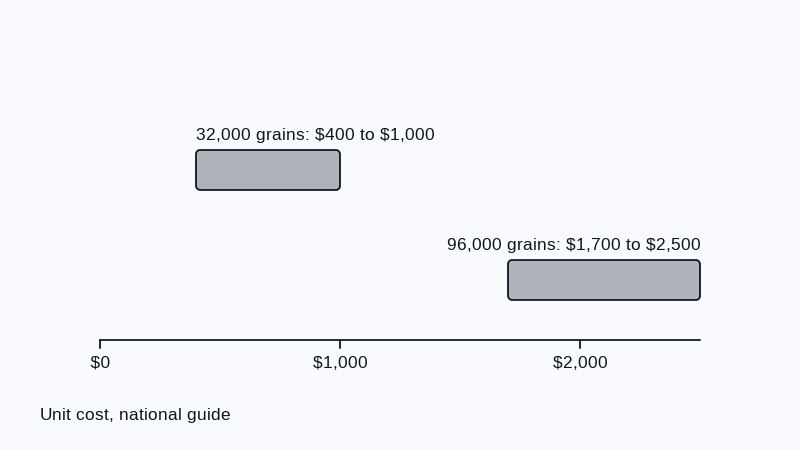
Capacity, tank layout, labor and extras. Bigger households need bigger units, and the guide lists unit costs rising from $400 to $1,000 for a 32,000 grain unit up to $1,700 to $2,500 for 96,000 grains. Dual-tank systems cost more than single tanks, and a combined filter adds again. Labor at $100 to $1,000 varies with plumbing changes.
Ask the plumber what is included. A typical installation covers a bypass valve so you can isolate the softener, connection to the main water line, a drain line for the backwash, power for the control head, and a place for salt. Extras that raise the price include new drain plumbing, electrical work, a pressure regulator, a sediment filter and moving pipe in a tight garage.
Watch for hidden costs too: taking out an old unit, any permit that applies, and repairs the plumber finds necessary before connecting, such as a corroded shutoff. The more general page on softener installation cost in Bell goes over the same ground in plain terms.
How can I get a firm quote?
Fill in the quote form with your address, household size, number of bathrooms, the spot you would like for the unit, and your provider's hardness figure if you have it. A local plumber answers with a visit and a written price. Forms are checked on weekdays from 9am to 5pm. For installation service details, see water softener installation service.
Common questions
What is the typical install price for a softener?
National guides show about $1,100 to $3,000 as the typical installed range, averaging near $2,500 for a dual-tank ion exchange system in a 3 to 4 bedroom home. Labor alone runs $100 to $1,000. Only a plumber's quote after a visit gives a reliable figure for your house.
Which softener size suits my house?
Size depends on household headcount, water hardness and how often you want regeneration. Larger households and harder water need larger capacity. Give the plumber your provider's hardness figure and the household size, and ask for the capacity to be justified in the quote.
Is a whole house softener worth it?
If your water is hard and you see scale on fixtures, heaters and glass, many people find it is. If your water is only mildly hard, it may not pay back. Check the provider's report, compare the installed price with the benefit, and note the sodium and drain water trade-offs.
Is a DIY softener install realistic?
Fitting involves cutting into the main line, plus drain and power connections. Work that needs a permit or reaches $1,000 in labor and materials requires a California contractor license. Even for smaller jobs, a leak at the main can flood the house, so most owners hire a plumber.
Does a softener remove all minerals?
No. It trades calcium and magnesium for sodium or potassium, and does not make water pure. It does not remove most other contaminants. A reverse osmosis system or a filter is a different purchase, and the table above shows reverse osmosis costing more installed.