Water is coming from somewhere it should not. Start by closing the main valve, normally located next to the meter or at the spot the line reaches the building. Turn it closed (clockwise for a wheel handle, a quarter turn across the pipe for a lever) and open a low tap to empty the pipes. Then inspect what sits nearby: outlets, light fittings and appliances. The rest is walked through below, and Slauson Plumbing can line up a local plumber via the quote form once the job outgrows a quick fix.
What comes first when you spot a leaking pipe?
Shut the main, open a faucet at the lowest point to release pressure, and keep electricity away from the water. If water reaches outlets, a ceiling light or the electrical panel, switch off the breaker only if the panel is reachable without wading through water; otherwise stay clear and contact your electric utility or 911.
Then limit the damage: move belongings, lay towels, set a bucket under drips, and photograph everything with timestamps for any insurance claim. Waiting for a leak to "settle" is pointless, since it will not.
A pipe that has burst and sprays water is urgent: shut the main first, afterward see the guide on a burst water pipe and the page covering urgent plumbing help for a burst pipe. A slow drip can hold for a booked visit, but keep the main shut if it is getting worse.
What does a plumber inspect, and what should I put to them?
The plumber confirms the source, checks pressure and pipe condition along the run, repairs or replaces the failed section, and pressure-tests it before walls are closed. Ask what failed, whether more of the same pipe is at risk, if a permit is needed, and whether wall patching sits inside the quote.
Hold on to the old pipe section if possible; it shows the cause and can support an insurance claim. Request written findings if damage is large. Renters should notify the landlord immediately, since the lease and the cause decide who pays.
Attach a photo of the leak to the quote form, plus where it is and whether the water is off. A local plumber replies with a visit and a written price. Someone checks the form Monday to Friday, 9am to 5pm.
Is a DIY fix for a leaking pipe possible?
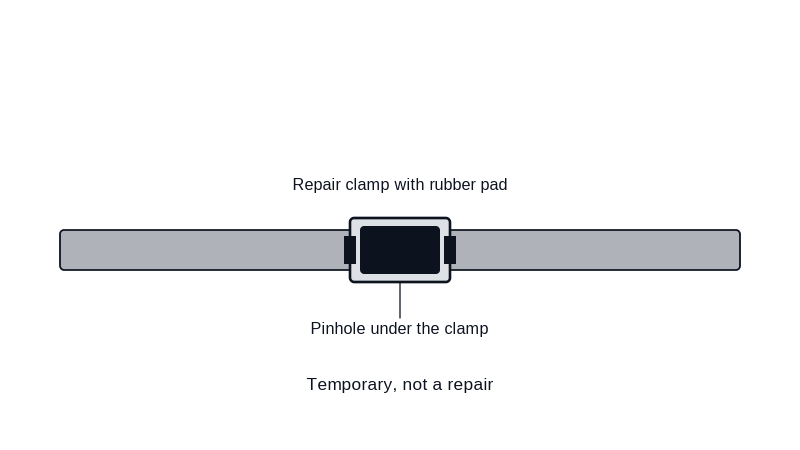
For small leaks on accessible pipe, yes, as a temporary measure. A rubber pad and clamp kit, a push-fit coupling or epoxy putty can hold a pinhole or a split long enough to arrange a proper fix. These are patches, and a patch is not a repair. Water must be off and the pipe dry before any product is applied.
Match the fix to the pipe:
- Copper pinhole: use a clamp or a push-fit sleeve; the guide to pinhole leak repair in copper pipe has details
- Plastic pipe: cut out the damaged section and join in a matching coupling; see stopping a leak from plastic pipe
- Galvanized steel: leaks at corroded threads usually mean the section is failing, and patches fail again
- Polybutylene: fittings fail at bends and joints, and replacement of the whole system is the long-term fix
Some work is not for owners. Under California rules, anything costing $1,000 or more in labor and materials, along with every permit job, generally needs a contractor holding a state license. Work on the main, the buried service line or a gas line falls on the contractor side of that threshold.
What if the water is escaping under the floor?
Slab leaks are the hardest to find and the costliest to ignore. Watch for a warm patch on the floor, the sound of flowing water while everything is off, a meter that turns with the house shut down, and damp or lifting flooring. Never dig or break concrete yourself.
A plumber locates it with acoustic and thermal tools, and the choices are typically a local patch, rerouting the line through walls or ceiling, or repiping. Costs depend on method and access, and the page on slab leak detection and repair sets out the options. Close the main if you suspect it, and arrange an inspection promptly.
How can I locate the origin of the water?
Follow the water uphill. Wet drywall, stains, bubbling paint, or damp carpet all show where water ends up, and the source is usually above or beside it. Inspect the pipes under sinks, behind toilets and around the water heater, looking for green crust on copper, rust trails on steel or a soaked insulation sleeve.
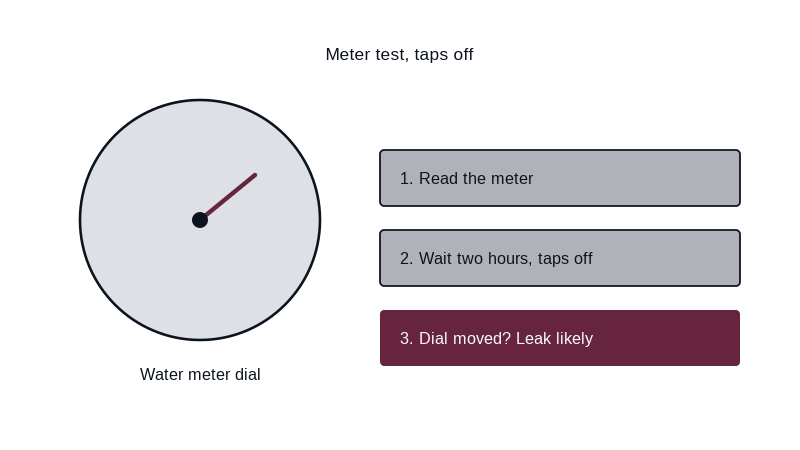
A leak you cannot see calls for the meter. Record the reading, leave every tap off for 120 minutes, and look at the dial once more; a changed number or a spinning leak indicator means water is escaping. The EPA reports that the typical home loses above 9,300 gallons a year to leaks, so small ones deserve early attention.
To learn whether the leak is indoors or outdoors, close the main at the house. When the meter indicator stops, the leak is inside; when it keeps turning, the fault lies in the buried line from meter to house. The hidden cases are covered in the pages on ceiling leaks and leak detection cost.
When is a repair enough and when does the pipe need replacing?
Repair alone is enough when the remaining pipe is in good shape and the failure came from a fitting, a joint or an accident like a stray nail or a freeze. Replacement is the better route when leaks keep appearing along the same line, when the pipe type is known to fail, or when the pipe is corroded through its length.
Age is a factor. A home-inspector association lists about 50 to 70 years for copper water lines and about 40 for PEX, as estimates. Polybutylene, which went into several million homes from roughly 1978 until 1997, was tied to leaks and is no longer accepted by U.S. codes. Old steel rusts from the inside.
In the bungalows and small tract homes of the 1920s to 1950s that are common around Bell, the pipes may be anything from original steel to later copper. A plumber can tell at a glance, and can say whether the leak is isolated or a hint that repiping the house merits a quote.
Common questions
How many hours does a pipe leak fix take?
A simple fitting or short pipe section can be mended within a couple of hours once the plumber has access. Leaks inside walls take longer thanks to opening and patching, and slab leaks can stretch to days. Expect the plumber to state the time after seeing the leak, since access drives most of it.
What is the most dependable stopgap for a dripping pipe?
On a dry, accessible pipe, a clamp-style repair sleeve with a rubber pad is the most dependable stopgap, with epoxy putty a second option for pinholes. Neither is permanent. Turn the water off, fit the patch, and book a proper repair soon. A patch can mask a pipe that is failing along its length.
Does home insurance pay for a pipe leak?
Policies differ. Many cover sudden and accidental harm from a burst pipe, but exclude gradual leaks and the pipe itself. Read your policy, take dated photos, stop the water, and save receipts for emergency work. Check with your insurer before repairs, since some require inspection of the damage first.
Can a pipe leak push my water bill up?
Yes, because water that leaks still passes through the meter. Run the meter test over two hours and compare this month with a quiet one. A page on a high water bill shows how to separate leaks from changes in use.
Does a dripping pipe count as an emergency?
It does when water is spraying, running near electrics, soaking ceilings or flooding floors. Shut the main and get a plumber lined up right away. A slow, contained drip is less urgent, but still needs a repair soon, because small leaks tend to grow and damage structure unseen.