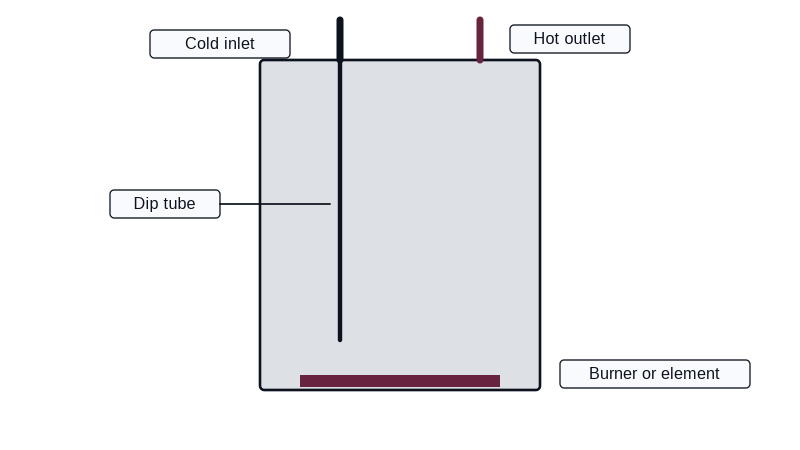
Inside a storage water heater, the dip tube guides incoming cold water to the tank floor so heating starts from below. When the tube cracks, shrinks or crumbles, cold water arrives high in the tank, right beside the hot outlet's pickup, and showers go lukewarm. A plumber replaces it quickly. The water heater repair page shows how a visit is arranged, and the home page explains who we are.
What is the dip tube for?
The cold inlet inside the tank joins a long, thin tube that reaches almost to the bottom. Denser cold water stays low and gets heated by the burner or lower element, while the hot water climbs and exits through an outlet at the top. Without the tube, incoming cold would splash directly into the hot layer.
That is the whole design: a narrow plastic straw. It costs little, yet it spends years in a tank of hot, mineral-rich water, and some older plastic tubes just turn brittle. The USGS notes that hard water leaves calcium carbonate deposits when heated, and the same mineral-heavy conditions explain why many tanks collect sediment on the bottom.
Tankless units have no dip tube. If yours is an instant water heater, this page does not apply, and a lukewarm fault there has other causes.
How do I know the dip tube has failed?
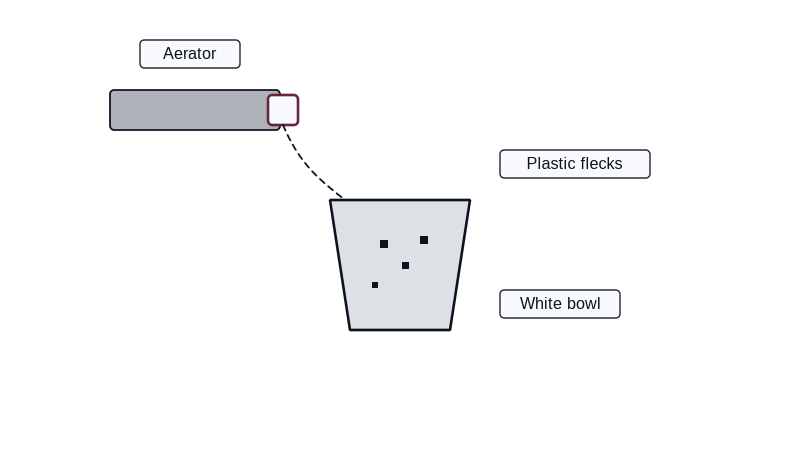
The strongest clue is hot water that runs out much sooner than before, even though the heater fires and the top of the tank feels hot. Many owners also find tiny white or beige plastic flecks clogging faucet aerators and showerheads. Neither sign proves it alone, so a plumber should rule out other causes.
Compare it with the usual suspects:
| Symptom | Dip tube | Something else |
|---|---|---|
| Hot water fades within minutes | Likely | Failed lower element (electric), weak burner (gas), heavy sediment |
| Plastic specks at the aerators | Very likely | None common |
| No hot water at all | Unlikely | Pilot, thermocouple, tripped breaker, failed element |
| Water too hot, then cold | Unlikely | Thermostat, mixing valve |
When the taps give nothing hot whatsoever, see no hot water despite a working heater and thermocouple replacement for gas models, or replacement heating elements for electric ones.
To check for flecks, unscrew a showerhead or faucet aerator and rinse it into a white bowl. Bits of hard plastic point at the tube.
Is replacing a dip tube a DIY task?
A confident owner can manage it, though it is messier than it looks. The work means cutting off gas or power, closing the cold supply, draining enough of the tank to reach the fitting, disconnecting the inlet, pulling the old tube and fitting a new one. Rust-seized fittings and scalding water are the real hazards. When in doubt, hire it out.
If you attempt it, follow this safe order:
- Set a gas unit's control to off or pilot; on an electric unit, switch the breaker off. An electric element must never run dry.
- Close the cold-water valve over the heater.
- Open a hot faucet somewhere else in the house, which lets air in and the tank drain.
- Give the water time to cool down, since the drain valve outlet delivers very hot water.
- Attach a hose at the drain valve and run the tank down until it sits under the inlet level.
- Unscrew the inlet nipple, usually using a pipe wrench, and look for the old tube hanging from it.
- Install a tube of the right length and material for your model and reconnect. Refill with a hot faucet left open until the spitting ends, then restore power or gas.
Hire a plumber if any fitting is corroded, the heater is gas and relighting it worries you, or the tank is old. A heater that is close to the end of its working life might not deserve new parts. See when to repair or replace a hot water heater and what replacement costs.
Should you detect gas, leave the building. SoCalGas advises staying away from flames and switches and reaching your gas utility after you are somewhere safe, with 911 for any immediate danger. Never try to fix a gas pipe yourself.
Why might a new heater beat a new dip tube?
Choose a new heater if the tank leaks, repairs keep piling up because of its age, or years of sediment have built up. A dip tube costs little, but the tank around it is what ages. When the tank is rusty or the relief valve keeps dripping, spend the money on the heater itself.
Things that tip the decision:
- Age. If you do not know the age, the serial number on the label usually encodes the date, and the manufacturer can decode it.
- Leaks. Water around the base is a tank problem, not a tube problem. Start with water heater leak repair.
- Anode rod and sediment. Manuals commonly advise checking the anode rod and flushing sediment on a regular schedule. A heater nobody has serviced may be overdue.
- Permits. A water heater change typically involves a permit and a hired contractor. Each Gateway city's building office decides how it is handled, so ask yours.
Leaning toward replacement? The guide to hiring a plumber for a new water heater explains what to expect, while urgent water heater repair handles pressing cases. Form submissions are processed on weekdays between 9am and 5pm.
Common questions
How long is a plumber on site to replace a dip tube?
With the part in hand, a plumber typically wraps up in under two hours from shutoff to hot tap, draining and refilling included. A seized inlet fitting, heavy sediment needing a flush or a tube that has to be ordered each add time. A closer look at the heater lets the plumber narrow it down.
Which questions are worth asking a plumber about this repair?
Have the plumber verify that the dip tube is really the cause before swapping it, and learn what the price covers and whether the cold inlet nipple and shutoff valve get inspected on the same visit. Request the price in writing first, and ask whether the heater's age makes replacement the wiser choice.
Is someone required at home during the job?
An adult should be there at the start to approve the price, and again at the end to test the hot water. Tenants may need landlord permission. The plumber needs reach to the heater, a hose route for draining and a working hot tap, so clear space around the unit beforehand.
Do all water heaters have a dip tube?
Almost all tank-style heaters do, gas and electric alike. Tankless units do not. Some heaters bring cold water in through the side or bottom without a long tube, so the part is not universal. Your model number tells you; the manufacturer's parts list will show whether a dip tube is listed for it.