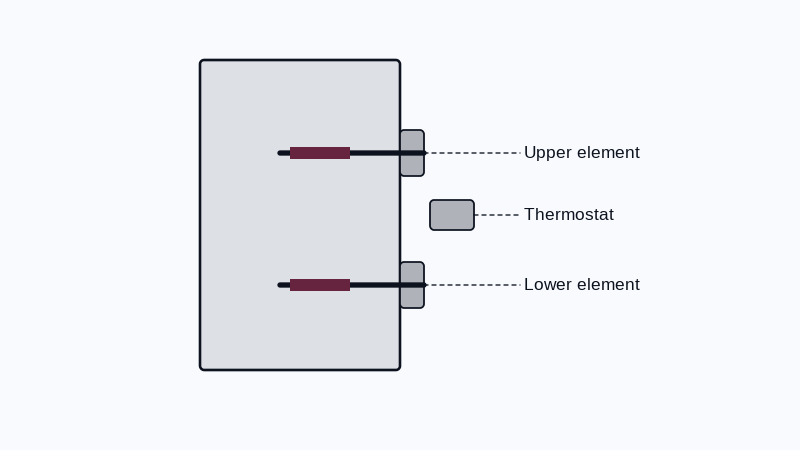
Inside an electric tank heater sit one or two metal rods, the elements, bolted through the shell at different heights. Lose one and the heater limps along: a meager hot supply, a lukewarm stream, or a shower that goes cold midway. The water heater repair page gives the wider picture, and this guide focuses on the element: signs, testing, price and safety. Gas heaters have no element, so skip this if yours runs on gas.
How do I know the heating element has failed?
The pattern is usually partial. With a dead lower element only the top of the tank stays hot, and that small amount runs out fast. A dead upper element may leave no hot water whatsoever, since the upper one normally begins the heating cycle. A tripped breaker or a repeatedly tripping one can also point to an element that has shorted.
Look for this mix of signs:
- Hot water for a minute or two, then cold
- Lukewarm water that never gets properly hot
- A breaker that trips when the heater runs
- No hot water at all with power at the panel
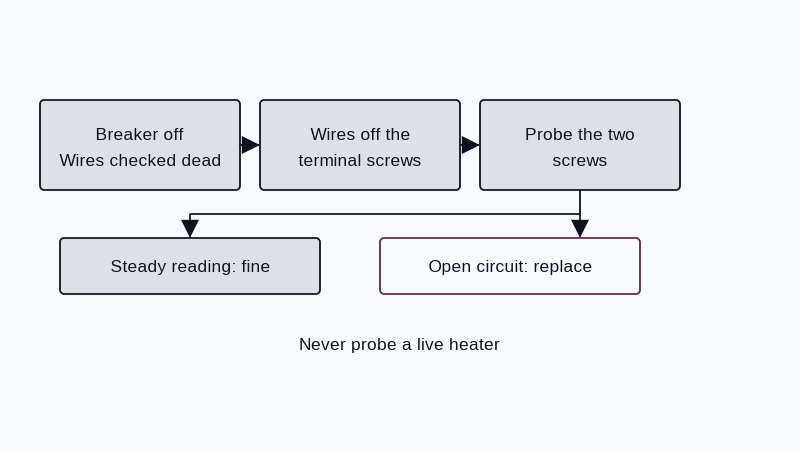
The proof comes from a continuity test with a multimeter: breaker off, wires disconnected from the terminals, probes on the two screws. An open circuit means the rod is finished. Never probe a live heater, which the next section explains.
Can I safely change a heating element on my own?
The repair is routine, but it involves household voltage along with a hot-water tank, so sequence matters. Breaker off, a tester held to the wires to prove they are dead, cold supply shut, and the tank drained below the element's level before anything is unscrewed. If any step feels uncertain, a plumber should do it.
One mistake ruins elements: powering one that is not submerged. A dry rod burns out within seconds. After fitting the new part, open a hot tap, let the tank fill until water runs steadily, and only then restore power. Match voltage and wattage to the old rod and the rating label, since ratings differ from tank to tank.
Scalding is a real risk, as skin can burn in less than five seconds at 140 degrees F. Work worth $1,000 or more generally requires a California contractor license, and permitted work always does. An element swap is usually far below that figure, but wiring changes, a new heater or anything that touches gas is a contractor's job.
What does a replacement element cost?
A national price guide lists a heating element or coil repair at $200 to $750 with labor, and the part alone is typically a small fraction of that. The same guide puts a thermostat at $75 to $150 and shows an overall water heater repair range of $150 to $750. These are published guide figures, not a quote, and the plumber sets the final price after testing.
What changes the price:
- Whether one element or both are replaced
- Whether draining the tank is needed to get at the part
- Scale and corrosion on old screws, which can make removal slow
- The time of the visit, since urgent work costs extra
The guide also says that if the repair quote reaches about $1,000, replacing the heater is often the better value, and that tank heaters typically last 8 to 10 years. A home-inspector association gives 6 to 12 years for a conventional tank. For a heater of that age, have the plumber look over the anode rod and the tank bottom while the element is out.
Is it the element or the thermostat?
Both parts cause the same symptoms, and a plumber tests both before replacing anything. The thermostat tells the element when to heat. If the thermostat is faulty, a good element may stay cold, or overheat and trip the safety cutoff. A tank thermostat can also read a different temperature from what leaves the tap, since it measures only at its own height.
A thermostat costs less to replace and is sometimes swapped in the same visit on an old heater. The causes of no hot water are taken in order on another page, and a heater that works but gives no hot water handles cases where nothing looks broken.
When only one tap runs cold, the heater is likely fine, and the guide to read next is no hot water at the kitchen sink.
Why do elements burn out, and can I make the next one last?
Age, scale and dry firing kill most elements. Minerals crust the rod so it overheats, and settled sediment can bury the lower one. Hard water accelerates both. Flushing the tank now and then, and inspecting the anode rod, slows the process.
The anode rod rusts away so the tank steel does not, and once it is used up the shell itself starts to rust, a far worse result than a dead element. Anode rod replacement explains when to check it. The hardness of your supply is stated in the water quality report from your provider, so consult it before assuming scale is the cause.
Owning or considering a water softener adds another reason, given its effect on a heater. The water softener installation cost guide covers what is involved.
What if the heater is old, or leaking?
Water pooling at the base means a new element will not help. The cause could be a fitting, the relief valve or the shell, and a holed shell cannot be patched. A dripping relief valve is a separate repair, covered under relief valve replacement.
An old heater with several faults is usually better replaced, and water heater replacement cost lists the price drivers. For an electric heater inspection in Bell, send the quote form. A person opens it on weekdays from 9am to 5pm, and a nearby plumber answers with a visit date and a written price. Other jobs we arrange are on Slauson Plumbing.
Common questions
Can I replace just one water heater element?
Yes, if only one has failed. Most plumbers test both while the power is off, because elements of the same age often wear out in sequence, and replacing both at one visit can avoid a second trip. Ask for the price both ways and decide on the numbers the plumber gives you.
How long does a heater element last?
No fixed figure exists. Elements typically serve several years and fail sooner in hard water or with sediment buildup. A conventional tank heater is listed at 6 to 12 years overall, so an element in a middle-aged tank might outlive the tank. Flushing the tank slows scale.
What size element does my heater need?
It must match the voltage and wattage printed on the old element and the heater's rating label, and fit the mounting type, whether screw-in or bolted flange. Fitting the wrong wattage can overheat the tank. Photograph the label and the old element, and hand the plumber the model number.
Why does my water heater trip the breaker?
A shorted element or a failed thermostat commonly trips a breaker. The breaker is doing its job, so do not replace it with a larger one or reset it repeatedly. Turn the heater off, and let a plumber check the element and wiring ahead of any power restoration.
Is there a cheaper fix than a new element?
Sometimes. If the problem is a tripped reset button on the thermostat, pressing it costs nothing, but a heater that keeps tripping has a real fault. A plumber who tests first avoids paying for a part you do not need. Replacement costs sit at $200 to $750 nationally, so testing is worth the fee.