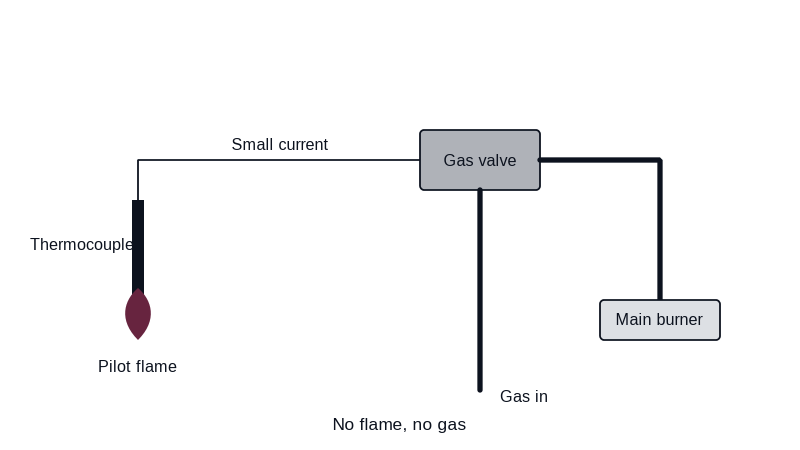
A thermocouple is a small metal probe parked in the pilot flame of a gas water heater, and it tells the gas valve the flame is alive. When it wears out, the valve shuts, the pilot goes dark and hot water ends. Plumbers can change one fast, and a national cost guide lists the job at roughly $150 to $325. The water heater repair page for Bell explains how to arrange a visit.
What does a thermocouple do on a water heater?
Pilot heat makes the thermocouple produce a faint electric current, enough to hold the gas control valve open. If the flame dies, the probe cools, the current drops and the valve stops the gas. This is a safety part, so a heater with a failed one shuts itself down rather than letting gas escape.
Older heaters with a standing pilot, common in 1950s tract houses and small bungalows, have one. Newer heaters with electronic ignition use a flame sensor and have no thermocouple. Look low on the tank behind the access door: a small window or tube showing a blue flame means a standing pilot. A control with only a digital display suggests your heater works another way.
Can you replace a thermocouple yourself?
Some homeowners do, but gas is the place to draw a line. The part is simple: unscrew the old probe from the gas control and the pilot bracket, install the new one and relight. The risk is a loose fitting or a fault you overlook. California requires a contractor license for gas piping and for jobs needing a permit, so if in doubt, hire a plumber.
Never work with the gas flowing. Set the gas control to off, let the area air out, and stop if you smell gas. If you do, exit the building, then reach your gas utility from outside, or 911 if anyone is in danger. Leave switches and lighters alone indoors. During a visit, a plumber can also test the gas connection and inspect venting, which a home swap would skip.
How do you know the thermocouple has failed?
The textbook symptom is a pilot that burns while you press the button but dies seconds after release. Others include a pilot that will not stay lit from one day to the next, a probe tip that looks black, bent or corroded, or hot water that simply vanishes after working fine.
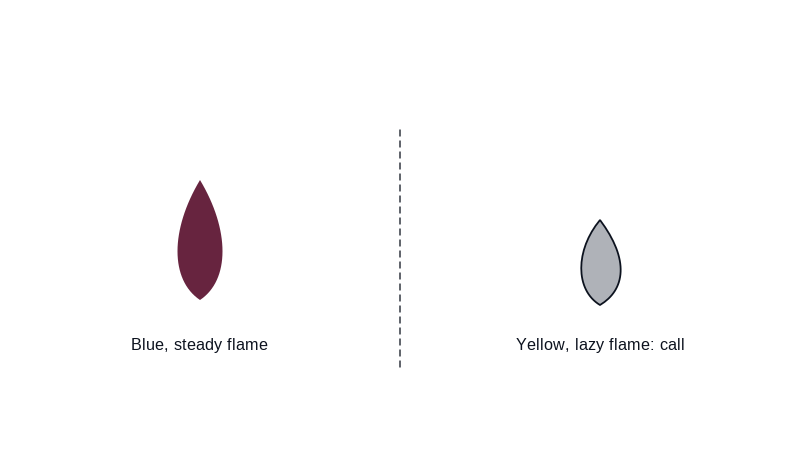
Before blaming the part, rule out a drafty closet, a blocked vent or a dirty pilot tube, any of which can snuff the flame. Soot around the burner or a lazy yellow flame signals combustion or venting trouble, which needs a professional rather than a new part. Carbon monoxide is a real risk with gas appliances, so open windows and go outside if anyone feels dizzy or sick. The page on why you might have no hot water lists other causes to check.
How much does a new thermocouple cost?
The national guide from Fixr (updated August 2025) lists thermocouple replacement at about $150 to $325, inside a wider water heater repair range of $150 to $750 averaging near $450. It adds $100 to $200 for urgent repairs. These numbers come from a cost website and are not a quote from Slauson Plumbing.
In Bell the price turns on the heater model, how easily the burner compartment can be reached, whether the gas control valve is worn too, and the plumber's minimum visit charge. On a tank 12 years old or more, fixing may not pay if other parts are failing. Request the repair figure and the replacement figure together. The water heater replacement cost page lists what drives the price of a new unit.
When does the job go beyond a DIY fix?
Hire a plumber if the pilot will not hold even with a new thermocouple, if you notice a gas smell, soot or a yellow flame, if the heater roars or pops, or if the gas control valve is the broken part. Work on a gas valve may require a city permit.
Bell permits are handled by Building and Safety at City Hall, 6330 Pine Avenue, so ask the plumber if this repair needs one. Look up the contractor on the CSLB site and ask about insurance. A deposit is capped at $1,000 or 10 percent of the contract price, whichever is lower. Renters should tell the landlord before anyone touches the heater.
Is it better to repair the heater or buy a new one?
Replace when the tank leaks, rust shows at the base, or the repair quote eats up much of a new heater's price. Repair when the tank is dry and sound and the broken part is cheap. A new thermocouple in an aging heater buys little time, so let age settle the question.
Typical lifespan and warning signs are covered in how often a water heater needs replacing. Considering a tankless model? The tank versus tankless comparison describes the venting and gas line changes. Tankless units light electronically and have no thermocouple.
Common questions
How long does the swap take?
With the part on the truck and an easy burner compartment, a thermocouple swap often takes well under an hour, plus time to test the pilot and check for leaks. Travel and extra faults add more. Visit times are set by the local plumbing business, so none can be promised here. Ask for the window in your quote.
What goes into a thermocouple quote?
Confirm the price includes the part, labor and a gas leak test on the connections. Ask what you owe for the visit if the thermocouple is not the problem. Verify insurance and a contractor license from California, and get repair and replacement prices in writing.
Does an adult have to be home?
Yes. Someone grown should open up the heater, usually in a garage, closet or utility room, and agree to the work. Renters need the landlord's approval. Mention pets or tight access in your request, and keep the area around the unit free of clutter.
Why does the pilot keep dying after a new thermocouple?
Likely causes are a draft, a blocked flue, a dirty pilot tube, a loose probe or a faulty gas control valve. Do not keep relighting a pilot that refuses to hold, especially with a gas smell or soot. Turn the heater off and have a plumber check it, venting included.
The rest of our guides start from plumber in Bell.