Water line breaks that happen in or beneath a concrete floor are called slab leaks. Nothing shows on the surface, so the early clues are a rising bill, warmth underfoot, or running water heard while every fixture is off. A local plumber repairs or reroutes the line, starting with finding the exact spot. The Slauson Plumbing home page shows what other work we arrange.
Choosing the company matters more here than on most jobs, because the work is costly and the first diagnosis can steer everything after it.
What are the signs of a slab leak?
Watch for a water bill that climbs though habits have not changed, a warm or damp patch on the floor, running water heard with all taps closed, weak pressure, or a meter that never stops. Together these suggest a hidden pressurized line. A specialist confirms it using acoustic gear or a camera rather than a guess.
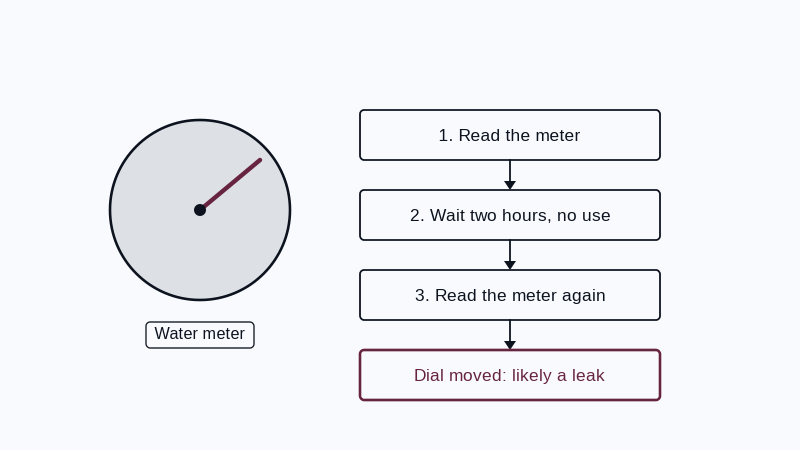
Try the EPA meter check yourself: note the meter reading, use no water for two hours, then read it again. Any change means a probable leak. A hot-water line in the slab tends to appear as a warm spot on the floor, and a cold-line leak as damp flooring or a musty smell.
What work does a slab leak repair company do?
A good company locates the leak first, then lays out the choices. Typical options are a spot repair that opens the floor at the break, a reroute running the line via walls or the attic, or repiping the house. The business pulls permits where needed, protects your flooring, and tests the new line under pressure before closing up.
Leak detection uses tools such as acoustic listening equipment, thermal imaging and pressure testing, and honest businesses say which they used. More detail sits in slab leak detection and repair and slab leak repair or repipe. If one spot is the only problem, the smaller fix can be enough.
Which repair is right: spot repair, reroute or repipe?
A spot repair suits one clear break in an otherwise sound line. A reroute abandons the leaking slab pipe and runs new line overhead, which avoids more breaks in the same pipe. A repipe swaps out everything and fits houses with recurring leaks or failing material. The right pick depends on pipe age, material and how many breaks there have been.
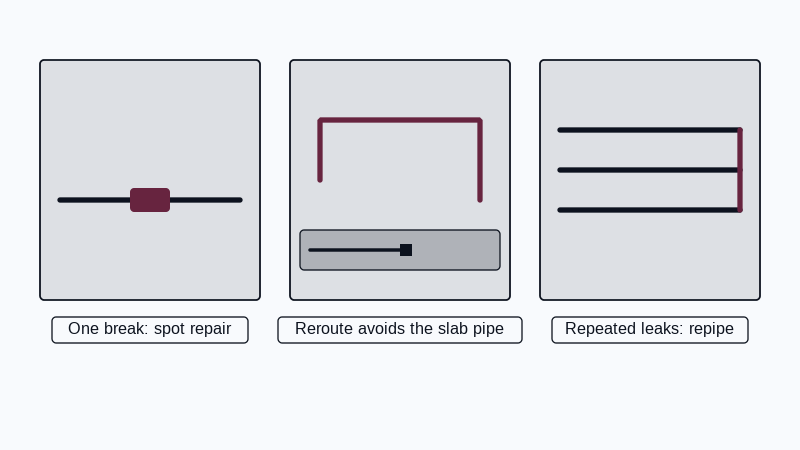
Ask the company why it recommends one over another. When the same pipe leaks twice within a few years, rerouting looks better. Considering a whole-house repipe? National guides average it near $7,500, spanning $1,500 to $15,000. Treat that as a guideline rather than a quote from us.
What is the way to pick a slab leak repair company?
Look for a business holding a California contractor license that provides a written estimate naming the detection method, the repair option and the permit plan, and explains which flooring or drywall gets opened. State law requires that license once labor and materials together reach $1,000, and for every permitted job.
Get at least two quotes. Look up the license number on the Contractors State License Board website. Find out who obtains the permit and which inspection follows. Be wary of anyone who names a price before finding the leak, or pushes a full repipe without testing. California caps a deposit at $1,000 or 10 percent of the contract price, whichever is less, so a larger request is a warning sign.
What are the immediate steps for a suspected slab leak?
Shut the main water valve when you hear running water or see damp flooring, and keep it shut until a plumber has inspected. Move rugs and valuables off wet areas, take a photo of the meter, and note when you first noticed the signs. If your homeowner or renter policy might cover it, tell the insurer early.
If there is a wet floor near outlets or appliances, stay clear and cut power at the panel only if that is safe, because water mixed with electricity is dangerous. Renters should inform the landlord or manager that day, as the repair affects the building. After that, use the quote form to share the details.
How much does a slab leak repair cost?
No sourced local price range exists for slab leak repair, so none is quoted here. Cost depends on how deep the leak lies, whether the floor must be opened, the flooring above, the repair method and the permit. Collect written quotes from two or more businesses, and see slab leak repair cost for what drives the price.
Adjacent work gives a rough sense of scale: national guides list permits at $50 to $500, and drywall repair at $50 to $75 a square foot. Those may appear as separate lines on a quote. A quote showing a single lump sum should be split into detection, repair, permit and finish work.
Common questions
Does a slab leak need emergency action?
Urgent, yes, but not always an emergency. A fast leak flooding the floor, like a burst pipe, is an emergency, so shut off the main. A slow leak can hold for a day or two before an assessment, but it keeps wasting water and can damage flooring and foundations, so do not leave it for weeks.
Will insurance pay for a slab leak?
It depends on the policy. Some pay for resulting water damage yet exclude the expense of reaching or fixing the pipe itself. Go through your policy and question your insurer ahead of any work. A written report from the plumber, with photos, helps any claim. We cannot say what your policy covers.
How long is a slab leak repair?
Spot repairs may need a day or two including patching, and reroutes or repipes need longer. Locating the leak comes first and can be fast. Have the company put a schedule in writing, covering the hours the water is off and the date flooring is restored.
Which questions come before hiring a slab leak company?
Request the contractor license number, the method for locating the leak, the repair options offered, whether a permit is included, which flooring repair is covered, the total price and the deposit. Also find out what follows if the leak returns, and keep every answer in writing.