Grab a plunger before anything else. It frees most sink and tub clogs in a minute or two, and a cheap hair tool handles the typical shower. If the water is still standing after two honest attempts, the blockage sits past the fixture, and that is when drain cleaning and clogs stops being a weekend chore. A local plumber then arrives at the house with a cable.
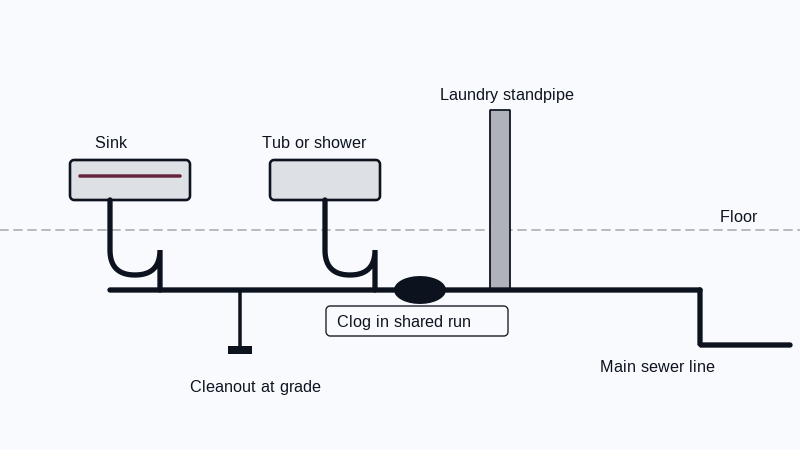
In smaller Bell homes, a bathroom, kitchen and laundry commonly share one run of drain pipe under the floor. A blockage down the line shows up everywhere at once. Keep that in mind while you work through the fixtures below; our other services are listed on the Slauson Plumbing home page.
What do I do when a shower or tub is holding water?
Nine times out of ten the cause is hair bound up with soap film just beneath the strainer. Lift out the strainer or stopper, hook the clump free with a bent wire or a barbed plastic strip, and run hot tap water for a minute. If the tub still lags, feed a small hand auger a few inches down and turn it as you withdraw.
Tubs with a lever or pop-up stopper hide a second trap for hair. Unscrew the overflow plate, draw out the linkage slowly and look at the tangle clinging to its end. Wear gloves, because that mass is not pleasant.
Skip boiling water. It can warp plastic traps and weaken glued joints, so stick with the hottest tap water. When the water runs freely, set a mesh catcher over the opening; it is the single habit that stops a repeat. Tenants should tell the manager before disassembling anything, because many leases ask for that.
Can I clear a drain without drain cleaner?
Yes, and mechanical tools are the better first choice. Store-bought cleaners are largely strong acids or alkalis, and frequent use can corrode pipe. A plunger, an auger, a wet-dry vacuum and hot water all pull the blockage out, rather than dissolving a bit of it and leaving the rest behind to harden again.
What each tool is good at:
- Cup plunger. Stop up the overflow with a damp rag, and pump hard for roughly twenty seconds.
- Hand auger or rod. Suits short, fairly straight runs near the fixture.
- Wet-dry vacuum. Set to liquid and sealed over the opening, it pulls a loose plug upward.
- Dish soap and hot water. Helps on a greasy kitchen drain.
- Enzyme products. Designed to digest grease, hair and food residue; they suit upkeep and mild slowness, not a hard plug.
Will baking soda and vinegar work?
Not on a real clog. The mix foams for a few seconds and rinses off a light film, but it will not break up a wad of hair or a cooled lump of cooking fat. Count it as light cleaning at best. Once a drain is visibly blocked, reach for a plunger or auger and keep the pantry trick for maintenance.
A related myth is a nightly handful of salt. Neither remedy takes the obstruction out of the pipe. And do not stack products: if a store-bought cleaner has already gone in and failed, leave the standing water alone and tell the plumber exactly what you used, since that water can burn skin and eyes.
How do I quickly open a stopped kitchen sink?
Plunge first, with the second basin plugged. If nothing moves, place a bucket under the curved trap, undo the two slip nuts by hand and tip out what is inside. Rinse the trap and push a bottle brush through the short pipe running to the wall. Grease and coffee grounds cause most kitchen stoppages.
Inspect the rubber washers before tightening the nuts again; a cracked one will weep later. Run the tap for a minute and wipe each joint with dry paper to catch slow drips. More on this is in the guides to unclogging a kitchen sink and unclogging a bathroom sink.
What if the garbage disposal drain is blocked?
Turn the disposal off at the wall and cut its breaker or unplug it, and keep your hand out of the chamber. When water rises while it runs, the clog sits downstream, so plunge the sink. If it hums without spinning, something has jammed the plate; a hex wrench in the socket underneath usually frees it.
The hex socket is at the center of the unit's underside on most models, and many also have a red reset button. Run cold water while grinding, and keep stringy waste such as celery, corn husks and potato peel out of it. A disposal is a motor with a drain behind it, so repeated backups usually trace to grease; see garbage disposal repair if it keeps happening.
How do I clear a laundry drain that gurgles or overflows?
Lint and soap clog the standpipe behind a washer. Switch the machine off, lift the hose clear of the standpipe and pour in a little water to test the drainage. If it sits, work an auger down the pipe. Once water runs clear, put the hose back, ideally with a lint screen over the hose end.
When a wash cycle makes a nearby floor drain or a bathtub gurgle or rise, you are dealing with the branch line, not the standpipe. Stop using water in the house until it has been cleared, since the lowest opening in the building is where the overflow will come out.
What causes gurgling from a drain vent, and what about an AC drain?
A choked vent makes several fixtures gurgle and drain sluggishly at once, because the pipe cannot draw air. Vents exit through the roof, so clearing one means working at height, and most households should leave that to a plumber. An air conditioner condensate line is a separate small pipe that carries water outside.
For a backed-up AC line, turn the unit off at the thermostat, locate the small PVC line near the indoor coil or on the outside wall, and use a wet-dry vacuum at the outdoor end to pull the algae plug out. Water marks under the air handler are a sign it is already overflowing. Never pour drain cleaner into that line, and if water keeps returning, ask an HVAC contractor, as this is outside plumbing.
At what point should a plumber take over?
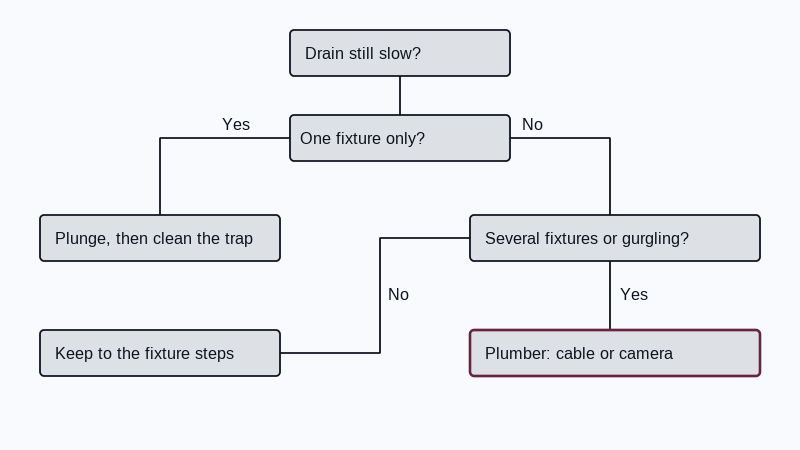
Call for one when two or more fixtures run slow together, a toilet flush raises water in a tub or floor drain, you hear gurgling, or a plunger and a small auger have each failed twice. Those signs point to the main or a branch line, which calls for a longer cable machine or a camera.
The state licensing board requires a California contractor license for work worth $1,000 or more in combined labor and materials, and always when a permit is needed. Routine drain clearing usually costs far less, but replacing a collapsed section may not. Use the quote form to pass along the details and name the affected fixtures.
Write down which drains are slow, the fixes you attempted and whether any chemical went down. The plumber then knows which cable to bring and what safety gear to wear.
Common questions
What is the time needed to clear a drain?
Expect around 15 to 30 minutes by hand for a simple sink, tub or shower clog. Opening a trap adds a few minutes. A main line cleared by cable machine can run longer, since the duration hinges on the depth and density of the obstruction.
Which questions come before a plumber works on a drain?
Find out if the price covers one fixture or the whole line, whether a camera look is part of it should the cable fail, what happens if the clog returns, and whether the business has a California contractor license. Get the total in writing before work begins.
Is it fine to plunge the same drain again and again?
Use a plunger for one-off clogs. A repeat clog in the same spot usually means hair, grease or a damaged pipe section is building up. If you are plunging one drain more than once or twice a month, ask for a camera inspection instead of guessing.
Does an adult need to be home for a drain visit?
Yes, someone should admit the plumber and show the affected drains, since access to the fixtures and any cleanout is needed. Rental managers can often arrange entry. Keep pets away and clear the cabinet beneath the sink beforehand so the plumber can reach it.