Plumbing for a bathroom remodel means deciding where the toilet, sink, tub or shower sit, then having supply lines, drains and vents fitted to match before the walls and floor are closed up. Keeping fixtures where they are is the cheap path, while moving them costs more because drains must slope and vent. While you are still scoping the job, the Slauson Plumbing home page shows which plumbing work we arrange.
Which plumbing tasks come with a bathroom remodel?
At the small end a remodel is a new faucet and toilet, and at the large end it adds fresh supply lines, a relocated drain and a new shower valve. Most jobs land between: old fixtures come out, the shutoff valves and drain get tested, the new valve and drain are placed at rough-in, and the plumber returns after tiling to connect the fixtures.
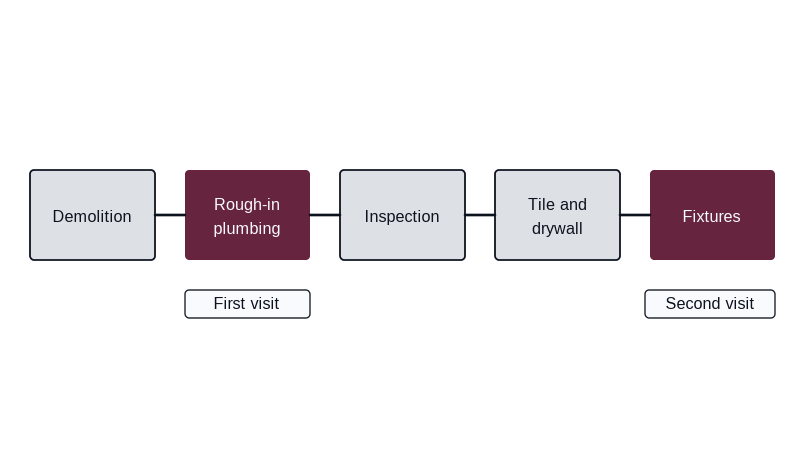
Two visits make up the work. The rough-in comes first, with walls open, when the shower valve, drain lines and supply stubs are positioned. The second is the finish, after tile and paint, when the fixtures, faucets and trim go on. Between the two, the pipes need to be pressure-tested while everything is still visible.
Plumbing is only one trade here. A bathroom exhaust fan is a ventilation and electrical job, and a contractor who does heating and air conditioning may handle the duct, not the plumber. Tile, drywall and waterproofing belong to other trades again, so ask who is coordinating.
What does it cost to move a toilet, sink or shower?
Rerouting plumbing runs about $700 to $1,500 in This Old House's national guide, and it also puts installing a toilet at $300 to $800, installing a sink at $200 to $800, and a shower installation from about $500 for a prefab unit up to $10,000 for a luxury remodel. These are guide figures, not quotes from us, and a specific house can fall outside them.
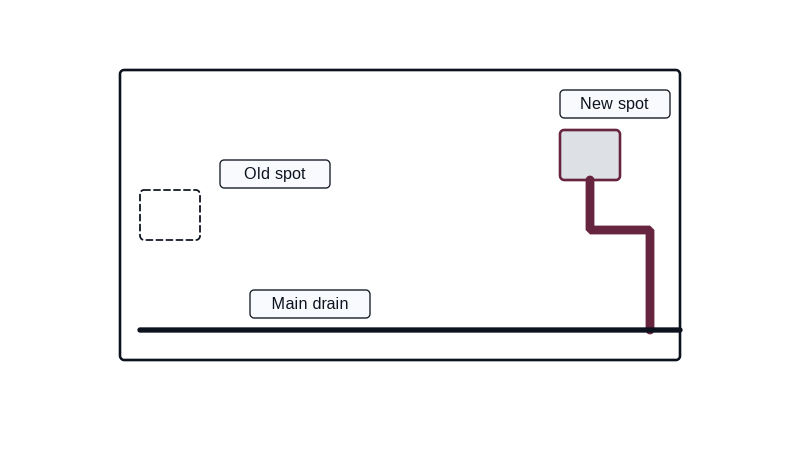
Why is moving a fixture expensive? A toilet drain is wide and must fall at a steady slope toward the main drain. Move the toilet a few feet across a floor with a crawlspace beneath, and it is a modest job. Move it on a concrete slab, and the floor may need to be cut, which turns plumbing into a demolition and concrete patch job too.
| Change | What it involves | Cost direction |
|---|---|---|
| Same-spot swap | New fixtures, same rough-in | Lowest |
| Move a sink or vanity | New supply and drain stubs | Moderate |
| Move a toilet | New wide drain at slope, vent | Higher, much higher on a slab |
| Move a shower or tub | New valve, drain, waterproofing | Highest of the fixtures |
Does bathroom plumbing call for a permit?
Frequently. Changing fixtures in place is normally light work, but relocating drains, adding fixtures or replacing a shower valve behind the wall generally goes through your city's building office, and unincorporated East Los Angeles falls under Los Angeles County. Permitted work needs a California contractor license, which rules out a handyman for it.
Ask your city before starting. Offices differ in hours and submission methods; Bell's Building and Safety office, for instance, is at City Hall, and counter hours elsewhere in the area run Monday to Thursday. The areas we cover page links every city we serve, which helps you locate the correct office. If you are an owner doing your own work, ask whether the city allows it and still requires inspection.
What problems do older Bell bathrooms hide?
Houses put up between the 1920s and 1950s often conceal corroded galvanized supply pipe, drain lines of cast iron or clay, and subfloors weakened by years of slow leaks. A remodel that opens a wall is the chance to see them. A pipe that looks fine at the sink may be badly choked with rust inside.
Where the supply is galvanized and the remodel will cost real money regardless, many owners replace the bathroom branch while the wall stands open. The galvanized pipe replacement guide covers it. Spongy floors near a toilet or tub point to a leak that has been running; EPA figures put average household leaks above 9,300 gallons yearly, and a concealed one near a bathroom can account for much of that while rotting wood.
In a duplex, check which side shares a wall or drain stack with the neighbor's unit before moving anything, because a stack is shared plumbing and a change can affect both homes.
In what order do the trades go?
Demolition comes first, then plumbing and electrical rough-in, then inspection if required, then waterproofing and drywall, then tile, then fixtures and finish. Plumbing appears twice, early and late, so schedule both visits. A skipped rough-in inspection, or a valve placed at an incorrect depth, becomes costly after tile goes up.
Before walls close, photograph where each pipe and valve sits for your records, and test the new shower valve and drain for leaks. Checking water pressure at rough-in costs less than hunting a leak after grouting. Have the plumber confirm the shower valve matches the thickness of your chosen tile and trim, because a wrong depth is hard to correct later.
Fixture-by-fixture pricing is in the guides on replacing a faucet and a shower leak, while the labor side appears under the hourly cost of a plumber.
How should I prepare for the plumber's arrival?
Pick your fixtures ahead of rough-in, since valve and drain positions depend on the exact model. Empty the room, locate your main shutoff valve, and settle whether the toilet and sink remain in their current spots. Have the product spec sheets on hand, since the plumber needs them for rough-in dimensions.
Common questions
How much time does remodel plumbing take?
Exchanging fixtures in the same spot can need a day or two spread over the rough-in and finish visits. Relocating drains or a shower valve takes more, as walls and floors may stay open and inspections may fall between stages. The overall remodel usually runs weeks, with plumbing visits early on and close to the end.
Which questions should I put to a plumber about a remodel?
Check whether the quote includes both rough-in and finish visits, who obtains the permit, how hidden damage found behind the wall is handled, and how change orders are priced. Ask if the old supply and drain pipes will be inspected. A written scope before work starts makes the price easier to compare.
Can I keep my existing plumbing and just change fixtures?
In many cases, and that is the lowest-cost route. If the shutoff valves work, the drain flows freely and the supply pipes are sound, new fixtures connect to what is there. The catch is that the new fixture needs to fit the old rough-in measurements, so check the spec sheet before you buy anything.
Should I replace old pipes during a remodel?
If the walls are open anyway, it is the cheapest time to do it. Galvanized supply lines and old drains are worth a close look, since the added cost of replacing a short branch is small next to opening finished walls again later. Only a plumber can judge their condition.
Who must be present during the plumbing work?
A person has to open up the space at the start and stay reachable for decisions, because something behind the wall may change the plan. Expect water off for some portion of every visit. Agree who is on site and who approves any changes.
Want plumbing priced for your remodel? Send a quote request with the fixtures you are changing and the age of the house.