Most of a mobile home's plumbing hides in the belly under the floor: supply lines, drain lines, vents and the connections to every fixture. Putting new lines in is not a weekend project, and in California it is also regulated work. This guide shows how the system is arranged, what the state permit covers and what to have ready before you ask for help. For the wider range of work we arrange, see Slauson Plumbing or send the quote form.
What does plumbing under a mobile home actually include?
Three systems share the space under the floor: water supply lines to the fixtures, drain-waste lines that carry used water out, and vent lines that let the drains flow. They connect to the home's utility hookups at the lot, with a shutoff at the water entry and a sewer connection at the drain outlet.
Add the water heater connections, because the heater is housed in a closet or compartment above, and any appliance lines for a washer or dishwasher. Ducts for heating and air conditioning often run in the same belly, so crews need to work around them, and a new line must not crush or kink them.
Mobile homes are built in a factory, so their plumbing follows the factory layout. Moving or adding a bathroom means extending that layout, and each new drain requires correct slope as well as venting. That is the part where mistakes are costly, because a drain with too little fall will clog repeatedly.
What does California require before you start?
In California, alterations to mobilehomes and manufactured homes are handled by the state's Department of Housing and Community Development rather than a city building office. Its permit page says that to do any work on your home, you apply for a permit on form HCD MH 415, and that HCD staff inspect alterations to plumbing, mechanical, electrical, structural and fire safety systems.
Why this matters: a city permit counter may not be the right place to apply, and unpermitted plumbing can cause problems at sale or with insurance. Ask HCD, or a contractor who works on manufactured homes, which permit your job needs. Some changes may require plans, and others may not.
California also sets a contractor license threshold: generally $1,000 or more of combined labor and materials, plus any job that needs a permit. Underfloor plumbing work usually clears that. So whoever installs it should hold a contractor license, verifiable through the Contractors State License Board. If you live in a park, read your lease and the park rules, and tell management before work begins.
How is underfloor plumbing laid out?
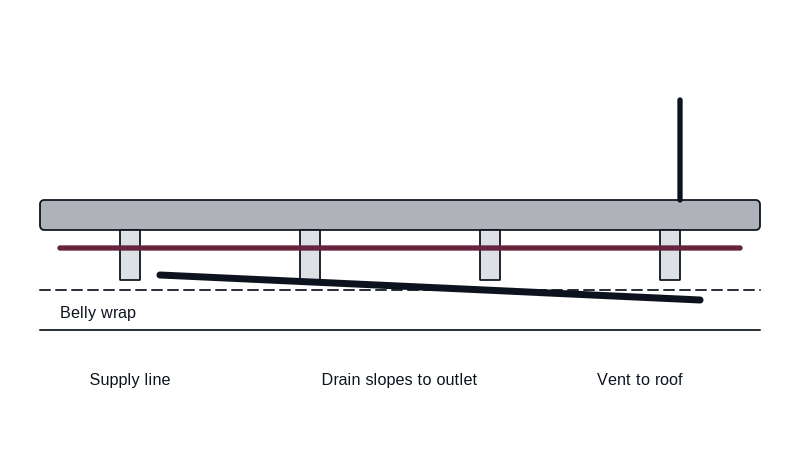
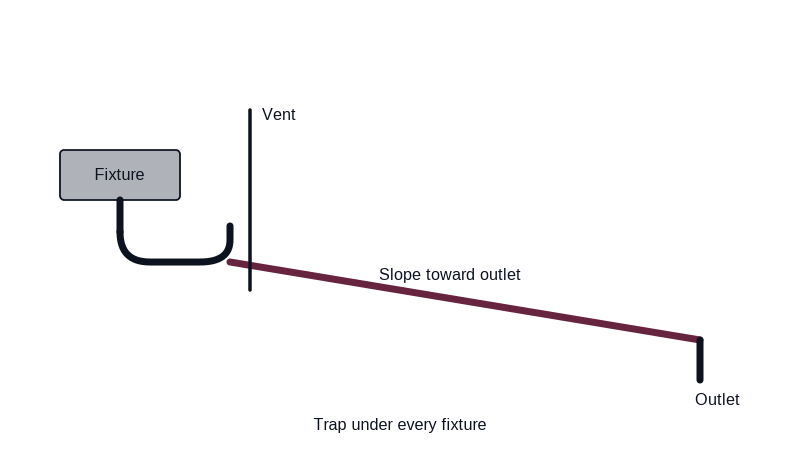
Supply lines run along the floor framing with support at regular intervals so they do not sag. Drain lines slope continuously toward the outlet, and each fixture has a trap and a vent. Everything sits above the ground and is usually enclosed by the belly wrap or covering that protects the home's underside, so a repair often begins by opening or cutting that covering.
Materials depend on the era and the repair. Copper has high corrosion resistance, and PEX, a cross-linked plastic, is valued for light weight and non-corrosive properties and for easy connections. Older homes may have polybutylene supply lines, which went into several million North American homes between about 1978 and 1997 and were tied to leaks and failures. A plumber who sees grey plastic lines with metal or plastic fittings under a home of that era should flag it.
The exact pipe, support, slope and venting rules for new work come from the manufactured home standards and the permit, and a contractor follows them. We do not give installation specifications here, because getting them wrong creates leaks and sewer gas problems.
Can I do any of it myself?
You can prepare. Clear the access panel, trim plants away from the skirting, find the water shutoff and the sewer cleanout, and photograph the area. Take notes: where does water collect, which fixture drains slowly, where does the floor feel soft? Those observations save time and money later.
Crawling under the home has real risks: rodents, insulation fibres, sharp edges, wasps and low clearance. Put on gloves, eye protection and a mask, and let someone know where you are. Do not cut into the belly wrap, move gas lines or work near electrical connections. Anything involving gas, drain slope or a new fixture is for a contractor.
A minor repair on a fitting you can reach, like swapping a dripping supply line at a basin, is often fine for a handy owner, and the guide on repairing a leaking pipe under the sink shows the method.
What affects the cost and the schedule?
Cost depends on how much of the system is replaced, how hard the access is, which material is used, how much of the belly must be opened and repaired, permit fees and the contractor's rates. Because this page does not rest on a published price survey, it does not give a dollar figure. Only a written quote after a site visit gives a reliable number.
Have each contractor state what is included: permit, inspection, materials, disposal of old pipe, repair of the belly wrap and insulation, and a pressure test of the new lines. Compare quotes line by line. Prepare a short list of what you want done, and mention whether the home is owned or rented.
For leaks, the cost question is different: tracing where water escapes can take time. First steps are in leaking water pipe repair, and mobile home water heater replacement cost applies if the heater is part of the job.
How do I get started?
Gather the facts first: the home's age if known, the fuel and the park or lot, what is failing, and photos of the area you can reach. Then fill in the quote form. A local plumber answers with a visit and a written price, and the form is checked on weekdays from 9am to 5pm.
If water is actively leaking, close the water valve to the home first. Reach your gas utility from outside the home if you smell gas. Everything else can hold for a booked visit, so long as the leak is contained and the floor is not soaking through.
Common questions
Is a permit required for new plumbing beneath a manufactured home?
Permits for alterations to mobilehomes and manufactured homes come from HCD in California, which also inspects plumbing alterations. Whether a small repair needs one depends on the work. For new lines, assume yes and check with HCD or a contractor first. Unpermitted work can bring trouble at sale time or in an insurance claim.
What pipe is used under mobile homes?
Copper and PEX are both used. Copper resists corrosion well and PEX is light, non-corrosive and easy to connect. Older homes may contain polybutylene, a type linked to failures and no longer accepted by U.S. codes. A plumber can identify what you have and say whether it needs replacing.
Can I repair plumbing under my mobile home myself?
Small, accessible repairs sometimes, new lines no. Layout, slope, venting, permits and the crawl space risks make new installation work for a contractor. Take photos, locate the shutoff, and describe the fault in your request for a visit. A mistake under the floor can go unseen for months.
Why does mobile home plumbing leak under the floor?
Common causes are worn fittings, damaged or sagging lines, freezing or physical damage to exposed pipe, aging materials such as polybutylene, and slow drains that back up. A leak under the floor can run unseen, so a damp smell, a soft floor or a rising water bill are the signs to chase.
Who installs plumbing in a manufactured home?
Look for a contractor with a California license who is experienced with manufactured homes, working under an HCD permit where one applies. Request the license number and verify it with the Contractors State License Board, find out who applies for the permit, and get a written quote. A local plumber can be arranged through the form on this site.