First, shut the cold valve above the tank, then kill the breaker or rotate the gas knob to off, and slide a bucket under the drip. The source of the water sets the remedy: a loose fitting is cheap, while a leaking tank body means replacement. Our water heater repair page lays out the choices, and this guide adds code, permit and tankless questions.
What are the first steps with a leaking water heater?
Shut the cold supply valve at the top of the heater, switch its power off at the breaker panel (or turn a gas unit's dial to off), and open one hot tap slightly to ease pressure. Put towels around the base. A rotten-egg smell means gas: go outside, report it to the gas company from there, and bring in 911 if someone is in danger.
Keep hands off wet wiring and stay out of pooled water near a live heater. The water can scald too, so give the tank time to cool.
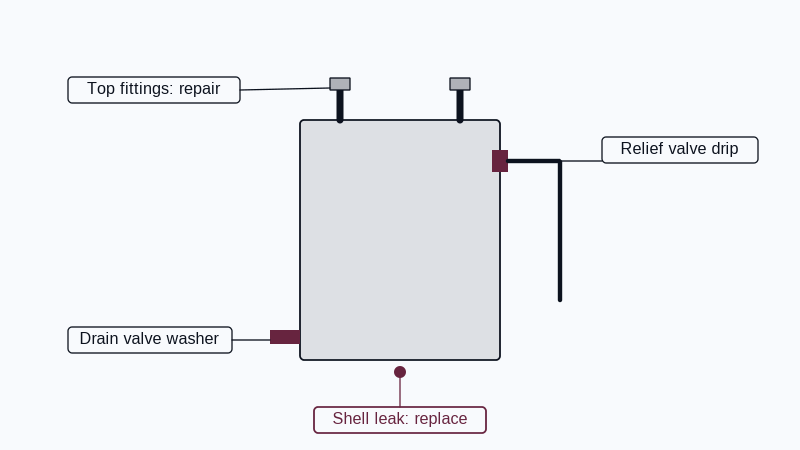
Once it's safe, dry everything and check again in a few minutes. Drips at the top pipe joints, a puddle from the relief valve line, and seepage at the tank's underside each point to a different fault, and photos of each help the plumber.
Can the leak be traced and repaired?
Fittings on top, the relief valve and a loose drain valve can be fixed. Water escaping through the tank's side or base is a failed tank and needs replacing. Water heaters age internally, and once the steel shell is breached no patch lasts.
Look at the pipes on top first: tighten a dripping union or replace a worn connector. A dripping relief valve may signal excess pressure or simple wear; see water heater relief valve replacement. A damp drain valve near the bottom is often a washer or a loose cap.
Wet seams or a damp base on the tank itself mean you should shut it down. Each case is walked through in the guide to repairing a water heater leak. The anode rod keeps rust off the tank and merits replacing before it is used up, but it cannot rescue a tank already leaking.
Does swapping a heater need a permit?
Often, but every city writes its own rule, so ask. Bell Building and Safety lists plumbing permits for all plumbing work and related fixtures and appliances without naming water heaters, so check with the city on whether your swap needs one. A permitted job has to be done by someone holding a California contractor license.
Bell takes applications by email at [email protected] or through its OpenGov online system, and a Building Technician follows up with fees. Neighbouring cities, such as Bell Gardens, Huntington Park and South Gate, each have separate Building and Safety offices, so which one applies depends on your address.
Contractor licensing in California applies once labor and materials total $1,000, and to any job requiring a permit. A heater replacement that includes the unit normally clears that bar. Ask who will file for the permit and if an inspection has been scheduled.
What does code say about installing a water heater?
Earthquake rules in California require water heaters to be braced, anchored or strapped. Health and Safety Code 19211 says new and replacement heaters, and existing residential ones, must be secured, and at a minimum in line with the California Plumbing Code, which a city can modify.
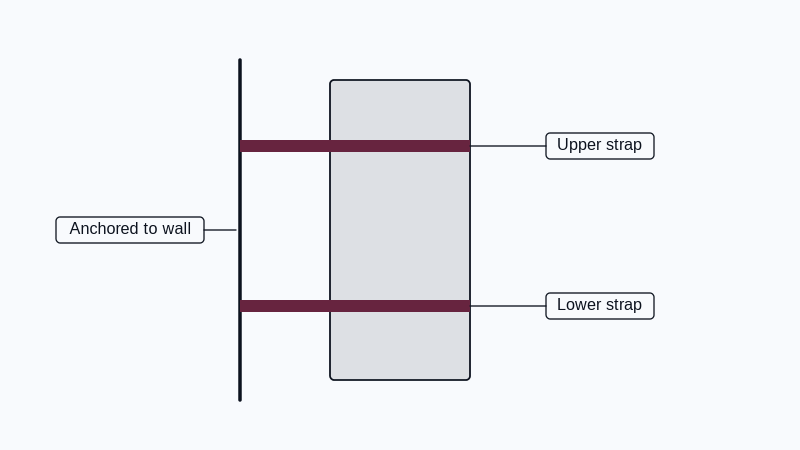
Beyond strapping, the details sit in the plumbing code, the manufacturer's manual and your city's rules: venting for gas models, clearances, a relief valve with a safe discharge line, and gas piping sized for the load. Gas piping is no weekend project. It goes to a plumber with the right contractor classification, and inspectors usually review it.
Fitting a check valve or pressure regulator on the supply line makes a closed system, and an expansion tank normally comes next. See the piece on water heater expansion tank replacement. After looking at your setup, the plumber decides if yours needs one.
In June 2025 the regional air board decided against amending its water heater rules, so the existing rules stay and nothing new was approved. Ask the plumber which models will be installed.
What about natural gas and condensing tankless water heater installation?
Moving to a gas tankless unit involves more than a tank swap, because it typically calls for a wider gas line, fresh venting and occasionally new wiring. One national guide says a gas line can add up to $1,000 to the project, and a condensing model has its own vent and drain needs.
The reference article on tankless heaters says a retrofit may demand heavier wiring, bigger gas lines or a replacement vent pipe, and that gas units still run on electricity. A condensing tankless model recovers more heat and has its own venting and condensate requirements, so the maker's installation manual rules.
On a Rinnai, check the model's installation manual and installation guide for clearances, vent type and gas size. Our Rinnai tankless installation and gas tankless installation guides go into model-specific steps. A plumber should read the manual for your unit, not rely on memory.
What if there is no hot water following a leak?
Run through the basics: power or gas on, thermostat set, the reset button if the unit has one, and whether the leak harmed anything. A tank that leaked and was shut off has no hot water until it is refilled and restarted, and refilling a tank that leaks again is a bad idea.
If the heater is dead because it was drained, refill it fully before switching the power on, or the element can burn out. When a gas heater's pilot refuses to light, stop retrying: that is when a plumber should be booked.
Other reasons for no hot water, such as a failed element or a thermostat, are covered in no hot water with a working heater. If a heater has been leaking for a while and the hot water has also gone cold, replacement is usually the answer. National price ranges are on the water heater replacement cost page.
When does a heater leak call for a professional?
Hire someone when the tank body weeps, you smell gas, the burner looks scorched or sooty, or the source of the water stays hidden. Work at that stage involves gas, electrical power, pressure and often a permit, and California law directs it to a contractor rather than a homeowner.
Use the quote form and an area plumbing company gets the request and visits your home. Submissions are read on weekdays from 9am until 5pm. Without hot water meanwhile? Ask the plumber about options and what a temporary fix would involve.
In nearby Bell Gardens, 76.5 percent of occupied homes are rented, so a leaking heater is often a tenant's problem in a shared closet or garage. Tell the owner or manager quickly, and shut off the water to limit damage while you wait.
Common questions
How much time does a heater leak repair take?
Replacing a fitting or valve takes about an hour. A whole new tank takes longer: drain, haul out the old unit, set the new one, strap it and test. Converting to gas tankless adds venting and gas piping, so allow extra time and ask for an arrival window.
What do I verify before hiring for a heater leak?
Check that the price includes the permit, strapping, an expansion tank, parts and hauling away the old unit. Ask who files the permit, whether the plumber carries insurance and which license number applies. Have the scope in writing before any deposit; California's cap is the smaller of 10 percent of the contract price and $1,000.
Should I be home while the repair happens?
Yes. An adult needs to open up access to the heater, inspect the finished work and sign permit paperwork if asked. A tenant needs the owner's agreement first. The water and heater supply will be off for part of the day, so plan around it.
Is a leaking heater an emergency?
Sometimes. A slow drip at a top fitting can wait for a regular appointment once the supply is closed. A tank that keeps pouring, or any hint of gas, cannot wait. If it is gas, leave the building before anything else and report the smell to the gas company from outside.
This guide is one of many on Bell plumber.